Sequera Celia, Bragado Paloma, Manzano Sara, Arechederra Maria, Richelme Sylvie, Gutiérrez-Uzquiza Alvaro, Sánchez Aránzazu, Maina Flavio, Guerrero Carmen, Porras Almudena
Departamento de Bioquímica y Biología Molecular, Facultad de Farmacia, Universidad Complutense de Madrid, 28040 Madrid, Spain.
Instituto de Investigación Sanitaria del Hospital Clínico San Carlos (IdISSC), 28040 Madrid, Spain.
Cancers (Basel). 2020 Aug 14;12(8):2282. doi: 10.3390/cancers12082282.
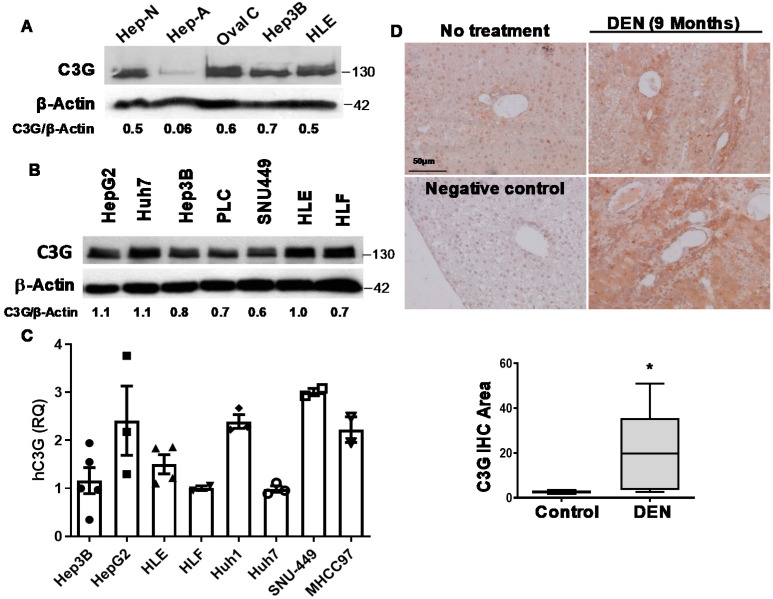
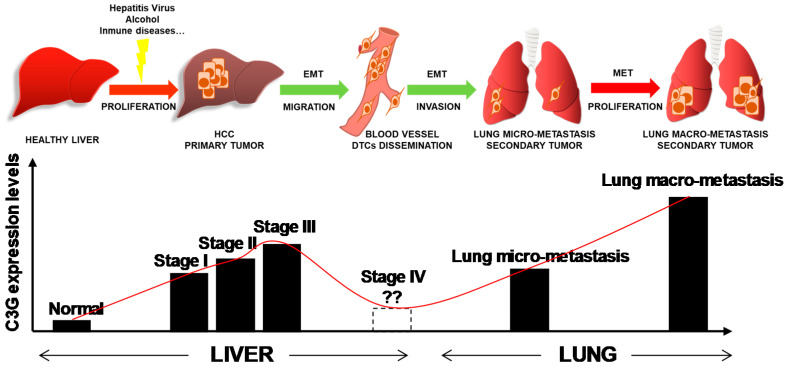
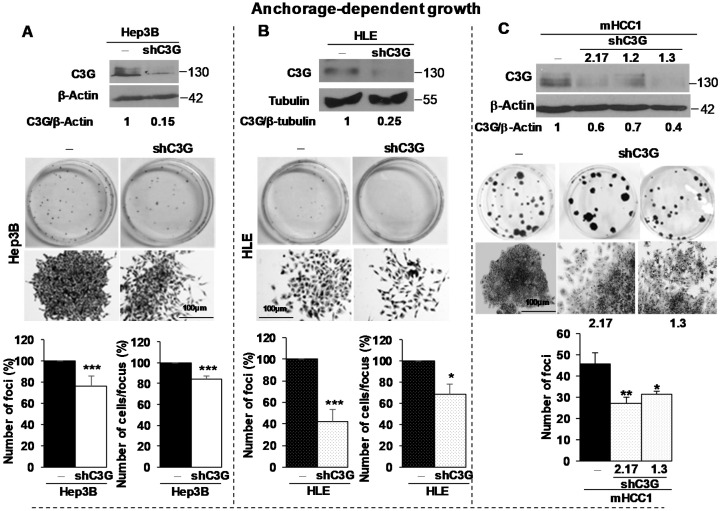
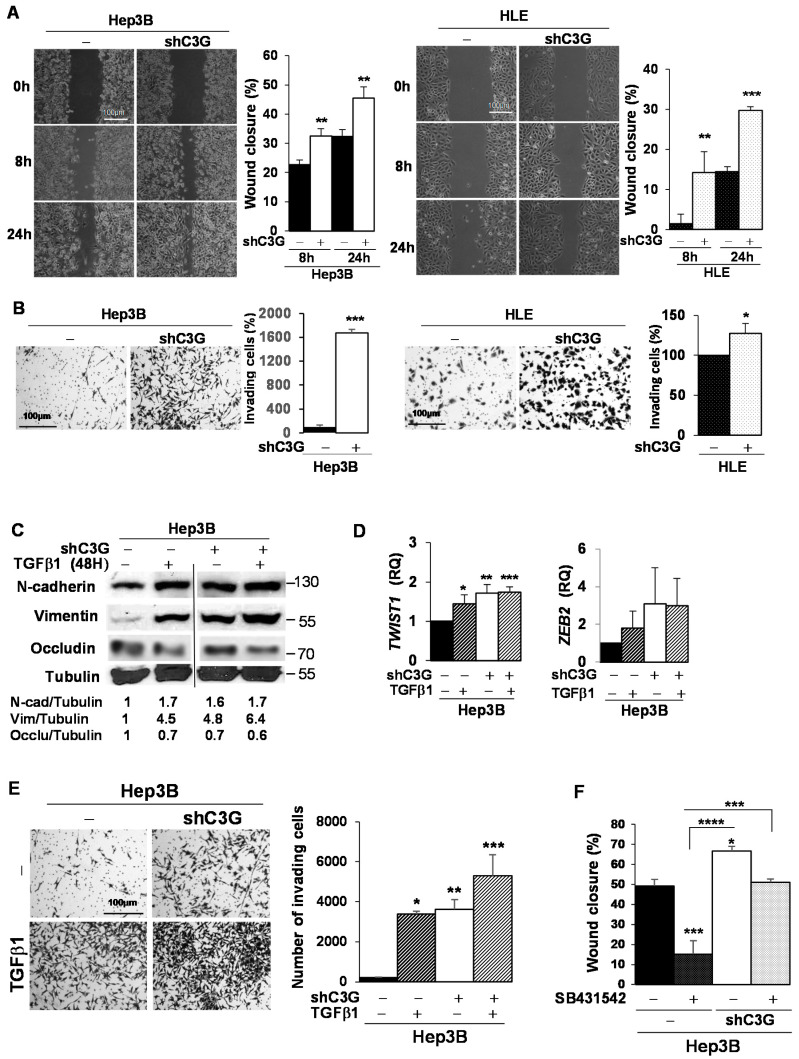
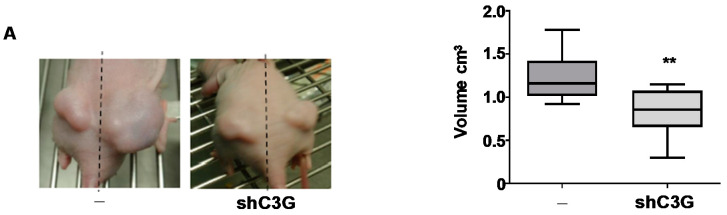
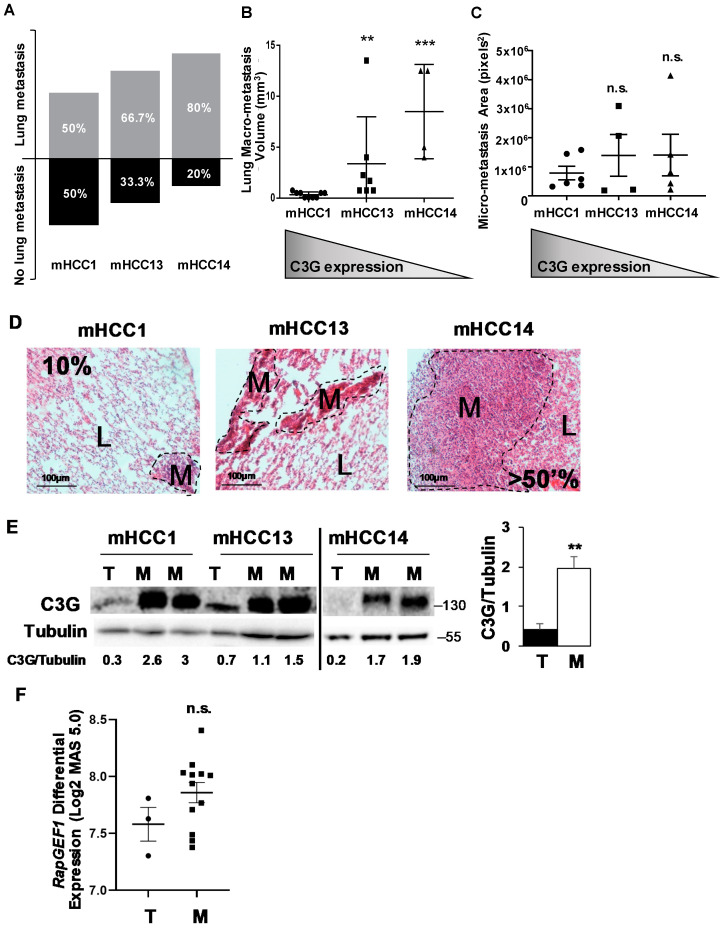
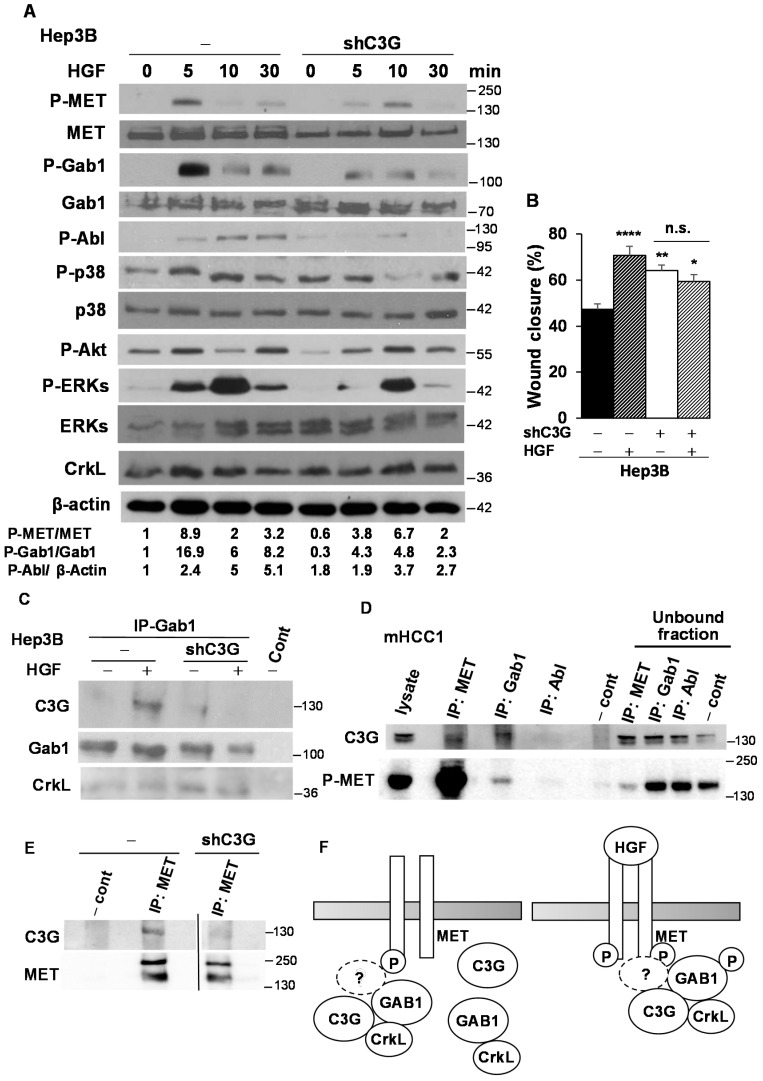
The complexity of hepatocellular carcinoma (HCC) challenges the identification of disease-relevant signals. C3G, a guanine nucleotide exchange factor for Rap and other Ras proteins, plays a dual role in cancer acting as either a tumor suppressor or promoter depending on tumor type and stage. The potential relevance of C3G upregulation in HCC patients suggested by database analysis remains unknown. We have explored C3G function in HCC and the underlying mechanisms using public patient data and in vitro and in vivo human and mouse HCC models. We found that C3G is highly expressed in progenitor cells and neonatal hepatocytes, whilst being down-regulated in adult hepatocytes and re-expressed in human HCC patients, mouse HCC models and HCC cell lines. Moreover, high mRNA levels correlate with tumor progression and a lower patient survival rate. C3G expression appears to be tightly modulated within the HCC program, influencing distinct cell biological properties. Hence, high C3G expression levels are necessary for cell tumorigenic properties, as illustrated by reduced colony formation in anchorage-dependent and -independent growth assays induced by permanent C3G silencing using shRNAs. Additionally, we demonstrate that C3G down-regulation interferes with primary HCC tumor formation in xenograft assays, increasing apoptosis and decreasing proliferation. In vitro assays also revealed that C3G down-regulation enhances the pro-migratory, invasive and metastatic properties of HCC cells through an epithelial-mesenchymal switch that favors the acquisition of a more mesenchymal phenotype. Consistently, a low C3G expression in HCC cells correlates with lung metastasis formation in mice. However, the subsequent restoration of C3G levels is associated with metastatic growth. Mechanistically, C3G down-regulation severely impairs HGF/MET signaling activation in HCC cells. Collectively, our results indicate that C3G is a key player in HCC. C3G promotes tumor growth and progression, and the modulation of its levels is essential to ensure distinct biological features of HCC cells throughout the oncogenic program. Furthermore, C3G requirement for HGF/MET signaling full activation provides mechanistic data on how it works, pointing out the relevance of assessing whether high C3G levels could identify HCC responders to MET inhibitors.
肝细胞癌(HCC)的复杂性对疾病相关信号的识别提出了挑战。C3G是一种针对Rap和其他Ras蛋白的鸟嘌呤核苷酸交换因子,在癌症中发挥双重作用,根据肿瘤类型和阶段,既可以作为肿瘤抑制因子,也可以作为肿瘤促进因子。数据库分析提示的C3G上调在HCC患者中的潜在相关性尚不清楚。我们利用公开的患者数据以及体外和体内的人源和鼠源HCC模型,探索了C3G在HCC中的功能及其潜在机制。我们发现C3G在祖细胞和新生肝细胞中高表达,而在成年肝细胞中下调,并在人类HCC患者、小鼠HCC模型和HCC细胞系中重新表达。此外,高mRNA水平与肿瘤进展和较低的患者生存率相关。C3G的表达似乎在HCC进程中受到严格调控,影响着不同的细胞生物学特性。因此,高C3G表达水平是细胞致瘤特性所必需的,使用shRNA永久沉默C3G可导致贴壁依赖性和非依赖性生长试验中的集落形成减少,这证明了这一点。此外,我们证明在异种移植试验中,C3G下调会干扰原发性HCC肿瘤的形成,增加细胞凋亡并减少增殖。体外试验还表明,C3G下调通过上皮-间质转化增强HCC细胞的促迁移、侵袭和转移特性,这种转化有利于获得更具间质表型。一致的是,HCC细胞中低C3G表达与小鼠肺转移形成相关。然而,随后C3G水平的恢复与转移生长相关。从机制上讲,C3G下调会严重损害HCC细胞中HGF/MET信号的激活。总体而言,我们的结果表明C3G是HCC中的关键因子。C3G促进肿瘤生长和进展,其水平的调节对于确保HCC细胞在整个致癌过程中的独特生物学特征至关重要。此外,C3G对HGF/MET信号完全激活的需求提供了其作用机制的数据,指出了评估高C3G水平是否可识别对MET抑制剂有反应的HCC患者的相关性。