Steiner Normann, Jöhrer Karin, Plewan Selina, Brunner-Véber Andrea, Göbel Georg, Nachbaur David, Wolf Dominik, Gunsilius Eberhard, Untergasser Gerold
Department of Internal Medicine V (Hematology and Medical Oncology), Medical University of Innsbruck, Anichstraße 35, A-6020 Innsbruck, Austria.
Tyrolean Cancer Research Institute, Innrain 66, A-6020 Innsbruck, Austria.
Cancers (Basel). 2020 Aug 19;12(9):2341. doi: 10.3390/cancers12092341.
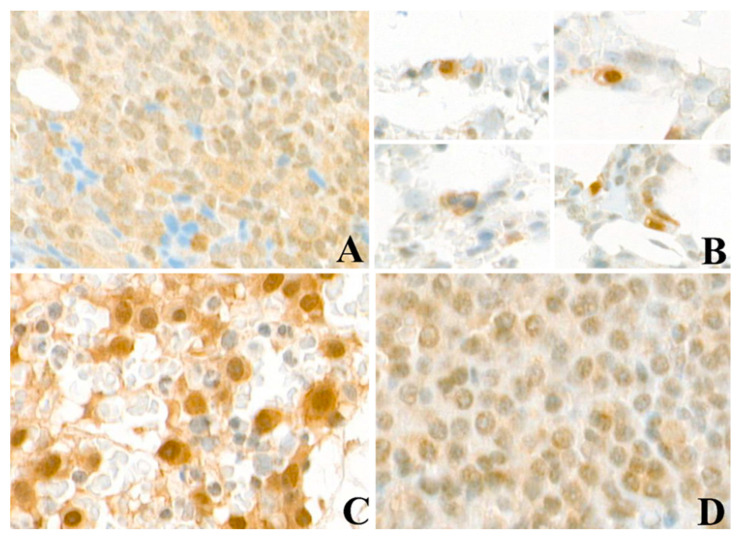
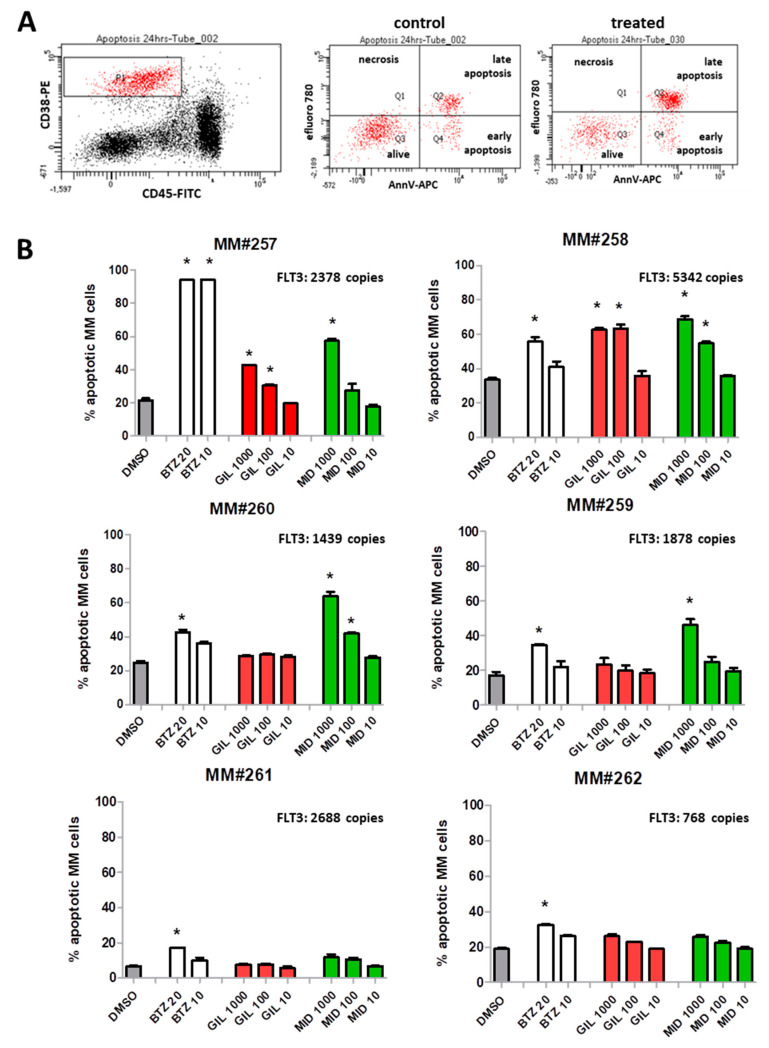
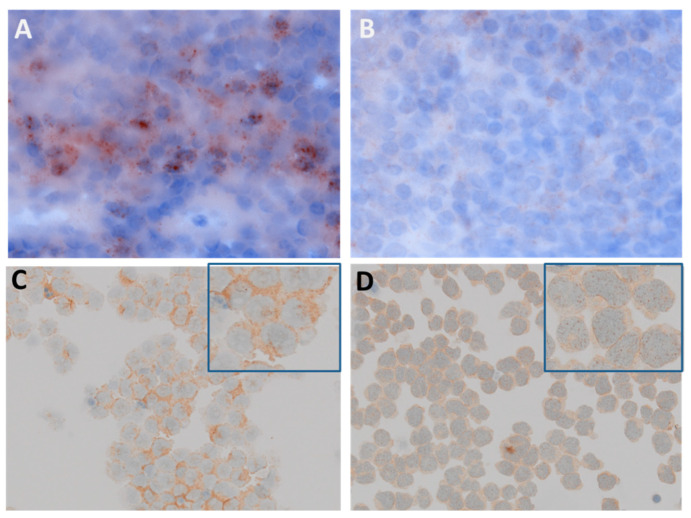
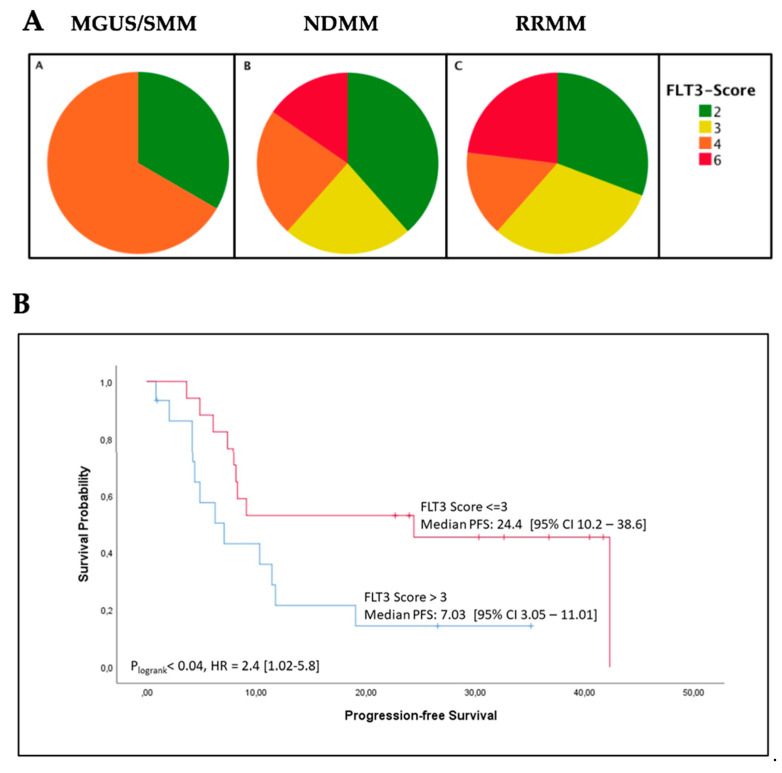
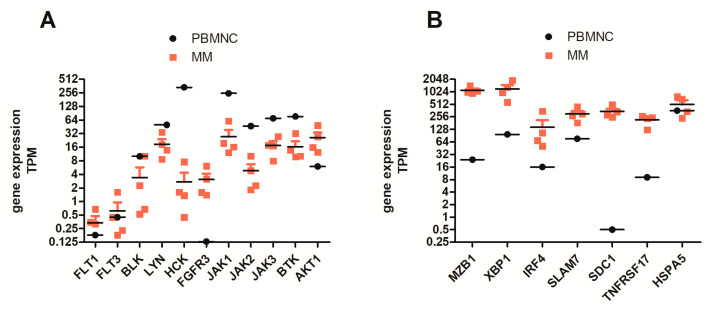
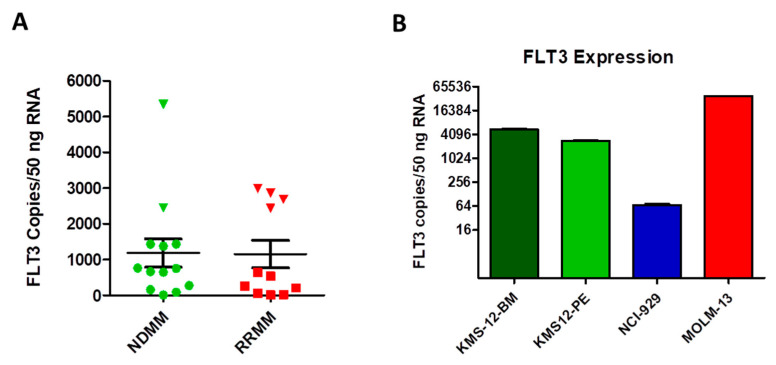
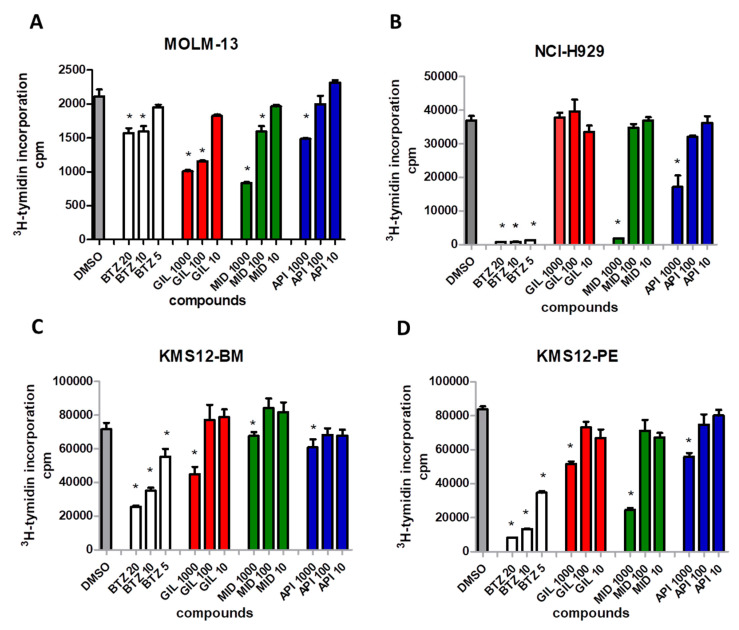
Therapy resistance remains a major challenge in the management of multiple myeloma (MM). We evaluated the expression of FLT3 tyrosine kinase receptor (FLT3, CD135) in myeloma cells as a possible clonal driver. FLT3 expression was analyzed in bone marrow biopsies of patients with monoclonal gammopathy of undetermined significance or smoldering myeloma (MGUS, SMM), newly diagnosed MM (NDMM), and relapsed/refractory MM (RRMM) by immunohistochemistry (IHC). gene expression was analyzed by RNA sequencing (RNAseq) and real-time PCR (rt-PCR). Anti-myeloma activity of FLT3 inhibitors (midostaurin, gilteritinib) was tested in vitro on MM cell lines and primary MM cells by H-tymidine incorporation assays or flow cytometry. Semi-quantitative expression analysis applying a staining score (FLT3 expression IHC-score, FES, range 1-6) revealed that a high FES (>3) was associated with a significantly shorter progression-free survival (PFS) in NDMM and RRMM patients ( = 0.04). RNAseq and real-time PCR confirmed the expression of in CD138-purified MM samples. The functional relevance of FLT3 expression was corroborated by demonstrating the in vitro anti-myeloma activity of FLT3 inhibitors on FLT3-positive MM cell lines and primary MM cells. FLT3 inhibitors might offer a new targeted therapy approach in a subgroup of MM patients displaying aberrant FLT3 signaling.
治疗耐药性仍然是多发性骨髓瘤(MM)治疗中的一个主要挑战。我们评估了骨髓瘤细胞中FLT3酪氨酸激酶受体(FLT3,CD135)的表达,将其作为一种可能的克隆驱动因素。通过免疫组织化学(IHC)分析意义未明的单克隆丙种球蛋白病或冒烟型骨髓瘤(MGUS,SMM)、新诊断的MM(NDMM)以及复发/难治性MM(RRMM)患者骨髓活检中的FLT3表达。通过RNA测序(RNAseq)和实时聚合酶链反应(rt-PCR)分析基因表达。通过H-胸苷掺入试验或流式细胞术在MM细胞系和原代MM细胞上体外测试FLT3抑制剂(米哚妥林、吉列替尼)的抗骨髓瘤活性。应用染色评分(FLT3表达IHC评分,FES,范围1 - 6)进行半定量表达分析显示,高FES(>3)与NDMM和RRMM患者显著较短的无进展生存期(PFS)相关(P = 0.04)。RNAseq和实时PCR证实了CD138纯化的MM样本中FLT3的表达。通过证明FLT3抑制剂对FLT3阳性MM细胞系和原代MM细胞的体外抗骨髓瘤活性,证实了FLT3表达的功能相关性。FLT3抑制剂可能为显示异常FLT3信号传导的MM患者亚组提供一种新的靶向治疗方法。