Bhalla Sherry, Melnekoff David T, Aleman Adolfo, Leshchenko Violetta, Restrepo Paula, Keats Jonathan, Onel Kenan, Sawyer Jeffrey R, Madduri Deepu, Richter Joshua, Richard Shambavi, Chari Ajai, Cho Hearn Jay, Dudley Joel T, Jagannath Sundar, Laganà Alessandro, Parekh Samir
Tisch Cancer Institute, Icahn School of Medicine at Mount Sinai, New York, NY, USA.
Department of Genetics and Genomic Sciences, Icahn School of Medicine at Mount Sinai, New York, NY, USA.
Sci Adv. 2021 Nov 19;7(47):eabg9551. doi: 10.1126/sciadv.abg9551. Epub 2021 Nov 17.
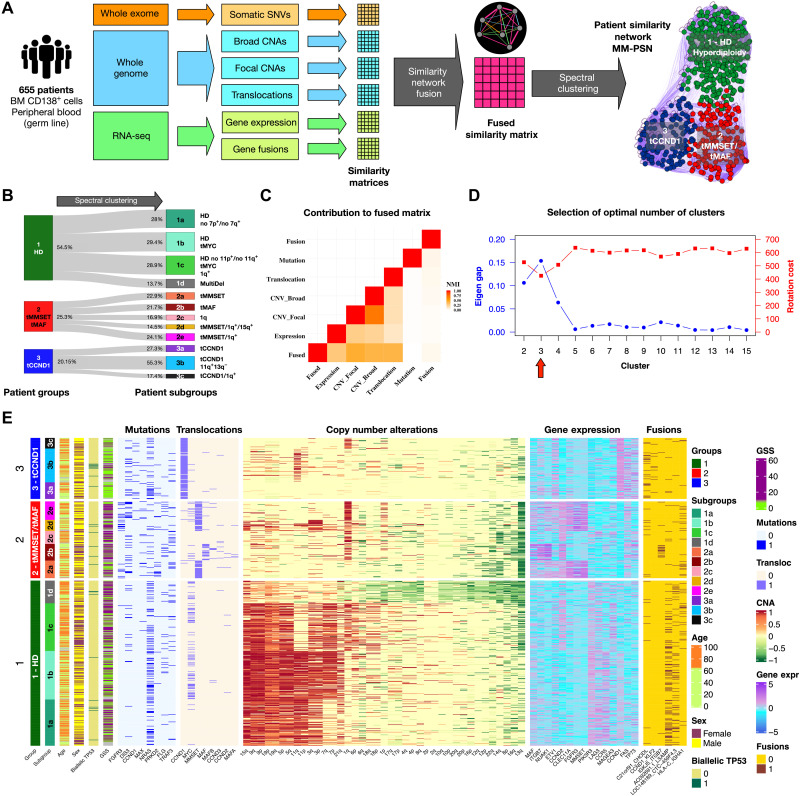
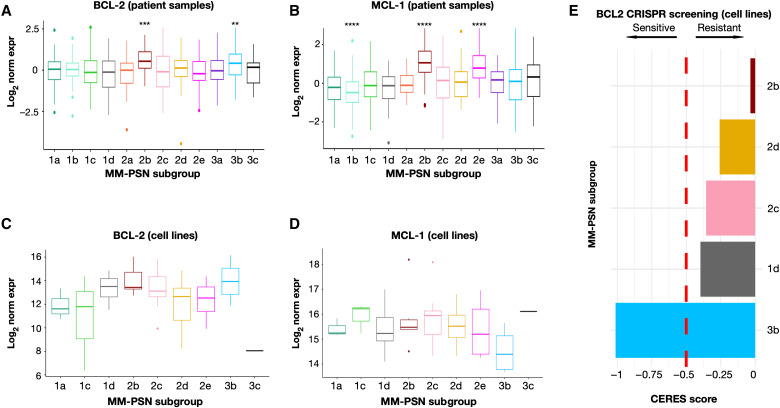
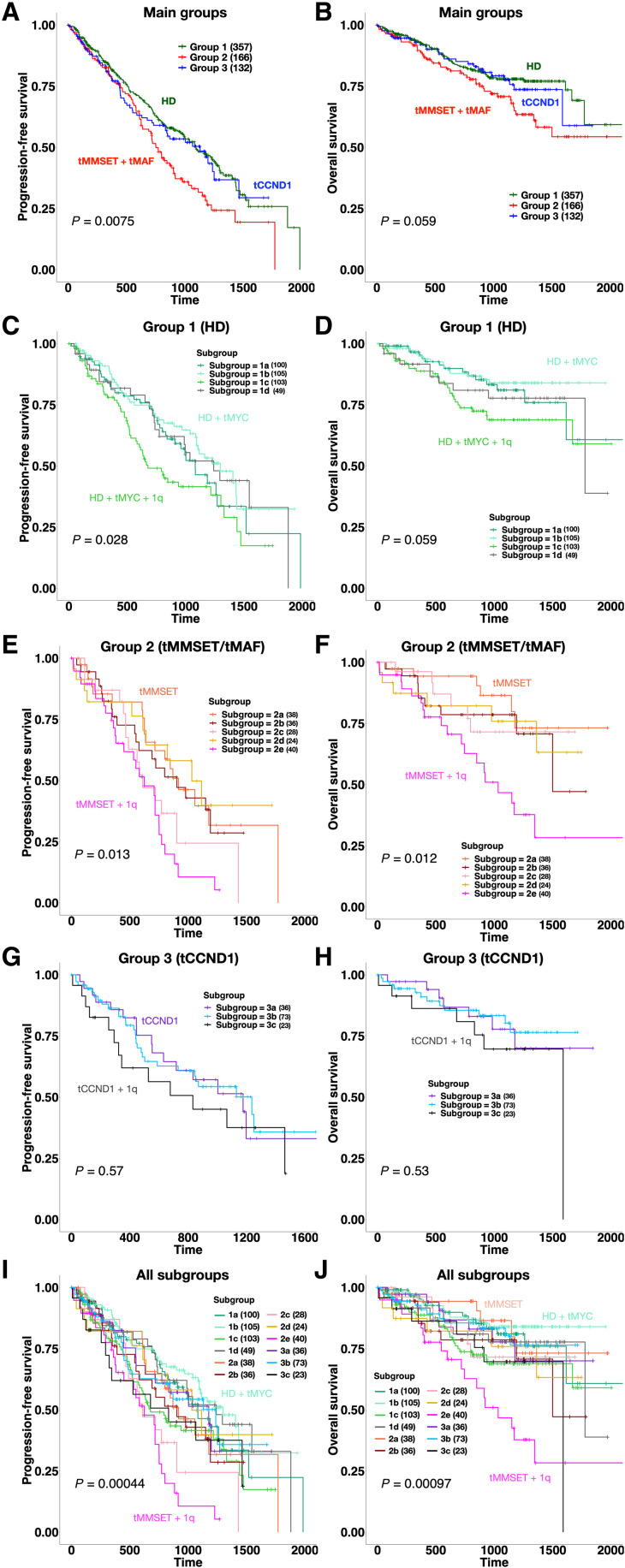
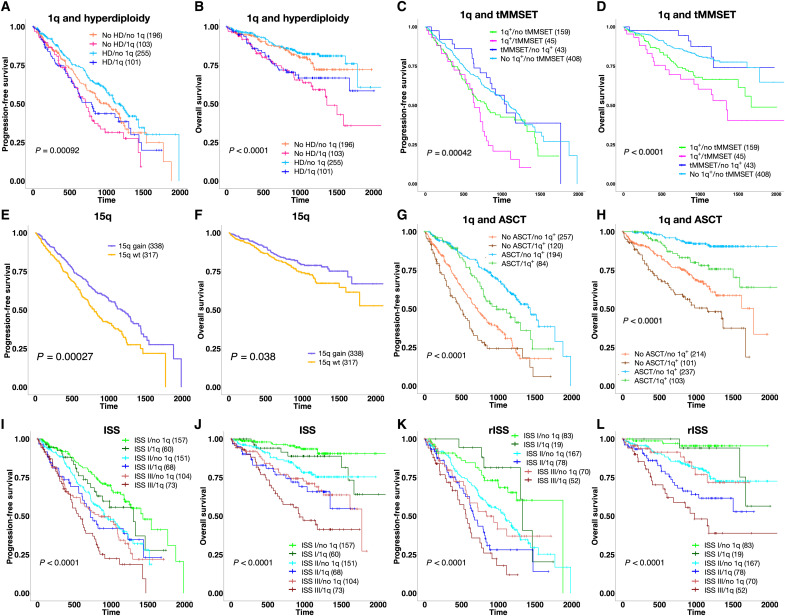
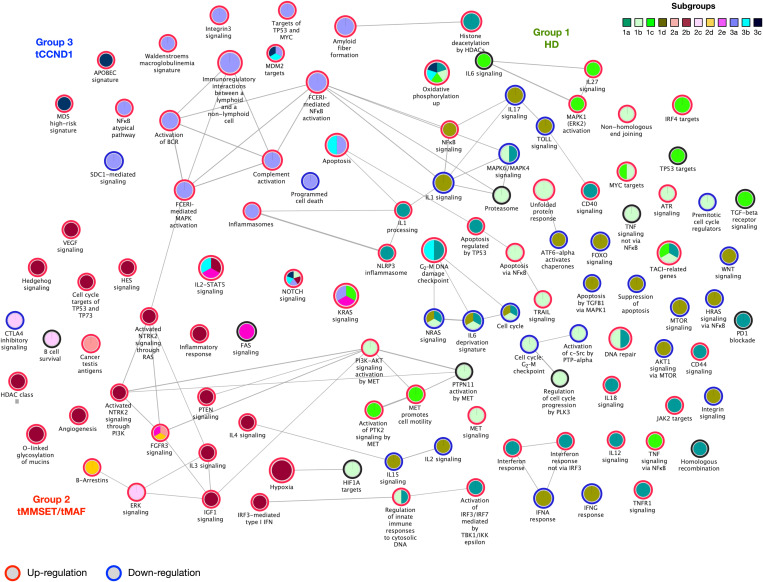
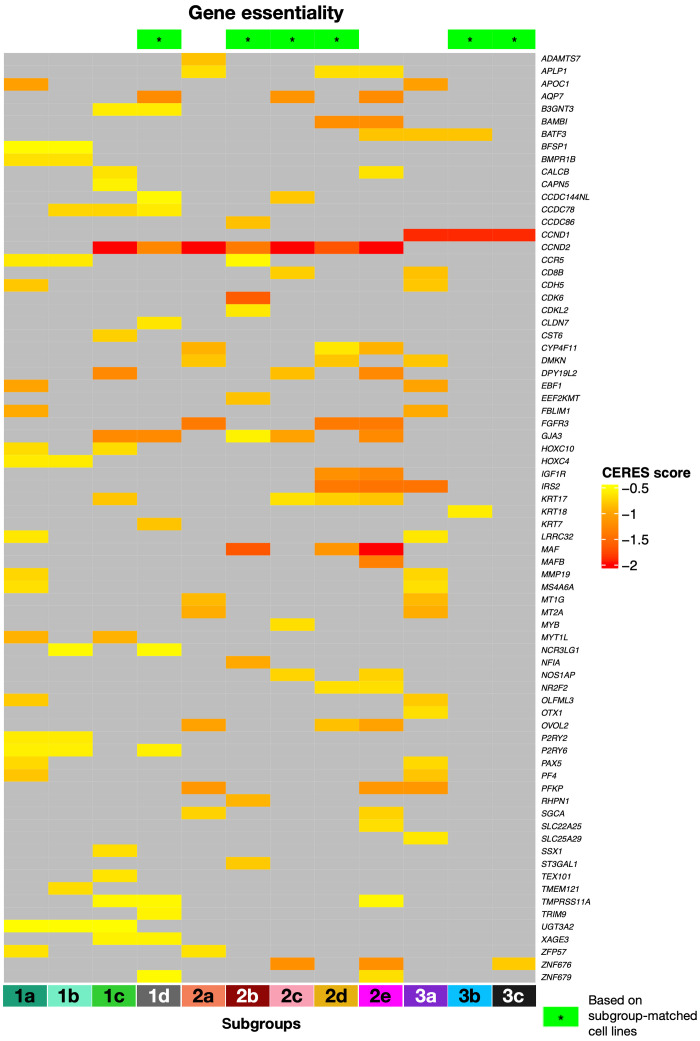
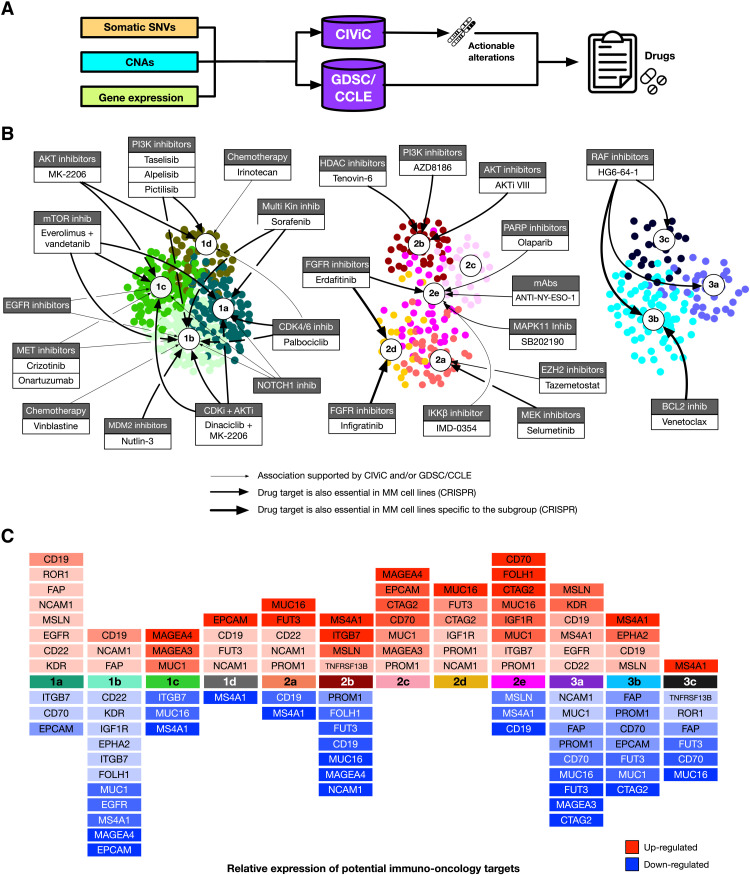
The remarkable genetic heterogeneity of multiple myeloma poses a substantial challenge for proper prognostication and clinical management of patients. Here, we introduce MM-PSN, the first multiomics patient similarity network of myeloma. MM-PSN enabled accurate dissection of the genetic and molecular landscape of the disease and determined 12 distinct subgroups defined by five data types generated from genomic and transcriptomic profiling of 655 patients. MM-PSN identified patient subgroups not previously described defined by specific patterns of alterations, enriched for specific gene vulnerabilities, and associated with potential therapeutic options. Our analysis revealed that co-occurrence of t(4;14) and 1q gain identified patients at significantly higher risk of relapse and shorter survival as compared to t(4;14) as a single lesion. Furthermore, our results show that 1q gain is the most important single lesion conferring high risk of relapse and that it can improve on the current International Staging Systems (ISS and R-ISS).
多发性骨髓瘤显著的基因异质性给患者的准确预后评估和临床管理带来了巨大挑战。在此,我们介绍了MM-PSN,这是首个骨髓瘤多组学患者相似性网络。MM-PSN能够准确剖析该疾病的基因和分子格局,并确定了由655名患者的基因组和转录组分析产生的五种数据类型所定义的12个不同亚组。MM-PSN识别出了先前未描述的患者亚组,这些亚组由特定的改变模式所定义,富含特定的基因脆弱性,并与潜在的治疗选择相关。我们的分析表明,与单独存在t(4;14)相比,t(4;14)与1q增益同时出现的患者复发风险显著更高,生存期更短。此外,我们的结果表明,1q增益是导致复发高风险的最重要单一病变,并且它可以改进当前的国际分期系统(ISS和R-ISS)。