Department Business Management and Marketing, University of Seville, 41004 Sevilla, Spain.
School of Engineering, Universidad Católica del Norte, Coquimbo 1780000, Chile.
Int J Environ Res Public Health. 2020 Aug 21;17(17):6078. doi: 10.3390/ijerph17176078.
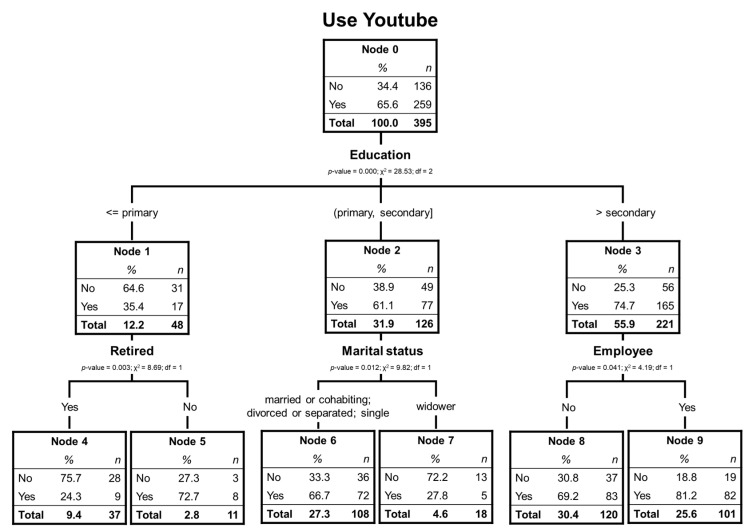
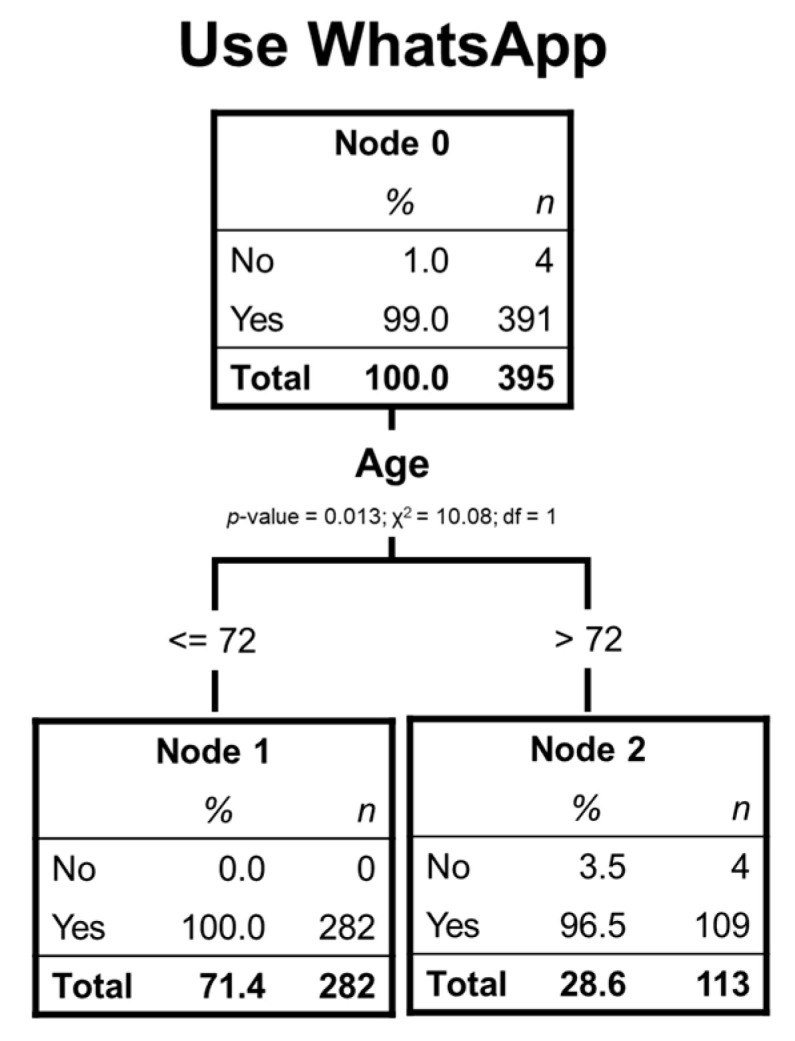
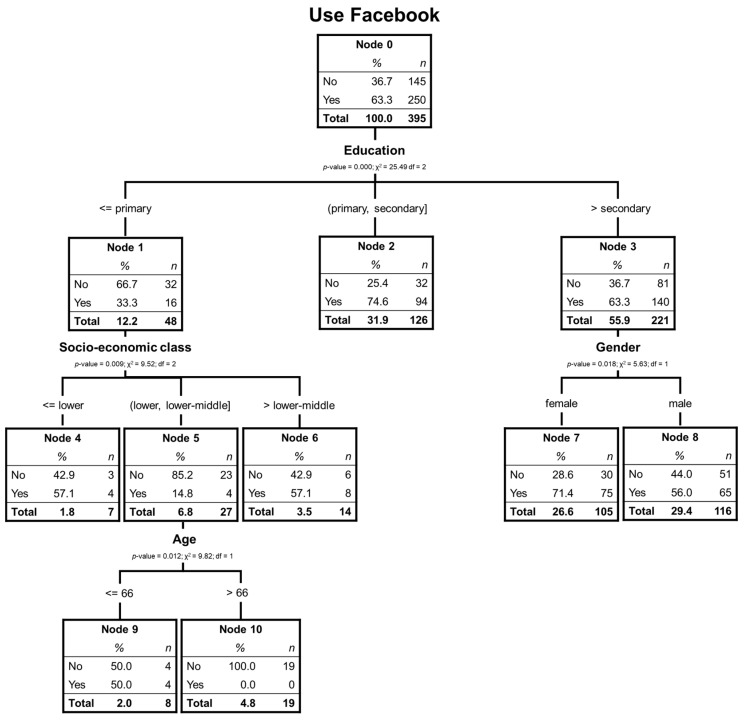
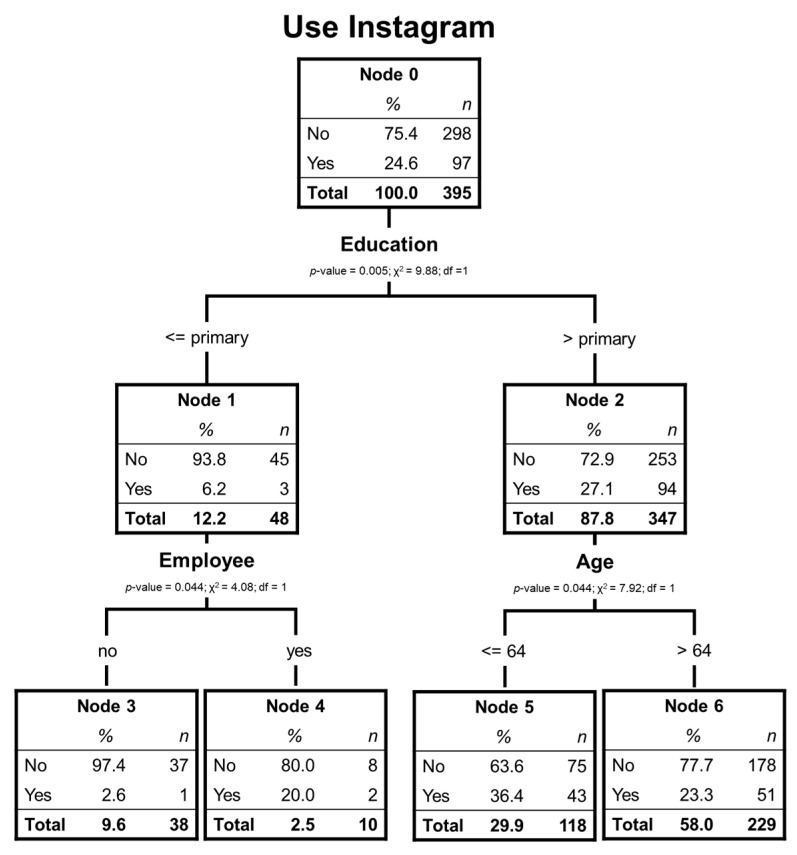
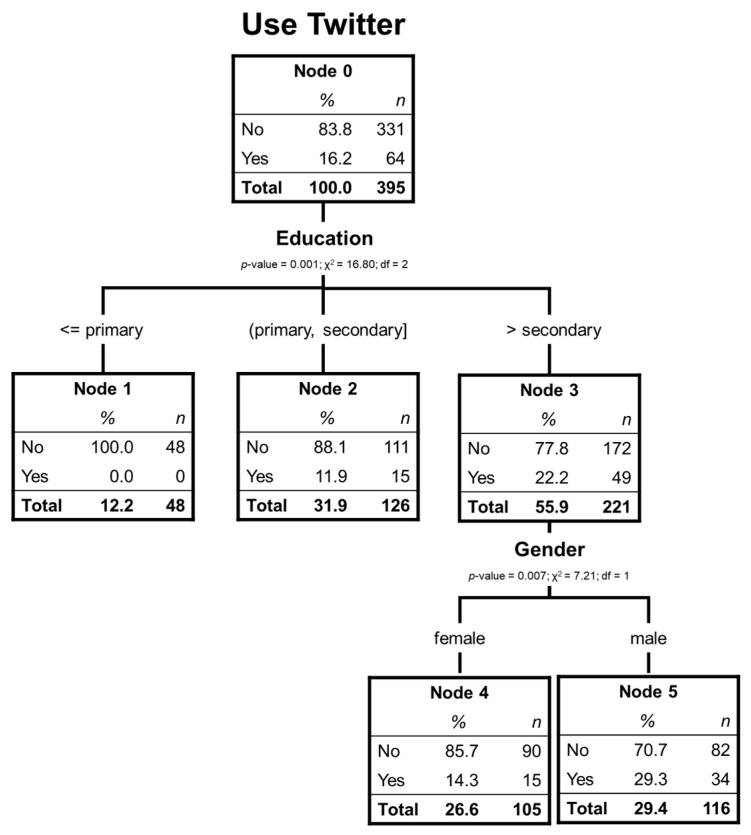
The growth of older adults in new regions poses challenges for public health. We know that these seniors live increasingly alone, and this impairs their health and general wellbeing. Studies suggest that social networking sites (SNS) can reduce isolation, improve social participation, and increase autonomy. However, there is a lack of knowledge about the characteristics of older adult users of SNS in these new territories. Without this information, it is not possible to improve the adoption of SNS in this population. Based on decision trees, this study analyzes how the elderly users of various SNS in Chile are like. For this purpose, a segmentation of the different groups of elderly users of social networks was constructed, and the most discriminating variables concerning the use of these applications were classified. The results highlight the existence of considerable differences between the various social networks analyzed in their use and characterization. Educational level is the most discriminating variable, and gender influences the types of SNS use. In general, it is observed that the higher the educational level, the more the different social networking sites are used.
新地区老年人的增长给公共卫生带来了挑战。我们知道,这些老年人越来越独居,这损害了他们的健康和整体幸福感。研究表明,社交网站 (SNS) 可以减少孤立感,提高社交参与度,并增强自主性。然而,我们对这些新领域中 SNS 的老年用户特征知之甚少。没有这些信息,就不可能改善该人群对 SNS 的采用。本研究基于决策树分析了智利各种 SNS 的老年用户有何特点。为此,构建了社交网络中不同老年用户群体的细分,并对与这些应用程序使用相关的最具辨别力的变量进行了分类。结果突出了分析的各种社交网络在使用和特征方面存在相当大的差异。教育水平是最具辨别力的变量,性别影响 SNS 的使用类型。总的来说,观察到教育水平越高,不同的社交网络网站使用得越多。