Wang Yongfen, Zhang Zhen, Yang Pengkun, Zhang Miaorui, Xi Lei, Liu Qiong, Li Jingang
College of Life Sciences, National Engineering Laboratory for Resource Development of Endangered Crude Drugs in Northwest China, Shaanxi Normal University, Xi'an, China.
College of Food and Biology Engineering, Henan University of Animal Husbandry and Economy, Zhengzhou, Henan, China.
PeerJ. 2020 Aug 3;8:e9638. doi: 10.7717/peerj.9638. eCollection 2020.
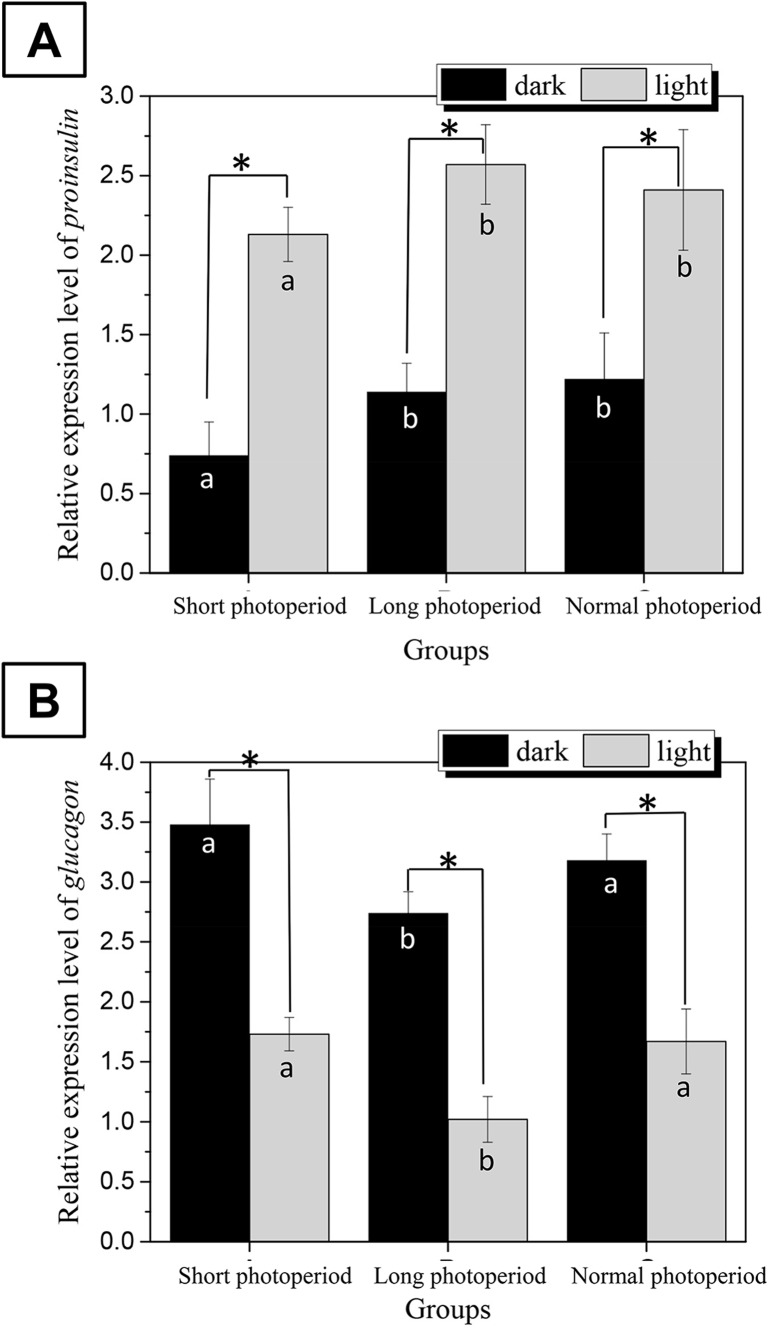
The circadian rhythms associated with light have important effects on the growth, metabolism, immunity and reproduction of broilers. However, there is a lack of systematic evaluations of the effect of the light cycle on intestinal microbes and the nutritional metabolism of these microbes in broilers. This study was designed to study the effects of the light cycle on the intestinal bacterial community structure and growth of broilers. In this study, Arbor Acre (AA) broilers were fed under a short photoperiod (1L:23D), a long photoperiod (23L:1D), and a normal photoperiod (16L:8D), respectively. The feed conversion ratio of the broilers was calculated, and the levels of endocrine hormones, such as melatonin, insulin and glucagon, were determined. Intestinal contents were collected from the small intestines of the broilers after slaughtering, and the V3+V4 region of the 16s rDNA gene was sequenced. The results demonstrated that changes in the light cycle could affect the synthetic rhythms of melatonin, insulin and glucagon. Compared to short and normal photoperiod, long photoperiod significantly increased the abundances of species in intestinal microbes and decreased the abundances of and species. Cluster of Orthologous Groups of proteins analysis indicated that prolongation of the illumination increased the abundances of bacterial genes with glycometabolic and membrane transport functions in intestinal microorganisms. A model was established in this study, and our results showed that prolonged illumination altered the intestinal microbial community structures of broilers, increased the absorption and utilization of polysaccharides in broilers, and reduced the feed-to-meat ratios. To the best of our knowledge, this is also the first study to describe the molecular mechanism underlying the effects of the light cycle on the uptake and utilization of nutrients that occur via modification of the intestinal microbial community structure in broilers.
与光照相关的昼夜节律对肉鸡的生长、代谢、免疫和繁殖具有重要影响。然而,目前缺乏对光照周期对肉鸡肠道微生物及其营养代谢影响的系统评估。本研究旨在探讨光照周期对肉鸡肠道细菌群落结构和生长的影响。在本研究中,分别将艾拔益加(AA)肉鸡饲养在短光照周期(1L:23D)、长光照周期(23L:1D)和正常光照周期(16L:8D)条件下。计算肉鸡的饲料转化率,并测定褪黑素、胰岛素和胰高血糖素等内分泌激素水平。屠宰后从肉鸡小肠收集肠内容物,对16s rDNA基因的V3+V4区域进行测序。结果表明,光照周期的变化会影响褪黑素、胰岛素和胰高血糖素的合成节律。与短光照周期和正常光照周期相比,长光照周期显著增加了肠道微生物中某些物种的丰度,同时降低了另外某些物种的丰度。直系同源蛋白簇分析表明,延长光照时间会增加肠道微生物中具有糖代谢和膜转运功能的细菌基因丰度。本研究建立了一个模型,结果显示延长光照会改变肉鸡的肠道微生物群落结构,增加肉鸡对多糖的吸收和利用,并降低料肉比。据我们所知,这也是首次描述光照周期通过改变肉鸡肠道微生物群落结构影响营养物质摄取和利用的分子机制的研究。