Kang Seok Mun, Kim Duho, Lee Kug-Seung, Kim Min-Seob, Jin Aihua, Park Jae-Hyuk, Ahn Chi-Yeong, Jeon Tae-Yeol, Jung Young Hwa, Yu Seung-Ho, Mun Junyoung, Sung Yung-Eun
Center for Nanoparticle Research Institute for Basic Science (IBS) Seoul 08826 Republic of Korea.
School of Chemical and Biological Engineering Seoul National University (SNU) Seoul 08826 Republic of Korea.
Adv Sci (Weinh). 2020 Jul 2;7(16):2001263. doi: 10.1002/advs.202001263. eCollection 2020 Aug.
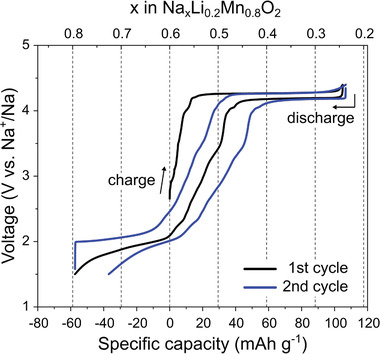
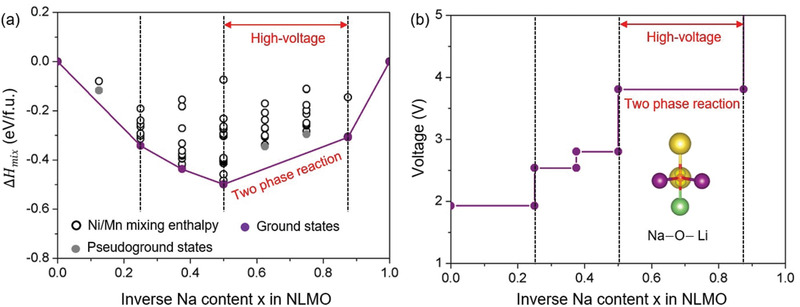
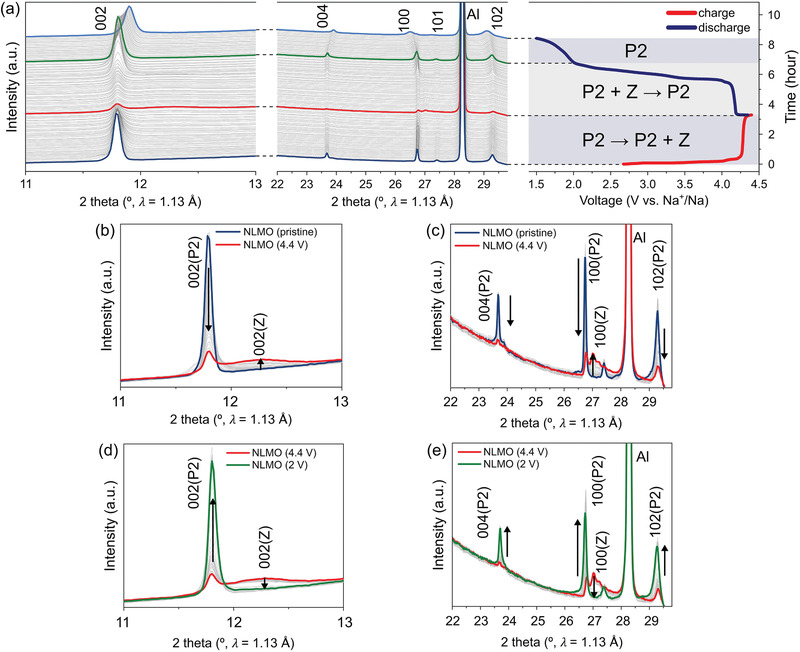
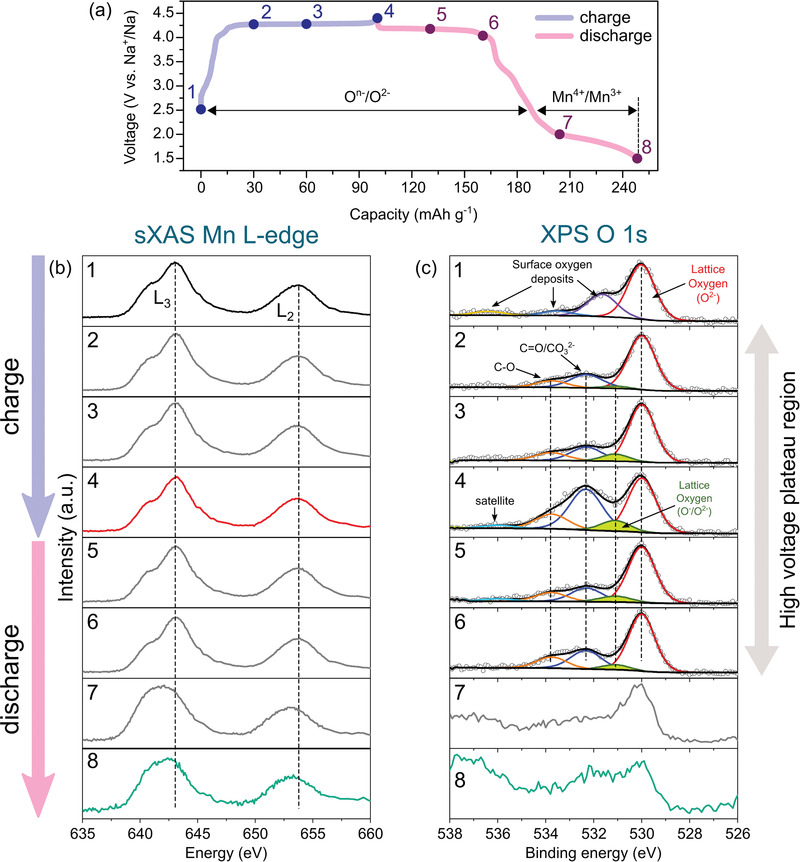
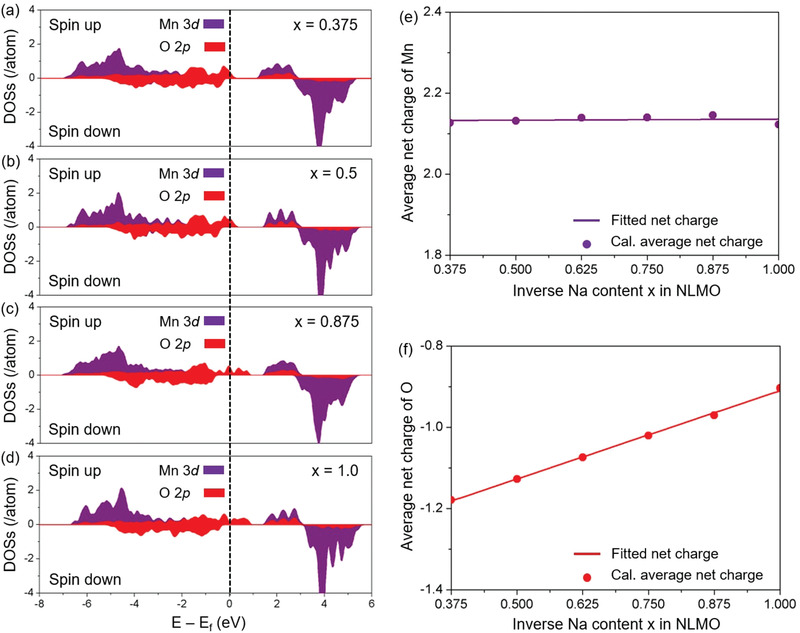
A breakthrough utilizing an anionic redox reaction (O/O) for charge compensation has led to the development of high-energy cathode materials in sodium-ion batteries. However, its reaction results in a large voltage hysteresis due to the structural degradation arising from an oxygen loss. Herein, an interesting P2-type Mn-based compound exhibits a distinct two-phase behavior preserving a high-potential anionic redox (≈4.2 V vs Na/Na) even during the subsequent cycling. Through a systematic series of experimental characterizations and theoretical calculations, the anionic redox reaction originating from O 2p-electron and the reversible unmixing of Na-rich and Na-poor phases are confirmed in detail. In light of the combined study, a critical role of the anion-redox-induced two-phase reaction in the positive-negative point of view is demonstrated, suggesting a rational design principle considering the phase separation and lattice mismatch. Furthermore, these results provide an exciting approach for utilizing the high-voltage feature in Mn-based layered cathode materials that are charge-compensated by an anionic redox reaction.
利用阴离子氧化还原反应(O/O)进行电荷补偿的突破,推动了钠离子电池中高能阴极材料的发展。然而,由于氧损失导致的结构退化,其反应会产生较大的电压滞后。在此,一种有趣的P2型锰基化合物表现出独特的两相行为,即使在随后的循环过程中也能保持高电位阴离子氧化还原(相对于Na/Na约为4.2 V)。通过一系列系统的实验表征和理论计算,详细证实了源自O 2p电子的阴离子氧化还原反应以及富钠相和贫钠相的可逆解混。根据综合研究,从正负两个角度证明了阴离子氧化还原诱导的两相反应的关键作用,这表明了一种考虑相分离和晶格失配的合理设计原则。此外,这些结果为利用基于锰的层状阴极材料中的高电压特性提供了一种令人兴奋的方法,该特性通过阴离子氧化还原反应进行电荷补偿。