Dong Yijie, Li Xiaohui, Duan Jiaqi, Qin Youcai, Yang Xiufen, Ren Jie, Li Guangyue
State Key Laboratory for Biology of Plant Diseases and Insect Pests/Key Laboratory of Control of Biological Hazard Factors (Plant Origin) for Agri-product Quality and Safety, Ministry of Agriculture, Institute of Plant Protection, Chinese Academy of Agricultural Sciences, Beijing 100081, People's Republic of China.
Guangdong Provincial Key Laboratory of Microbial Culture Collection and Application, State Key Laboratory of Applied Microbiology Southern China, Guangdong Institute of Microbiology, Guangdong Academy of Sciences, Guangzhou 510070, People's Republic of China.
ACS Omega. 2020 Aug 3;5(32):20391-20398. doi: 10.1021/acsomega.0c02357. eCollection 2020 Aug 18.
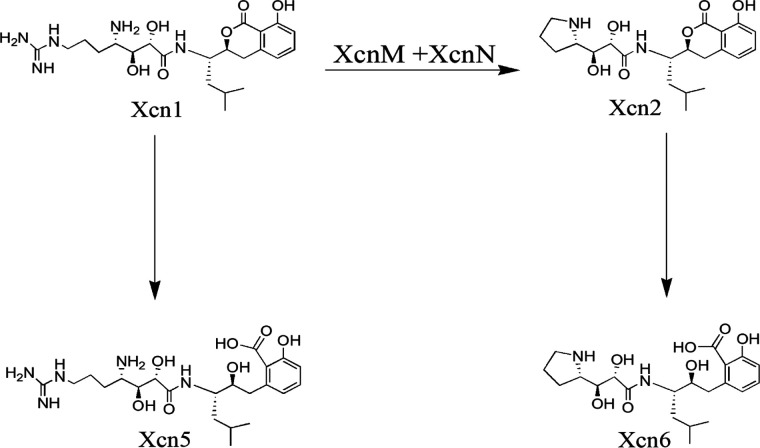
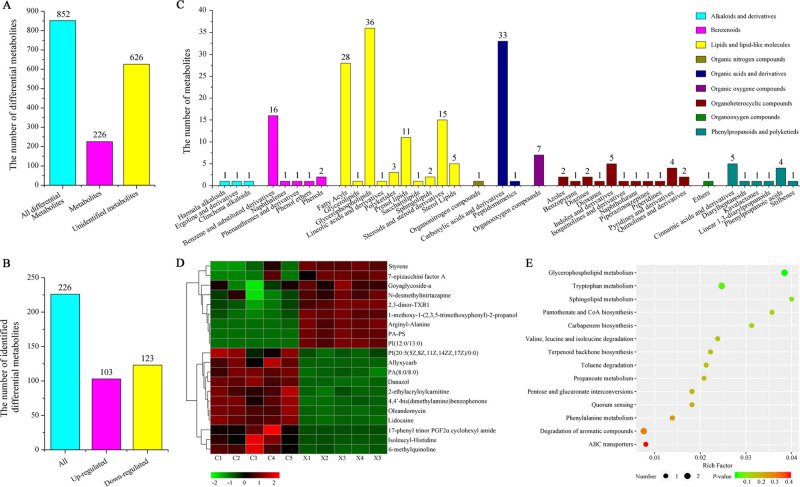
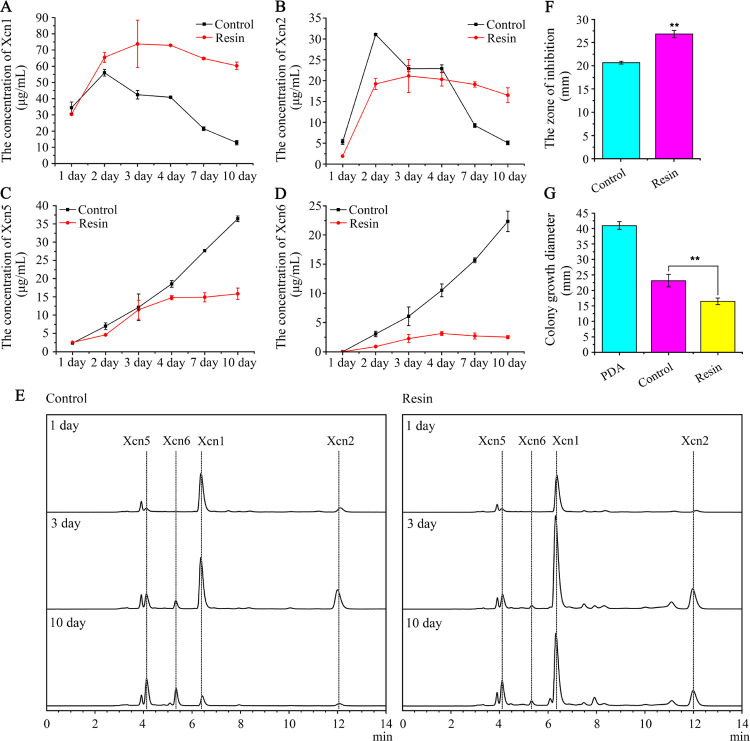
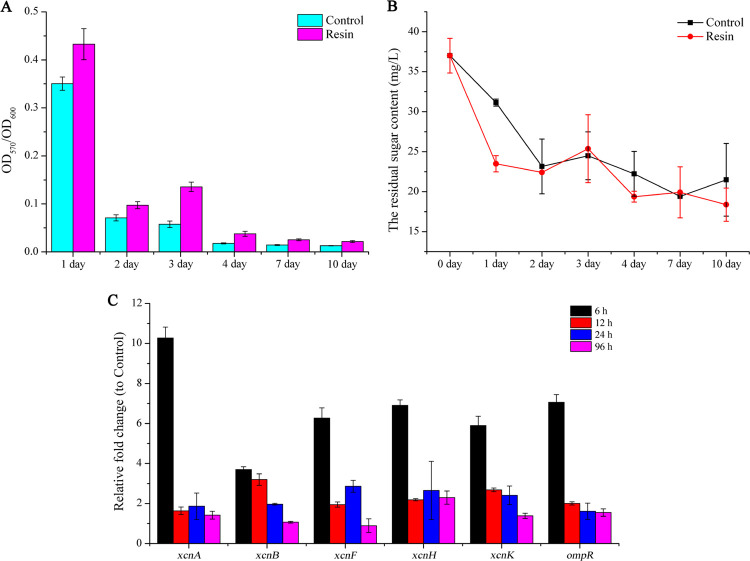
Xenocoumacin 1 (Xcn1), a major antimicrobial compound produced by CB6, has great potential to be developed into a novel biofungicide. However, its low yield in the producing cells has limited its possible commercial applications. In this study, we explored the effect of in situ product removal (ISPR), a well-established recovery technique, with the use of macroporous resin X-5 on the production of Xcn1 in a fermentation setting. Relative to the routine fermentation process, the yield of Xcn1 was improved from 42.5 to 73.8 μg/mL (1.7-fold) and 12.9 to 60.3 μg/mL (4.7-fold) in three and ten days, respectively. By agar diffusion plate and growth inhibition assays, the antibiotic activity against and was also found to be improved. Further study revealed that protection of Xcn1 against degradation and decrease in cell self-toxicity as well as upregulation of biosynthesis-related genes of Xcn1 at the transcription level contributed to yield improvement of Xcn1. In addition, resin X-5 significantly altered the metabolite profile of CB6, which could promote the discovery of new antibiotics.
异香豆素1(Xcn1)是CB6产生的一种主要抗菌化合物,具有开发成新型生物杀菌剂的巨大潜力。然而,其在产生细胞中的低产量限制了其可能的商业应用。在本研究中,我们探索了原位产物去除(ISPR)这一成熟的回收技术,使用大孔树脂X-5在发酵环境中对Xcn1生产的影响。相对于常规发酵过程,Xcn1的产量在三天内从42.5 μg/mL提高到73.8 μg/mL(1.7倍),在十天内从12.9 μg/mL提高到60.3 μg/mL(4.7倍)。通过琼脂扩散平板法和生长抑制试验,还发现其对[具体对象1]和[具体对象2]的抗菌活性有所提高。进一步研究表明,保护Xcn1不被降解、降低细胞自身毒性以及在转录水平上调Xcn1生物合成相关基因有助于提高Xcn1的产量。此外,树脂X-5显著改变了CB6的代谢产物谱,这可能促进新抗生素的发现。