
面向韧性未来的粮食系统。
Food systems for resilient futures.
作者信息
Kahiluoto Helena
机构信息
Sustainability Science, LUT University, Mukkulankatu 19, 15210 Lahti, Finland.
出版信息
Food Secur. 2020;12(4):853-857. doi: 10.1007/s12571-020-01070-7. Epub 2020 Jul 10.
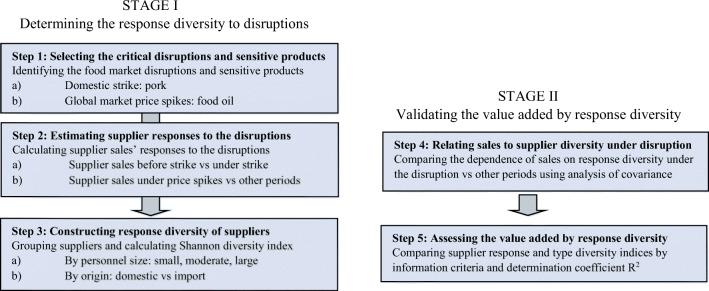
In this time of the pandemic, nothing is as it used to be. This change creates space for new narratives towards resilience. The resilience perspective implies preparing for shocks as well as various futures that might evolve. Thus, more sustainable food systems cannot only be built to be pandemic proof. This preparation can be facilitated by co-designing contrasting future narratives, identifying means for developing capacity to adapt to those futures and developing tools to enhance that capacity, such as demonstrated here. The capacity of food systems to adapt and transform is enhanced by dialogue, transparency and collective learning in food value chains and networks, sovereignty over resources, and built-in diversity in response to change. In market-led global food chains, supplier-buyer diversity is important, while in public-led regions with some market protection, farm and crop diversity might matter more in response to variability in weather, price and policies. During, for example, an international conflict, or the time of a pandemic, diverse food sourcing from local producer-consumer cooperatives to community-supported and urban agriculture could secure food for citizens. Assessments of critical diversity in response to shocks and volatility can help actors to tailor effective diversity to manage resilience while avoiding the long-feared trade-off between diversity and resource-use efficiency. The interdependence of humanity deserves attention, as food systems are only as resilient as their weakest actor. A truly resilient global food system implies not only preparedness for coming shocks and changes but also a foundation that makes shocks less probable and critical.
在疫情肆虐的当下,一切都已今非昔比。这种变化为有关恢复力的新叙事创造了空间。恢复力视角意味着要为冲击以及可能演变出的各种未来状况做好准备。因此,更具可持续性的粮食系统不能仅仅建成能抵御疫情的系统。通过共同设计不同的未来叙事、确定发展适应这些未来状况能力的方法以及开发增强这种能力的工具(如此处所示),可以推动这种准备工作。粮食系统的适应和转型能力可通过粮食价值链和网络中的对话、透明度和集体学习、对资源的主权以及应对变化时的内在多样性得到增强。在以市场为主导的全球粮食链中,供应商与买家的多样性很重要,而在有一定市场保护的公共主导地区,农场和作物的多样性对于应对天气、价格和政策的变化可能更为重要。例如,在国际冲突期间或疫情期间,从当地生产者 - 消费者合作社到社区支持农业和都市农业的多样化粮食采购可为公民确保粮食供应。评估应对冲击和波动的关键多样性有助于行为体调整有效的多样性以管理恢复力,同时避免长期以来人们所担忧的多样性与资源利用效率之间的权衡。人类的相互依存值得关注,因为粮食系统的恢复力仅取决于其最薄弱的环节。一个真正具有恢复力的全球粮食系统不仅意味着为即将到来的冲击和变化做好准备,还意味着要有一个能降低冲击可能性和严重性的基础。
 Zotero 插件