Centre for Global Child Health, Hospital for Sick Children, Toronto, Ontario, Canada.
Dalla Lana School of Public Health, University of Toronto, Toronto, Ontario, Canada.
Am J Clin Nutr. 2020 Sep 14;112(Suppl 2):875S-893S. doi: 10.1093/ajcn/nqaa163.
Chronic undernutrition in children continues to be a global public health concern. Ethiopia has documented a significant decline in the prevalence of childhood stunting, a measure of chronic undernutrition, over the last 20 y.
The aim of this research was to conduct a systematic assessment of the determinants that have driven child stunting reduction in Ethiopia from 2000 to 2016, focused on the national, community, household, and individual level.
This study employed both quantitative and qualitative methods. Specifically, a systematic literature review, retrospective quantitative data analysis using Demographic and Health Surveys from 2000-2016, qualitative data collection and analysis, and analyses of key nutrition-specific and -sensitive policies and programs were undertaken.
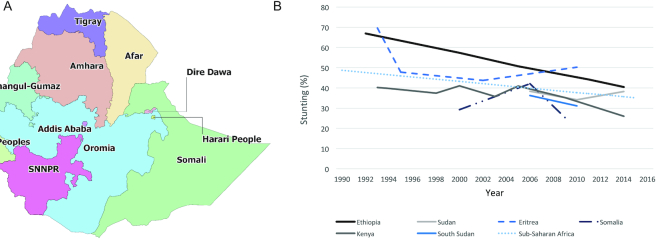
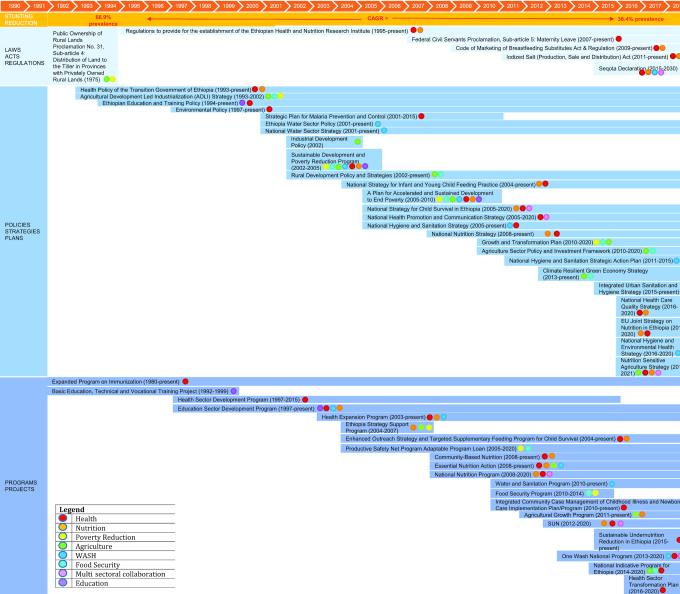
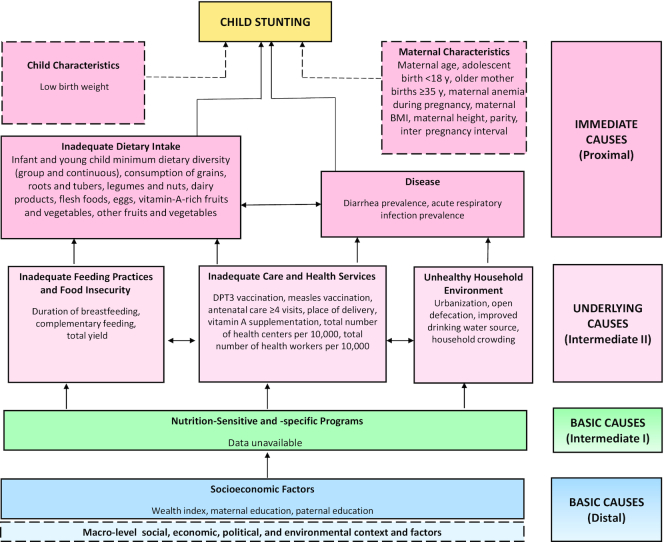
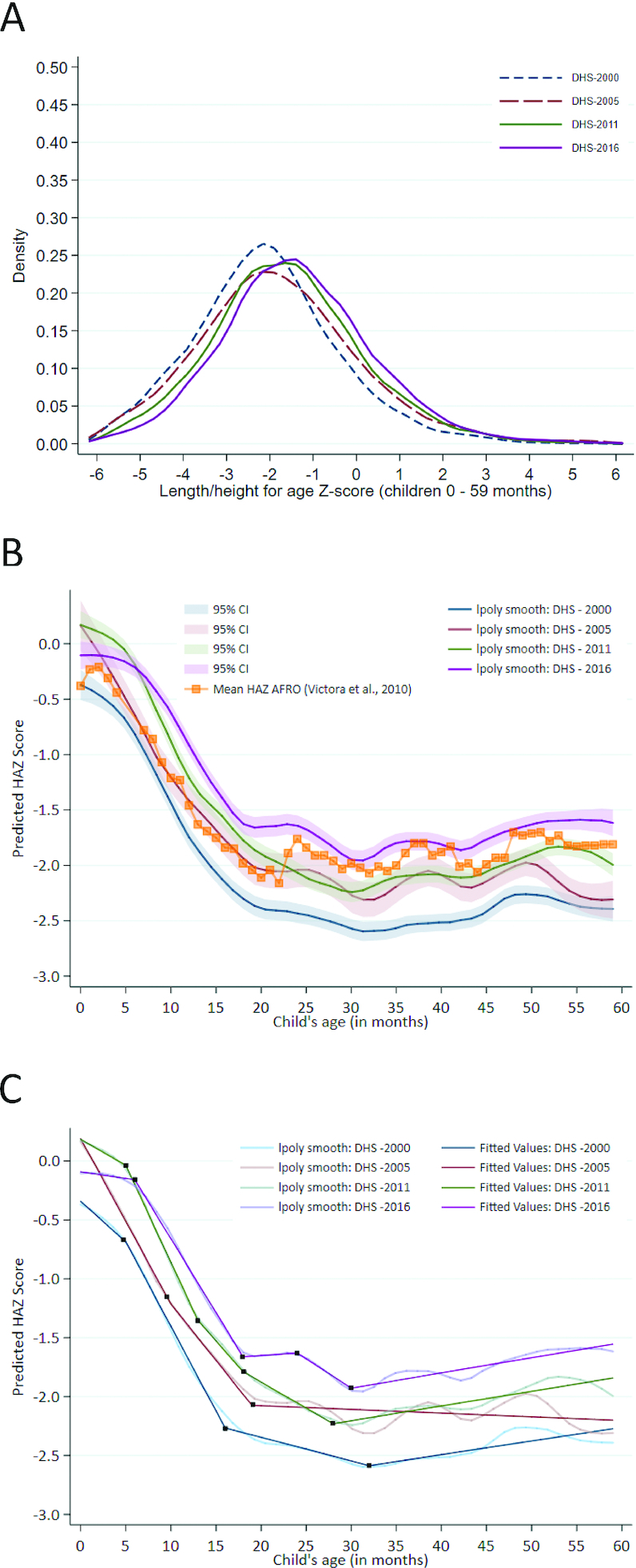
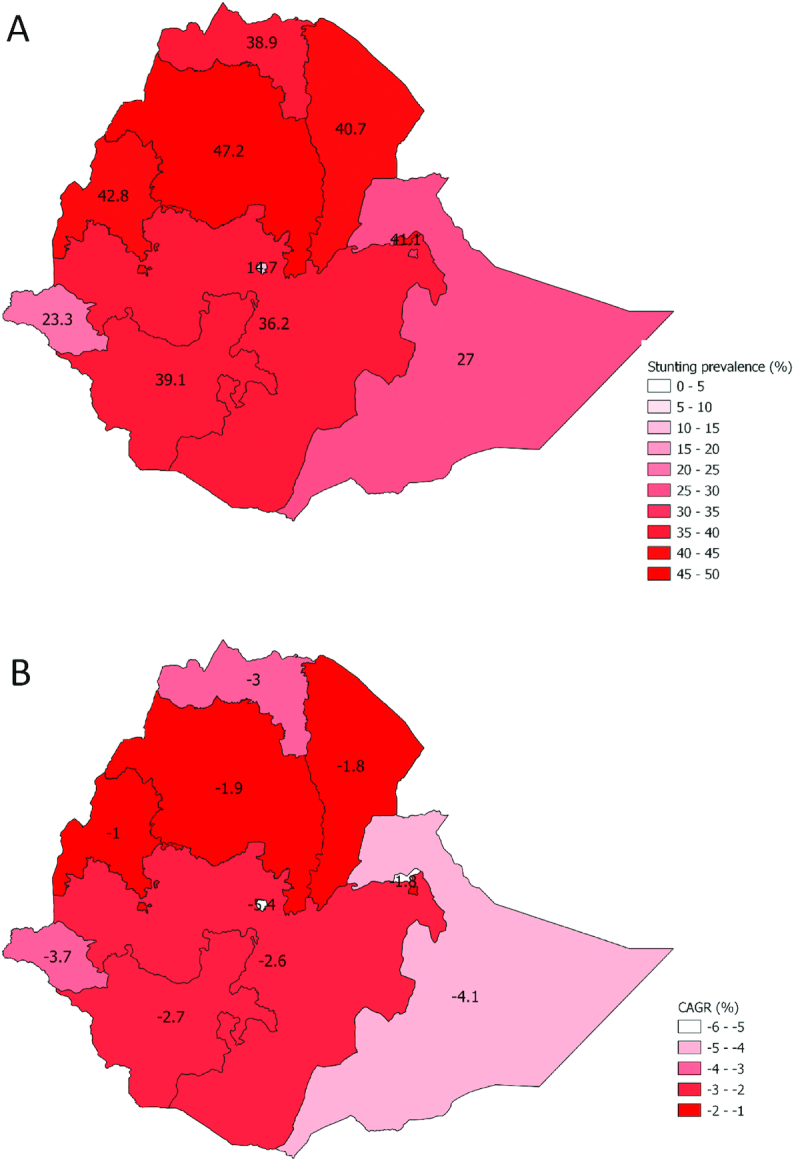
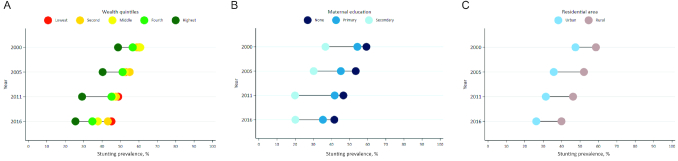
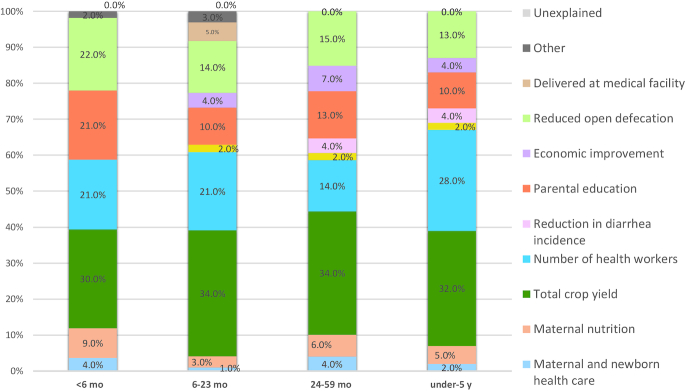
National stunting prevalence improved from 51% in 2000 to 32% in 2016. Regional variations exist, as do pro-rich, pro-urban, and pro-educated inequalities. Child height-for-age z score (HAZ) decomposition explained >100% of predicted change in mean HAZ between 2000 and 2016, with key factors including increases in total consumable crop yield (32% of change), increased number of health workers (28%), reduction in open defecation (13%), parental education (10%), maternal nutrition (5%), economic improvement (4%), and reduced diarrhea incidence (4%). Policies and programs that were key to stunting decline focused on promoting rural agriculture to improve food security; decentralization of the health system, incorporating health extension workers to improve rural access to health services and reduce open defecation; multisectoral poverty reduction strategies; and a commitment to improving girls' education. Interviews with national and regional stakeholders and mothers in communities presented improvements in health service access, women and girls' education, improved agricultural production, and improved sanitation and child care practices as drivers of stunting reduction.
Ethiopia's stunting decline was driven by both nutrition-specific and -sensitive sectors, with particular focus on the agriculture sector, health care access, sanitation, and education.
儿童慢性营养不良仍然是全球公共卫生关注的一个问题。埃塞俄比亚在过去 20 年中记录到儿童发育迟缓(衡量慢性营养不良的一个指标)的流行率显著下降。
本研究旨在对 2000 年至 2016 年期间推动埃塞俄比亚儿童发育迟缓减少的决定因素进行系统评估,重点关注国家、社区、家庭和个人层面。
本研究采用了定量和定性方法。具体来说,进行了系统的文献综述、使用 2000-2016 年人口与健康调查的回顾性定量数据分析、定性数据收集和分析,以及对关键营养特定和敏感政策和计划的分析。
全国发育迟缓患病率从 2000 年的 51%改善至 2016 年的 32%。存在区域差异,以及对富裕、城市和受过教育的不平等现象。儿童身高年龄 z 分数(HAZ)分解解释了 2000 年至 2016 年间平均 HAZ 变化的>100%,关键因素包括总可食用作物产量的增加(变化的 32%)、卫生工作者人数的增加(28%)、露天排便的减少(13%)、父母教育(10%)、孕产妇营养(5%)、经济改善(4%)和腹泻发病率降低(4%)。对发育迟缓下降至关重要的政策和计划侧重于促进农村农业以改善粮食安全;卫生系统权力下放,纳入卫生推广人员,以改善农村获得卫生服务和减少露天排便;多部门减贫战略;以及承诺改善女孩教育。对国家和地区利益相关者以及社区中的母亲进行的访谈表明,卫生服务可及性、妇女和女孩教育、农业生产的改善以及卫生和儿童保育做法的改善是减少发育迟缓的驱动因素。
埃塞俄比亚的发育迟缓下降是由营养特定和敏感部门推动的,特别侧重于农业部门、医疗保健获取、环境卫生和教育。