The George Institute for Global Health, UNSW Sydney, PO Box M201, Missenden Rd, Sydney, NSW, 2050, Australia.
Faculty of Medicine and Health, the University of Sydney, Sydney, NSW, Australia.
BMC Public Health. 2020 Aug 26;20(1):1294. doi: 10.1186/s12889-020-09391-0.
Mild to moderate road traffic injury (RTI) in people of working age is associated with limited recovery. Less is known about RTI recovery in older age. This study explored the perspectives and factors associated with recovery and health-related quality of life following mild to moderate RTI in older age in New South Wales, Australia.
A qualitative study using content analysis was undertaken. Participants aged 65 or more years were purposively selected from a larger inception cohort study of health outcomes following mild to moderate RTI conducted in New South Wales, Australia. Semi-structured interviews were undertaken at approximately 12 or 24 months post-injury. Content analysis was used to code and analyse the data, with methodological rigour obtained by double-coding and discussing findings to reach consensus. Results were reported using the consolidated criteria for reporting qualitative research (COREQ).
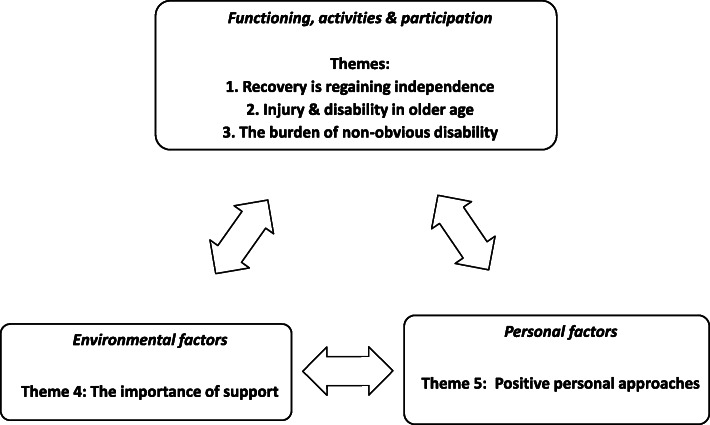
Nineteen participants were invited to participate in the study of which 12 completed interviews. Data saturation was reached at the twelfth interview. Recovery experiences were diverse. Five main themes were identified: recovery is regaining independence; injury and disability in older age; the burden of non-obvious disability; the importance of support; and positive personal approaches. Key facilitators of recovery were: regaining independence; support from family and friends; and positive personal approaches. Key barriers were: threats to independence; passive coping behaviours; non-obvious disabilities (chronic pain, psychological impacts); and reluctance to raise ongoing issues with General Practitioners. Threats to independence, especially not driving and self-care, appeared to have a more profound effect on recovery than physical functioning.
Older people view injury as a threat to independent functioning. This is somewhat different to what younger people report. Regaining independence is key to older people's recovery and health-related quality of life following RTI, and should be a key consideration for health professionals, services and supports working with this unique cohort. Greater efforts to help older people regain their independence following RTI are needed and can be facilitated by health professionals and appropriate service provision.
Australia New Zealand clinical trial registry identification number ACTRN12613000889752 .
在工作年龄段的人发生轻度至中度道路交通伤害(RTI)与恢复受限有关。对于老年人发生 RTI 后的恢复情况,人们知之甚少。本研究在澳大利亚新南威尔士州探索了老年人发生轻度至中度 RTI 后与恢复和健康相关的生活质量相关的观点和因素。
采用内容分析法进行了一项定性研究。从澳大利亚新南威尔士州一项关于轻度至中度 RTI 后健康结果的更大初始队列研究中,有目的地选择了年龄在 65 岁或以上的参与者。在受伤后约 12 或 24 个月进行了半结构化访谈。采用内容分析法对数据进行编码和分析,并通过双编码和讨论研究结果以达成共识来获得方法学严谨性。使用定性研究报告的统一标准(COREQ)报告结果。
邀请了 19 名参与者参加本研究,其中 12 名完成了访谈。在第十二次访谈时达到了数据饱和。恢复经验各不相同。确定了五个主要主题:恢复是重新获得独立性;老年人的伤害和残疾;非明显残疾的负担;支持的重要性;以及积极的个人方法。恢复的主要促进因素是:重新获得独立性;来自家人和朋友的支持;以及积极的个人方法。主要障碍是:独立性受到威胁;被动应对行为;非明显残疾(慢性疼痛、心理影响);以及不愿向全科医生提出持续存在的问题。独立性受到威胁,特别是无法驾驶和自理,似乎对老年人的恢复和 RTI 后的健康相关生活质量产生了比身体功能更深远的影响。
老年人将伤害视为独立功能的威胁。这与年轻人的报告有所不同。对于老年人来说,重新获得独立性是其 RTI 后恢复和健康相关生活质量的关键,应成为从事这一独特人群工作的卫生专业人员、服务和支持的主要考虑因素。需要做出更大的努力来帮助老年人在 RTI 后重新获得独立性,卫生专业人员和适当的服务提供可以为此提供便利。
澳大利亚新西兰临床试验注册中心注册号 ACTRN12613000889752 。