Dickens Alex M, Borgan Faith, Laurikainen Heikki, Lamichhane Santosh, Marques Tiago, Rönkkö Tuukka, Veronese Mattia, Lindeman Tuomas, Hyötyläinen Tuulia, Howes Oliver, Hietala Jarmo, Orešič Matej
Turku Bioscience Centre, University of Turku and Åbo Akademi University, Turku, Finland.
Department of Psychosis Studies, Institute of Psychiatry, Psychology & Neuroscience, King's College London, London, WC2R 2LS, UK.
NPJ Schizophr. 2020 Aug 26;6(1):21. doi: 10.1038/s41537-020-00110-7.
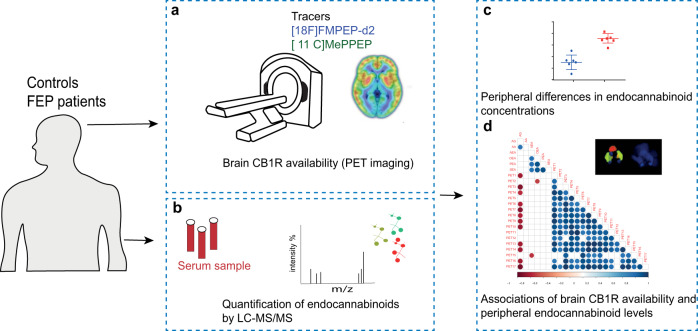
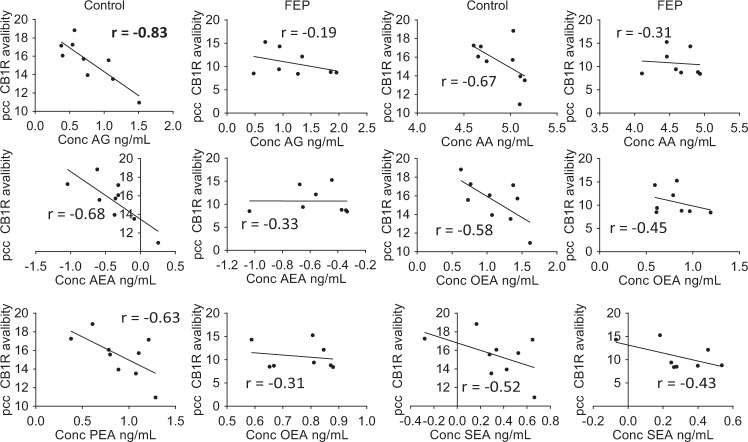
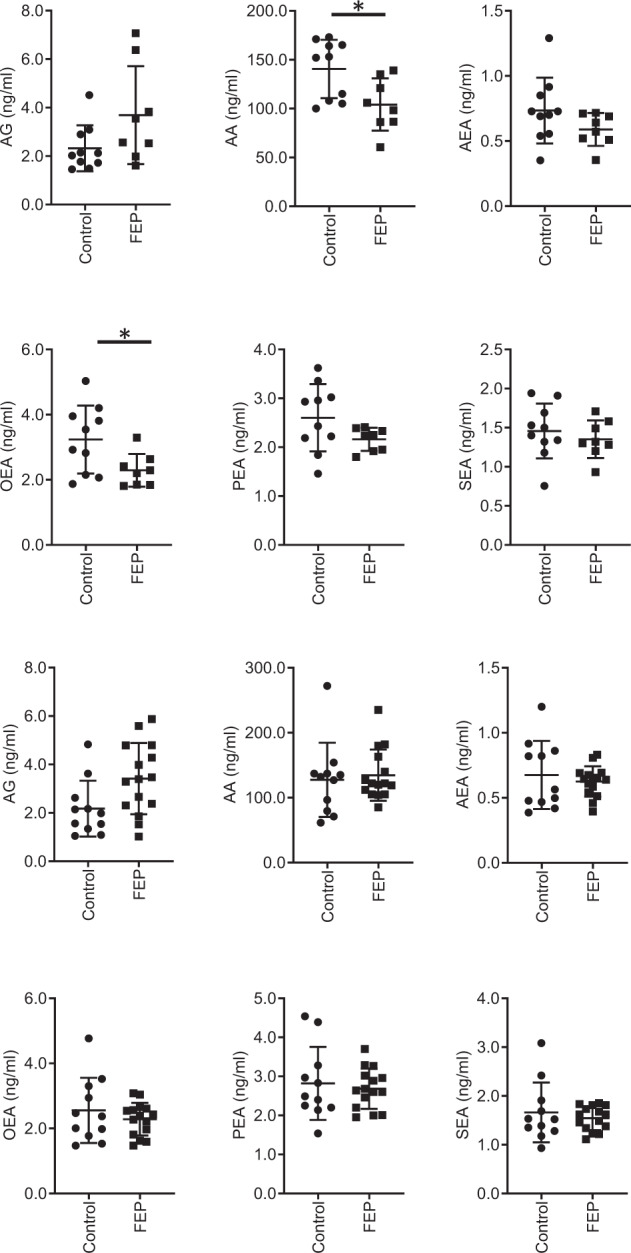
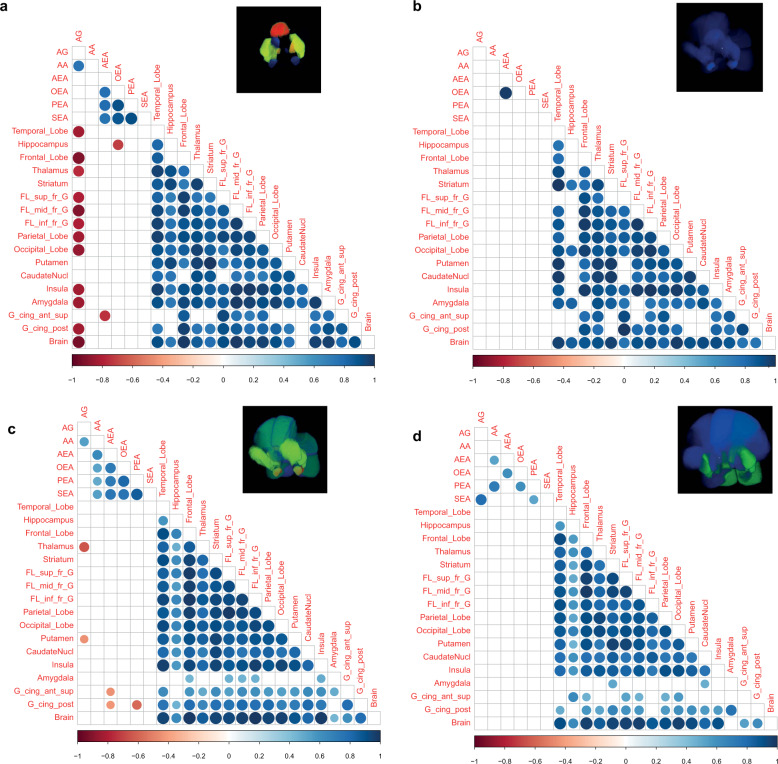
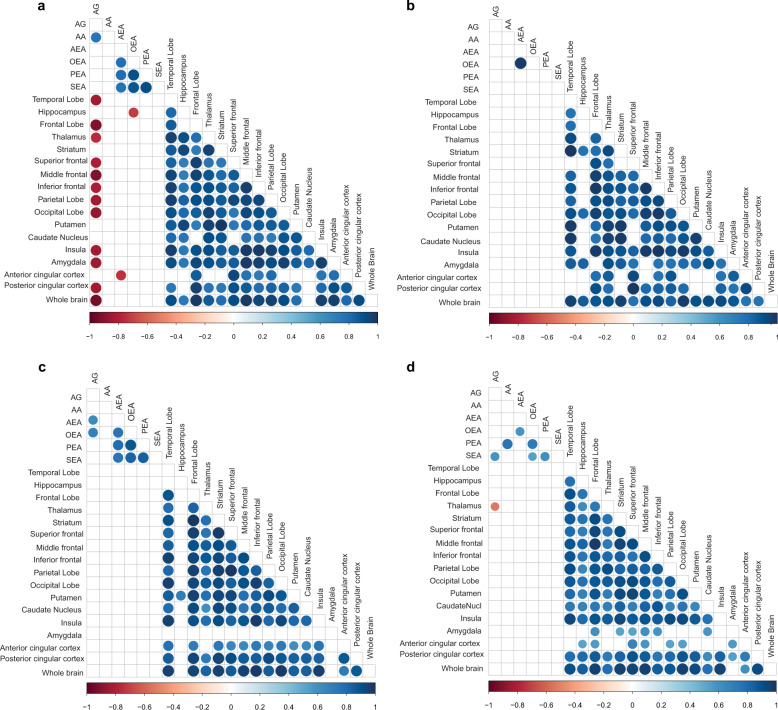
There is an established, link between psychosis and metabolic abnormalities, such as altered glucose metabolism and dyslipidemia, which often precede the initiation of antipsychotic treatment. It is known that obesity-associated metabolic disorders are promoted by activation of specific cannabinoid targets (endocannabinoid system (ECS)). Our recent data suggest that there is a change in the circulating lipidome at the onset of first episode psychosis (FEP). With the aim of characterizing the involvement of the central and peripheral ECSs, and their mutual associations; here, we performed a combined neuroimaging and metabolomic study in patients with FEP and healthy controls (HC). Regional brain cannabinoid receptor type 1 (CB1R) availability was quantified in two, independent samples of patients with FEP (n = 20 and n = 8) and HC (n = 20 and n = 10), by applying three-dimensional positron emission tomography, using two radiotracers, [C]MePPEP and [F]FMPEP-d2. Ten endogenous cannabinoids or related metabolites were quantified in serum, drawn from these individuals during the same imaging session. Circulating levels of arachidonic acid and oleoylethanolamide (OEA) were reduced in FEP individuals, but not in those who were predominantly medication free. In HC, there was an inverse association between levels of circulating arachidonoyl glycerol, anandamide, OEA, and palmitoyl ethanolamide, and CB1R availability in the posterior cingulate cortex. This phenomenon was, however, not observed in FEP patients. Our data thus provide evidence of cross talk, and dysregulation between peripheral endocannabinoids and central CB1R availability in FEP.
精神病与代谢异常之间存在既定的联系,如葡萄糖代谢改变和血脂异常,这些异常往往在抗精神病药物治疗开始之前就已出现。已知肥胖相关的代谢紊乱是由特定大麻素靶点(内源性大麻素系统(ECS))的激活所促进的。我们最近的数据表明,首发精神病(FEP)发作时循环脂质组会发生变化。为了确定中枢和外周ECS的参与情况及其相互关联;在此,我们对FEP患者和健康对照(HC)进行了一项联合神经影像学和代谢组学研究。通过应用三维正电子发射断层扫描,使用两种放射性示踪剂[C]MePPEP和[F]FMPEP-d2,在两个独立的FEP患者样本(n = 20和n = 8)和HC样本(n = 20和n = 10)中对脑内1型大麻素受体(CB1R)的区域可用性进行了量化。在同一成像过程中从这些个体采集的血清中对10种内源性大麻素或相关代谢物进行了量化。FEP个体中花生四烯酸和油酰乙醇胺(OEA)的循环水平降低,但在主要未用药的个体中未降低。在HC中,循环花生四烯酰甘油、花生四烯乙醇胺、OEA和棕榈酰乙醇胺的水平与后扣带回皮质中CB1R的可用性之间存在负相关。然而,在FEP患者中未观察到这种现象。因此,我们的数据提供了FEP中外周内源性大麻素与中枢CB1R可用性之间相互作用和失调的证据。