School of Physical Sciences, Dublin City University, Dublin 9, Ireland.
Cancer Research UK/MRC Oxford Institute for Radiation Oncology, Gray Laboratory, University of Oxford, Old Road Campus Research Building, Off Roosevelt Drive, Oxford, OX3 7DQ, UK.
Br J Cancer. 2020 Nov;123(10):1562-1569. doi: 10.1038/s41416-020-1021-5. Epub 2020 Aug 27.
Tumour hypoxia is associated with metastatic disease, and while there have been many mechanisms proposed for why tumour hypoxia is associated with metastatic disease, it remains unclear whether one precise mechanism is the key reason or several in concert. Somatic evolution drives cancer progression and treatment resistance, fuelled not only by genetic and epigenetic mutation but also by selection from interactions between tumour cells, normal cells and physical micro-environment. Ecological habitats influence evolutionary dynamics, but the impact on tempo of evolution is less clear.
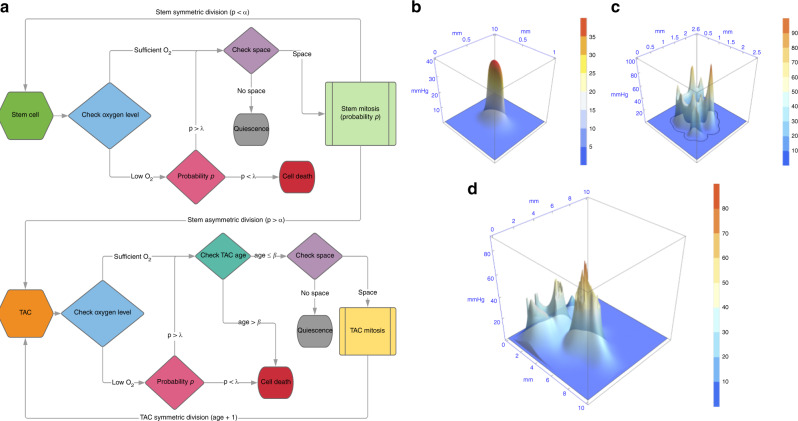
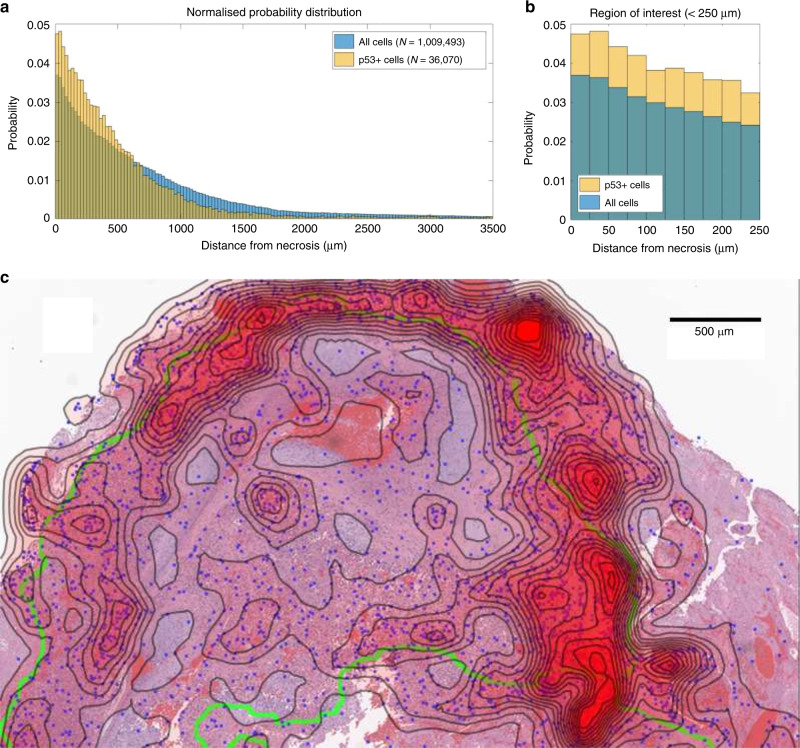
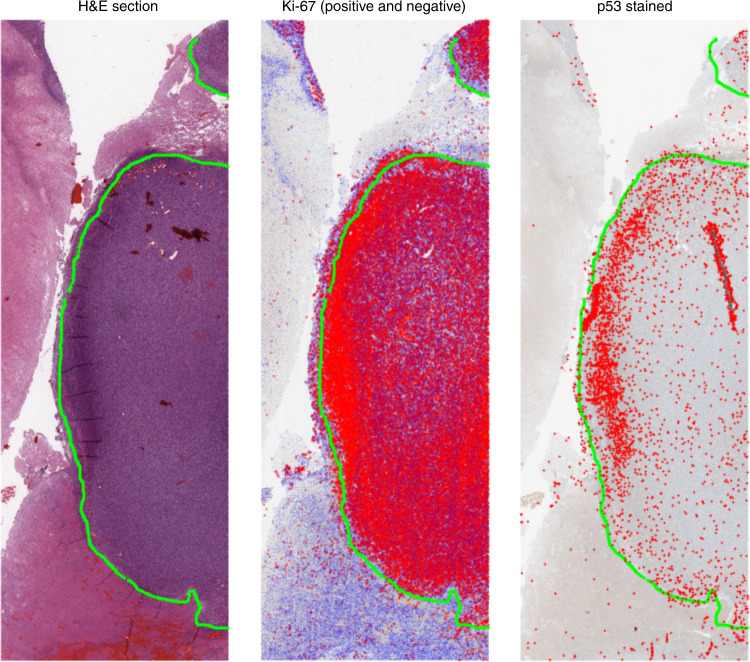
We explored this complex dialogue with a combined clinical-theoretical approach by simulating a proliferative hierarchy under heterogeneous oxygen availability with an agent-based model. Predictions were compared against histology samples taken from glioblastoma patients, stained to elucidate areas of necrosis and TP53 expression heterogeneity.
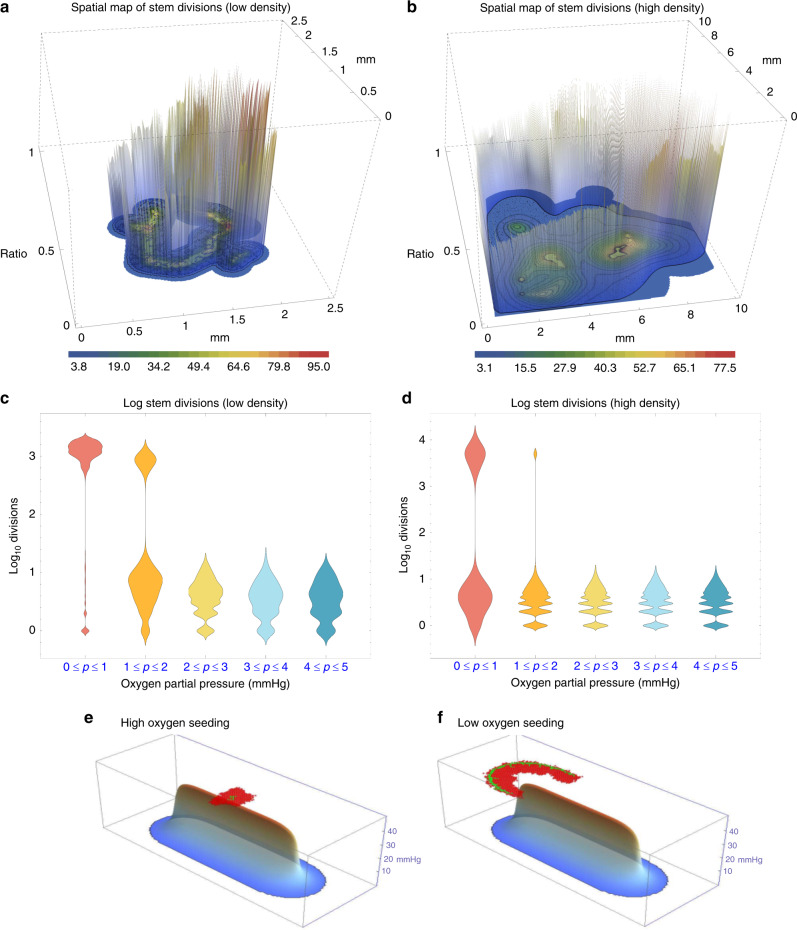
Results indicate that cell division in hypoxic environments is effectively upregulated, with low-oxygen niches providing avenues for tumour cells to spread. Analysis of human data indicates that cell division is not decreased under hypoxia, consistent with our results.
Our results suggest that hypoxia could be a crucible that effectively warps evolutionary velocity, making key mutations more likely. Thus, key tumour ecological niches such as hypoxic regions may alter the evolutionary tempo, driving mutations fuelling tumour heterogeneity.
肿瘤缺氧与转移疾病有关,虽然已经提出了许多关于肿瘤缺氧与转移疾病相关的机制,但目前仍不清楚是否存在一个精确的机制是主要原因,还是几个机制共同作用的结果。体细胞进化推动癌症的进展和治疗耐药性,不仅受到遗传和表观遗传突变的驱动,还受到肿瘤细胞、正常细胞和物理微环境之间相互作用的选择的驱动。生态栖息地影响进化动态,但对进化速度的影响尚不明确。
我们通过使用基于代理的模型,模拟在异质氧气可用性下的增殖层次结构,结合临床理论方法来探索这种复杂的对话。预测结果与从胶质母细胞瘤患者中采集的组织学样本进行了比较,这些样本经过染色以阐明坏死区域和 TP53 表达异质性。
结果表明,在低氧环境中细胞分裂被有效上调,低氧小生境为肿瘤细胞的扩散提供了途径。对人类数据的分析表明,缺氧环境下细胞分裂并没有减少,这与我们的结果一致。
我们的结果表明,缺氧可能是一个有效地扭曲进化速度的坩埚,使关键突变更有可能发生。因此,关键的肿瘤生态小生境,如缺氧区域,可能会改变进化速度,推动促进肿瘤异质性的突变。