Zhou Xiang, Long Tao, Haas Gretchen L, Cai HuaLin, Yao Jeffrey K
Department of Pharmaceutical Sciences, University of Pittsburgh School of Pharmacy, Pittsburgh, PA, United States.
Medical Research Service and The VISN 4 Mental Illness Research, Education, and Clinical Center, VA Pittsburgh Healthcare System, Pittsburgh, PA, United States.
Front Neurosci. 2020 Jul 29;14:784. doi: 10.3389/fnins.2020.00784. eCollection 2020.
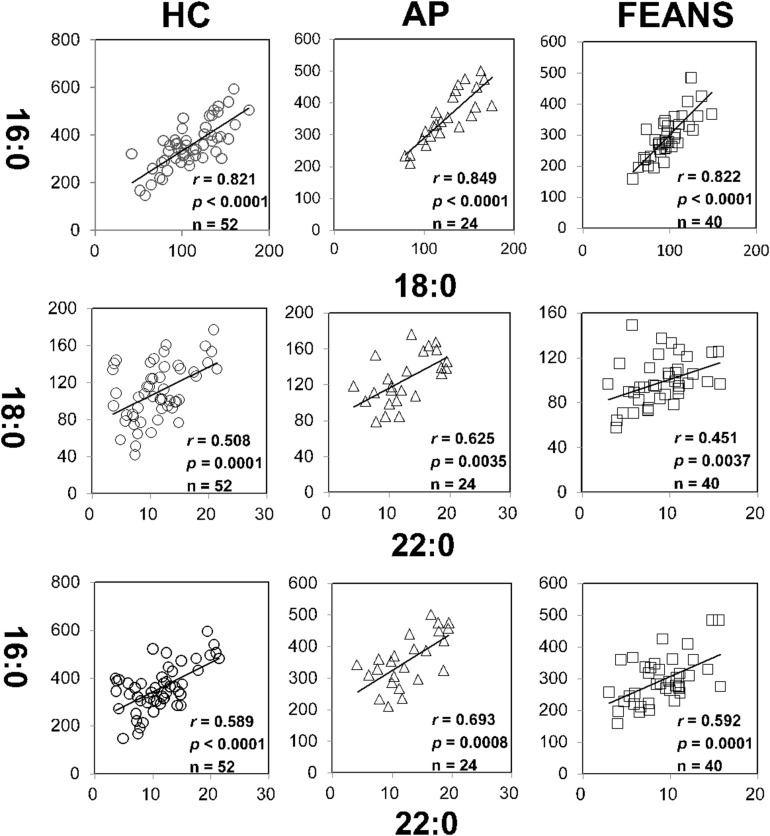
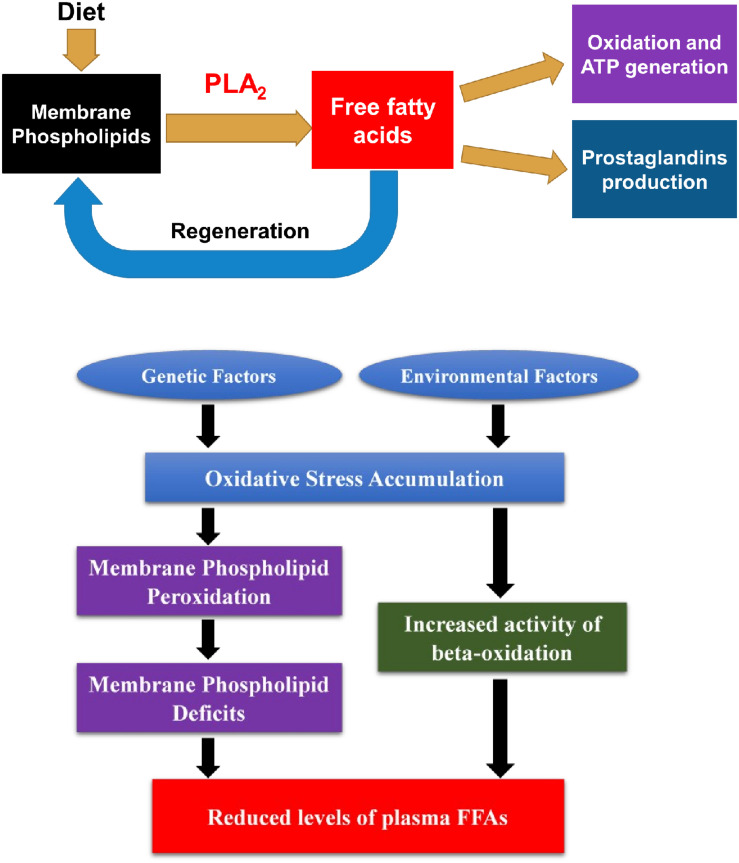
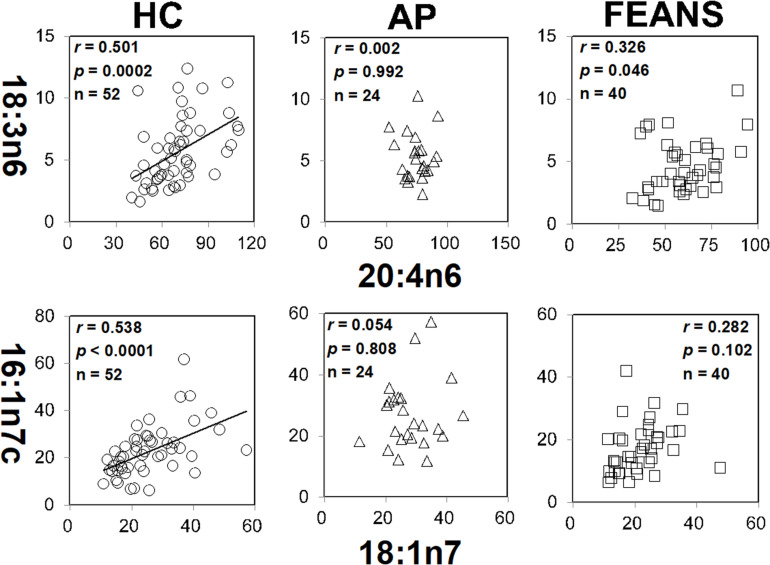
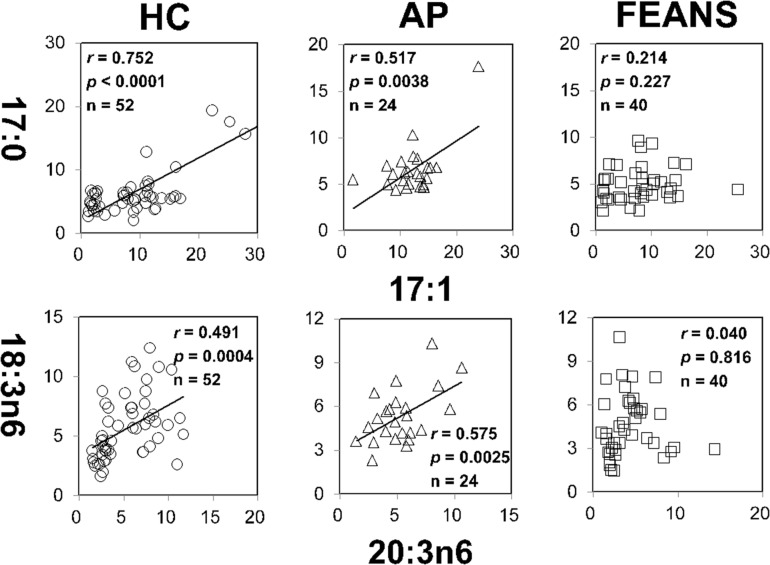
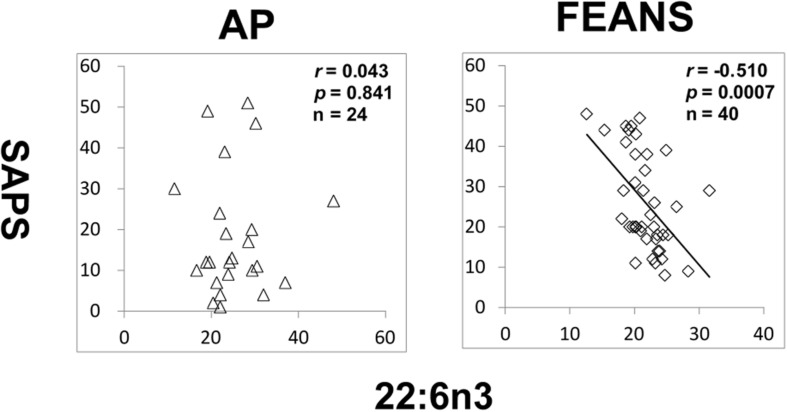
Membrane phospholipid deficits have been well-documented in schizophrenia (SZ) patients. Free fatty acids (FFAs) partially come from the hydrolysis of membrane phospholipids and serve as the circulating pool of body fatty acids. These FFAs are involved in many important biochemical reactions such as membrane regeneration, oxidation, and prostaglandin production which may have important implications in SZ pathology. Thus, we compared plasma FFA levels and profiles among healthy controls (HCs), affective psychosis (AP) patients, and first-episode antipsychotic-naïve schizophrenia (FEANS) patients. A significant reduction of total FFAs levels was observed in SZ patients. Specifically, significant reductions of 16:0, 18:2n6c, and 20:4n6 levels were detected in FEANS patients but not in APs when compared with levels in HCs. Also, disrupted metabolism of fatty acids especially in saturated and n-6 fatty acid families were observed by comparing correlations between precursor and product fatty acid levels within each fatty acid family. These findings may suggest an increased demand of membrane regeneration, a homeostatic imbalance of fatty acid biosynthesis pathway and a potential indication of increased beta oxidation. Collectively, these findings could help us better understand the lipid metabolism with regard to SZ pathophysiology.
膜磷脂缺乏在精神分裂症(SZ)患者中已有充分记录。游离脂肪酸(FFA)部分来源于膜磷脂的水解,是体内脂肪酸的循环库。这些游离脂肪酸参与许多重要的生化反应,如膜再生、氧化和前列腺素生成,这可能对精神分裂症的病理过程具有重要意义。因此,我们比较了健康对照(HC)、情感性精神病(AP)患者和首发未使用抗精神病药物的精神分裂症(FEANS)患者的血浆游离脂肪酸水平和谱。在精神分裂症患者中观察到总游离脂肪酸水平显著降低。具体而言,与健康对照相比,首发未使用抗精神病药物的精神分裂症患者中16:0、18:2n6c和20:4n6水平显著降低,但情感性精神病患者中未出现这种情况。此外,通过比较每个脂肪酸家族中前体脂肪酸和产物脂肪酸水平之间的相关性,观察到脂肪酸代谢紊乱,尤其是饱和脂肪酸和n-6脂肪酸家族。这些发现可能表明膜再生需求增加、脂肪酸生物合成途径的稳态失衡以及β氧化增加的潜在迹象。总体而言,这些发现有助于我们更好地理解精神分裂症病理生理学中的脂质代谢。