Roux Etienne, Bougaran Pauline, Dufourcq Pascale, Couffinhal Thierry
Inserm, UMR 1034, Biology of Cardiovascular Diseases, University of Bordeaux, Bordeaux, France.
UMR 8560 IHPST - Institut d'Histoire et de Philosophie des Sciences et des Techniques, CNRS, Université Paris 1 Panthéon-Sorbonne, Paris, France.
Front Physiol. 2020 Jul 24;11:861. doi: 10.3389/fphys.2020.00861. eCollection 2020.
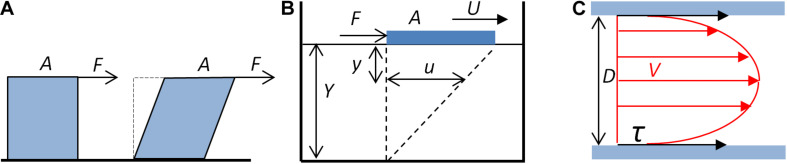
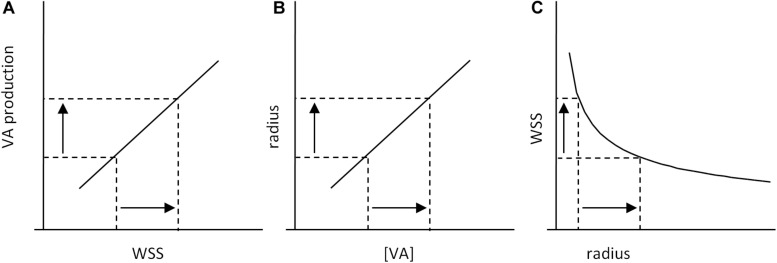
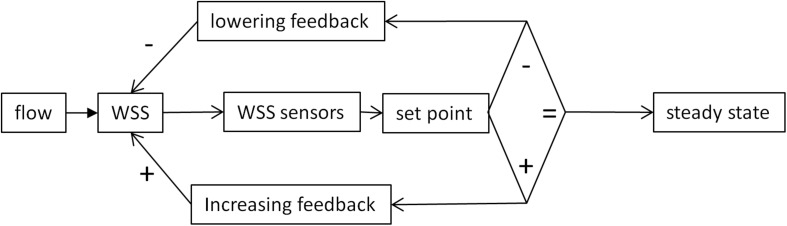
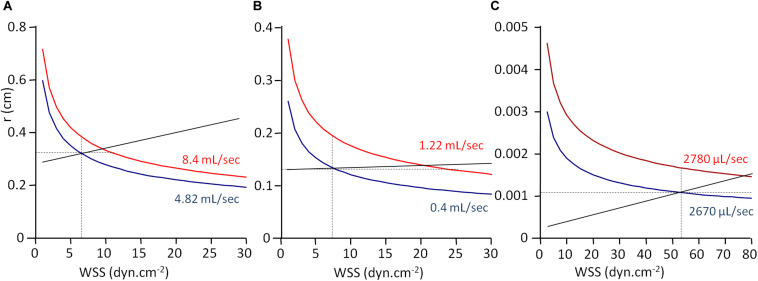
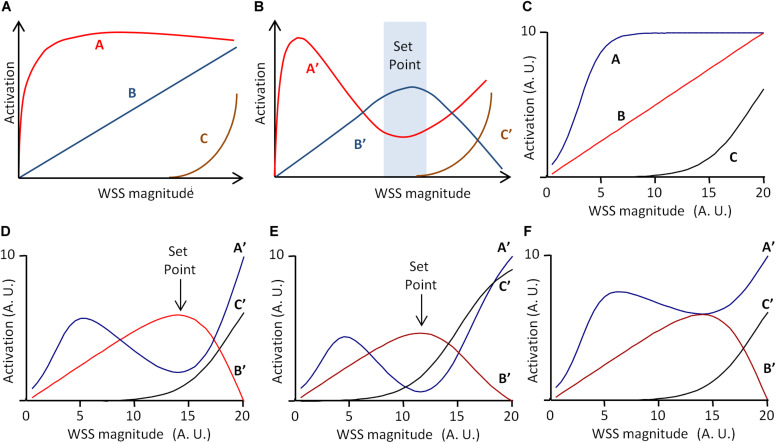
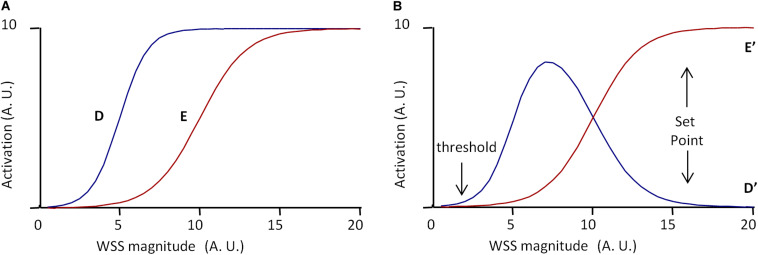
Blood flow produces mechanical frictional forces, parallel to the blood flow exerted on the endothelial wall of the vessel, the so-called wall shear stress (WSS). WSS sensing is associated with several vascular pathologies, but it is first a physiological phenomenon. Endothelial cell sensitivity to WSS is involved in several developmental and physiological vascular processes such as angiogenesis and vascular morphogenesis, vascular remodeling, and vascular tone. Local conditions of blood flow determine the characteristics of WSS, i.e., intensity, direction, pulsatility, sensed by the endothelial cells that, through their effect of the vascular network, impact WSS. All these processes generate a local-global retroactive loop that determines the ability of the vascular system to ensure the perfusion of the tissues. In order to account for the physiological role of WSS, the so-called shear stress set point theory has been proposed, according to which WSS sensing acts locally on vessel remodeling so that WSS is maintained close to a set point value, with local and distant effects of vascular blood flow. The aim of this article is (1) to review the existing literature on WSS sensing involvement on the behavior of endothelial cells and its short-term (vasoreactivity) and long-term (vascular morphogenesis and remodeling) effects on vascular functioning in physiological condition; (2) to present the various hypotheses about WSS sensors and analyze the conceptual background of these representations, in particular the concept of tensional prestress or biotensegrity; and (3) to analyze the relevance, explanatory value, and limitations of the WSS set point theory, that should be viewed as dynamical, and not algorithmic, processes, acting in a self-organized way. We conclude that this dynamic set point theory and the biotensegrity concept provide a relevant explanatory framework to analyze the physiological mechanisms of WSS sensing and their possible shift toward pathological situations.
血流会产生机械摩擦力,该摩擦力与施加在血管内皮壁上的血流方向平行,即所谓的壁面剪应力(WSS)。WSS感知与多种血管病变相关,但它首先是一种生理现象。内皮细胞对WSS的敏感性参与了多种发育和生理血管过程,如血管生成和血管形态发生、血管重塑以及血管张力调节。血流的局部条件决定了WSS的特征,即强度、方向、搏动性,内皮细胞感知这些特征后,通过其对血管网络的作用,影响WSS。所有这些过程形成了一个局部 - 整体的反馈回路,该回路决定了血管系统确保组织灌注的能力。为了解释WSS的生理作用,人们提出了所谓的剪应力设定点理论,根据该理论,WSS感知在局部对血管重塑起作用,从而使WSS保持在接近设定点值的水平,并产生局部和远处的血管血流效应。本文的目的是:(1)回顾关于WSS感知参与内皮细胞行为及其在生理条件下对血管功能的短期(血管反应性)和长期(血管形态发生和重塑)影响的现有文献;(2)介绍关于WSS传感器的各种假设,并分析这些表述的概念背景,特别是张力预应力或生物张力完整性的概念;(3)分析WSS设定点理论的相关性、解释价值和局限性,该理论应被视为动态的,而非算法的过程,以自组织的方式起作用。我们得出结论,这种动态设定点理论和生物张力完整性概念为分析WSS感知的生理机制及其可能向病理状态的转变提供了一个相关的解释框架。