Khan Imran, Mohamed Sonia, Regnault Thomas, Mieulet Delphine, Guiderdoni Emmanuel, Sentenac Hervé, Véry Anne-Aliénor
BPMP, Univ Montpellier, CNRS, INRAE, Institut Agro, Montpellier, France.
CIRAD, UMR AGAP, Montpellier, France.
Front Plant Sci. 2020 Jul 30;11:1130. doi: 10.3389/fpls.2020.01130. eCollection 2020.
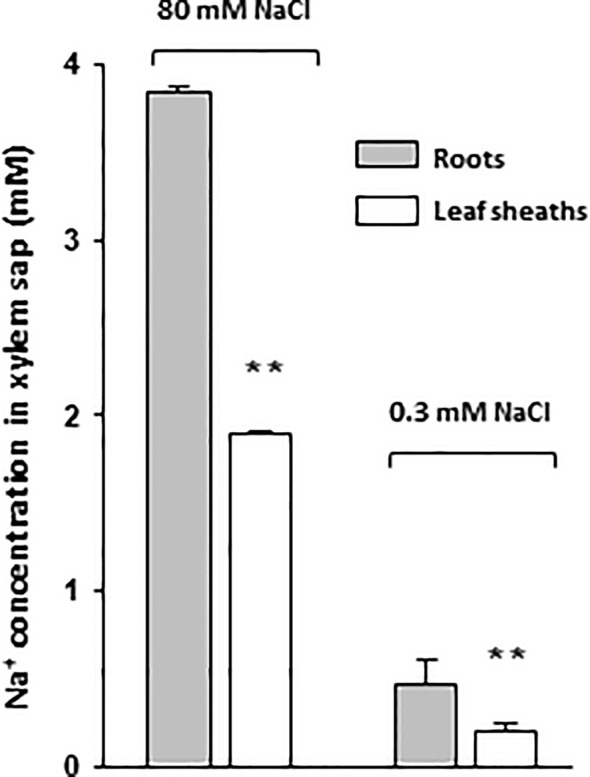
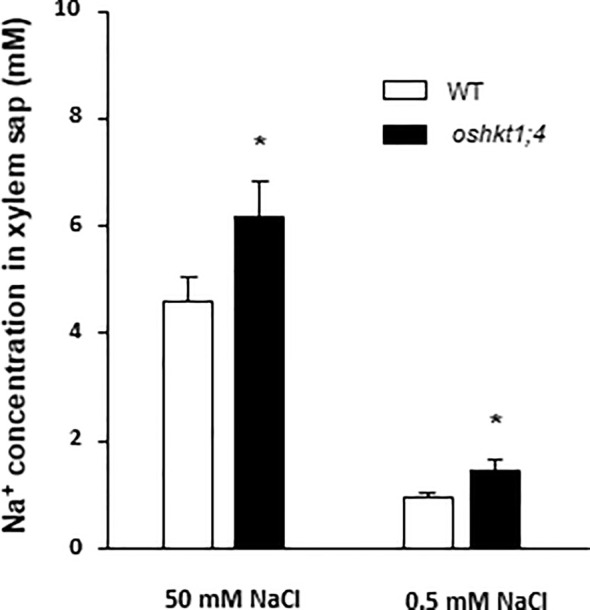
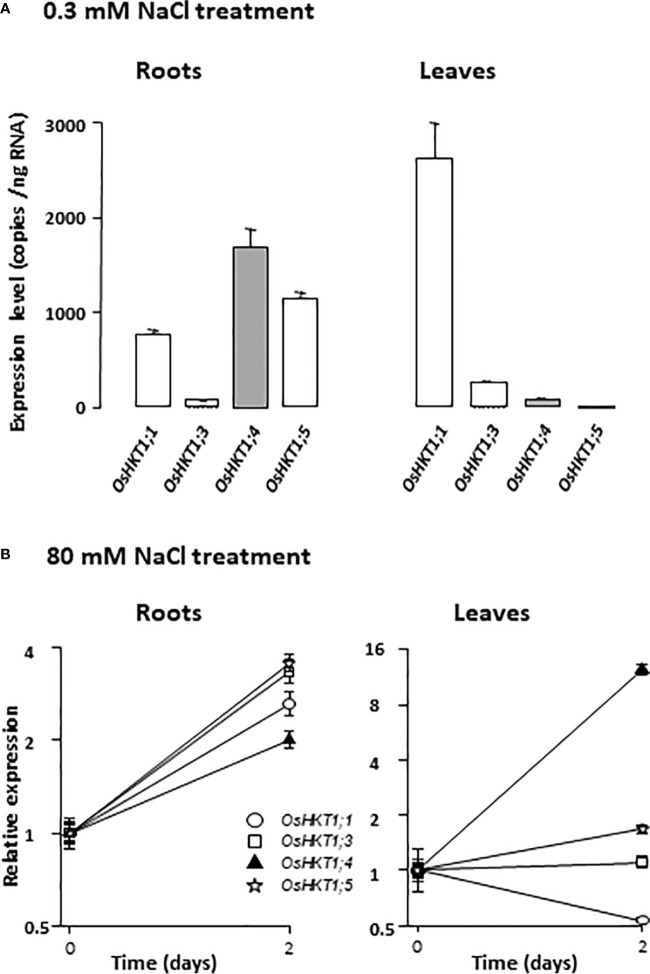
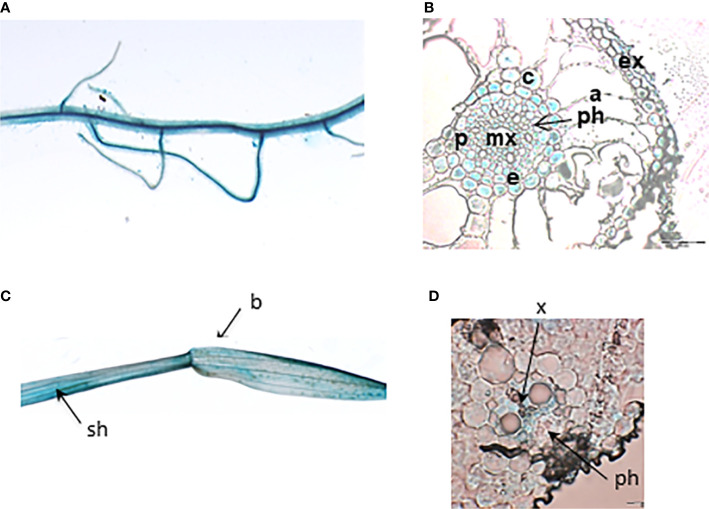
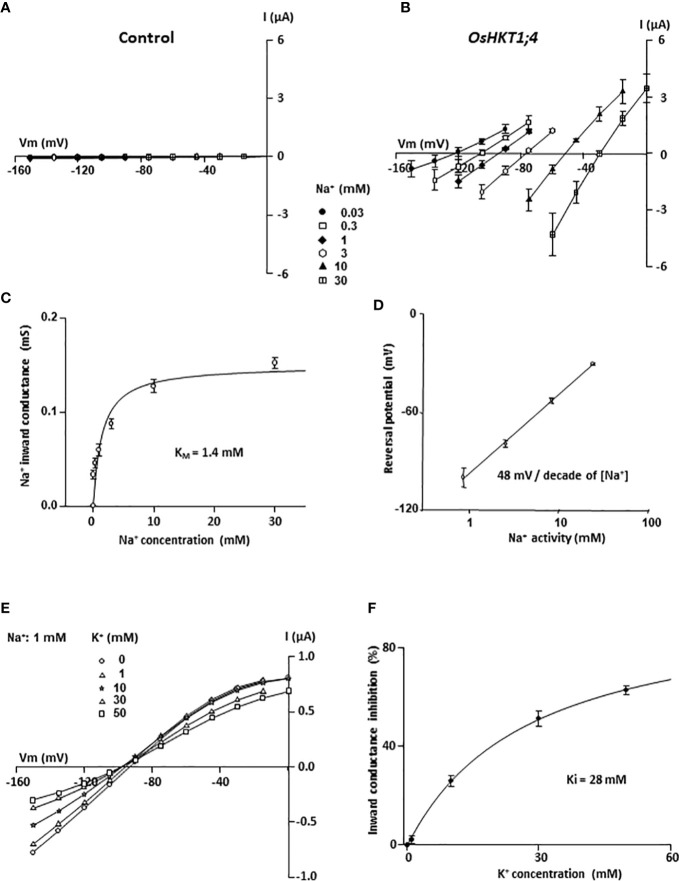
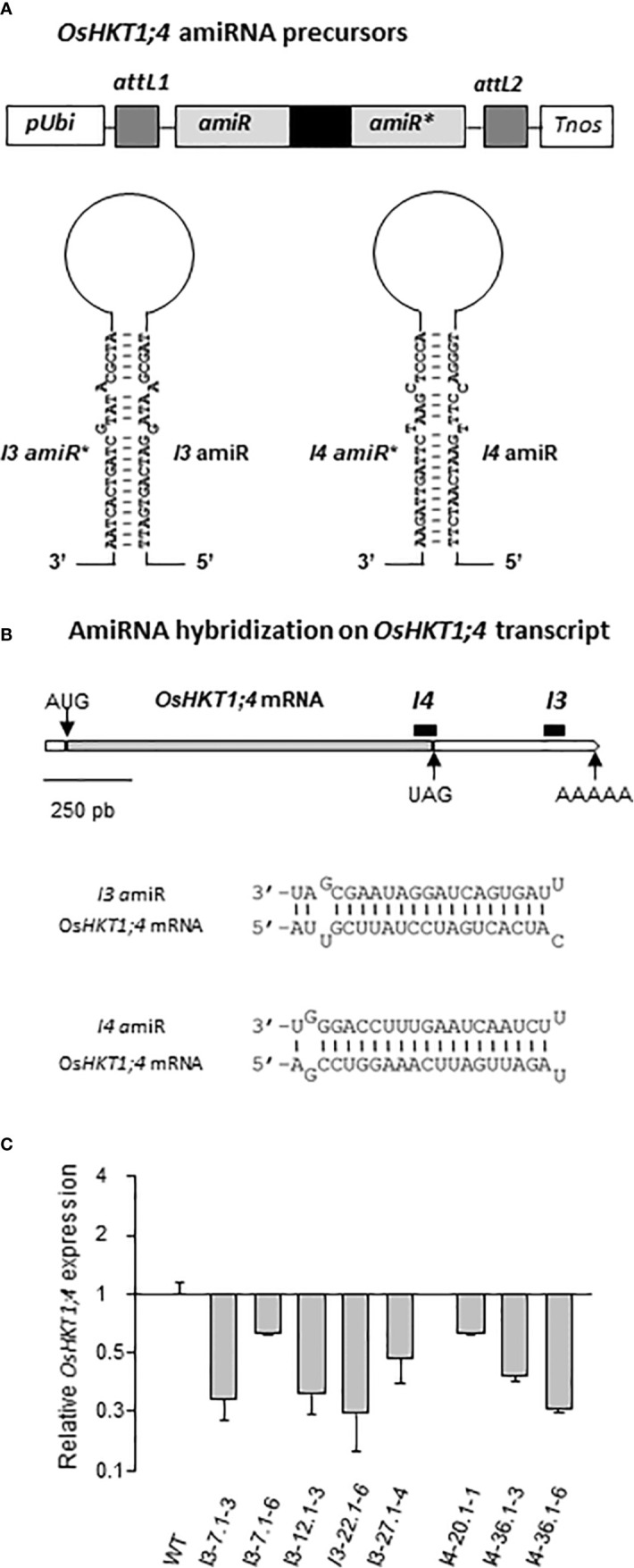
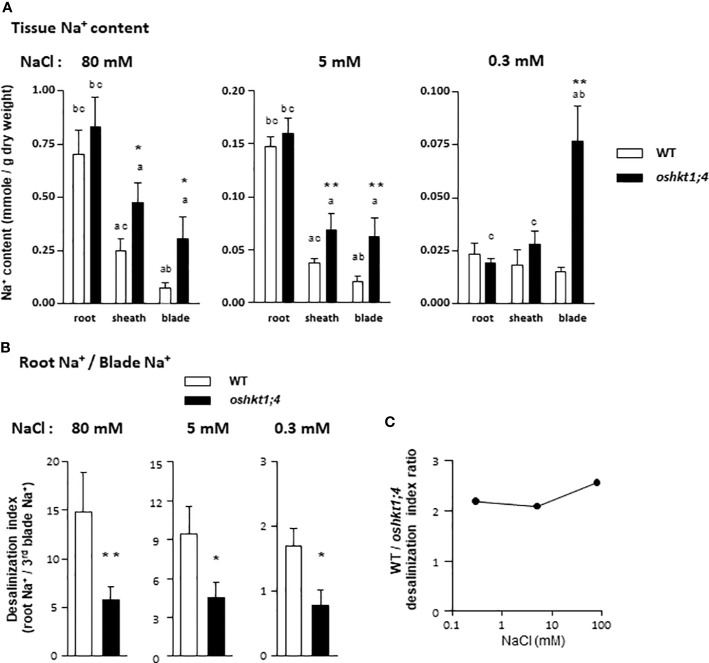
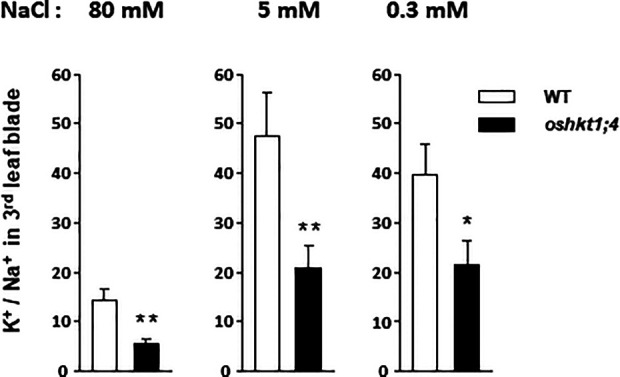
HKT Na transporters correspond to major salt tolerance QTLs in different plant species and are targets of great interest for breeders. In rice, the HKT family is composed of seven or eight functional genes depending on cultivars. Three rice genes, , and , are known to contribute to salt tolerance by reducing Na accumulation in shoots upon salt stress. Here, we further investigate the mechanisms by which OsHKT1;4 contributes to this process and extend this analysis to the role of this transporter in plants in presence of low Na concentrations. By analyzing transgenic rice plants expressing a reporter gene construct, we observed that is mainly expressed in xylem parenchyma in both roots and leaves. Using mutant lines expressing artificial microRNA that selectively reduced expression, the involvement of OsHKT1;4 in retrieving Na from the xylem sap in the roots upon salt stress was evidenced. Since was found to be also well expressed in the roots in absence of salt stress, we extended the analysis of its role when plants were subjected to non-toxic Na conditions (0.5 and 5 mM). Our finding that the transporter, expressed in oocytes, displayed a relatively high affinity for Na, just above 1 mM, provided first support to the hypothesis that OsHKT1;4 could have a physiological role at low Na concentrations. We observed that progressive desalinization of the xylem sap along its ascent to the leaf blades still occurred in plants grown at submillimolar Na concentration, and that OsHKT1;4 was involved in reducing xylem sap Na concentration in roots in these conditions too. Its contribution to tissue desalinization from roots to young mature leaf blades appeared to be rather similar in the whole range of explored external Na concentrations, from submillimolar to salt stress conditions. Our data therefore indicate that HKT transporters can be involved in controlling Na translocation from roots to shoots in a much wider range of Na concentrations than previously thought. This asks questions about the roles of such a transporter-mediated maintaining of tissue Na content gradients in non-toxic conditions.
HKT钠转运蛋白与不同植物物种中的主要耐盐数量性状位点相对应,是育种者非常感兴趣的目标。在水稻中,HKT家族由七到八个功能基因组成,具体数量取决于品种。已知三个水稻基因,即 、 和 ,通过在盐胁迫下减少地上部的钠积累来促进耐盐性。在这里,我们进一步研究了OsHKT1;4促进这一过程的机制,并将这一分析扩展到该转运蛋白在低钠浓度条件下对植物的作用。通过分析表达 报告基因构建体的转基因水稻植株,我们观察到 在根和叶的木质部薄壁细胞中主要表达。使用表达选择性降低 表达的人工微小RNA的突变系,证明了OsHKT1;4在盐胁迫下从根中的木质部汁液中回收钠的过程中发挥作用。由于发现 在无盐胁迫时在根中也有良好表达,我们扩展了对其在植物遭受无毒钠条件(0.5和5 mM)时作用的分析。我们的发现,即在卵母细胞中表达的该转运蛋白对钠表现出相对较高的亲和力,略高于1 mM,为OsHKT1;4在低钠浓度下可能具有生理作用的假设提供了首个支持。我们观察到,在亚毫摩尔钠浓度下生长的植物中,木质部汁液在向上运输到叶片的过程中仍会逐渐脱盐,并且在这些条件下OsHKT1;4也参与降低根中木质部汁液的钠浓度。在从亚毫摩尔到盐胁迫的整个外部钠浓度范围内,其对从根到幼嫩成熟叶片的组织脱盐的贡献似乎相当相似。因此,我们的数据表明,HKT转运蛋白可以在比以前认为的更广泛的钠浓度范围内参与控制钠从根到地上部的转运。这引发了关于这种转运蛋白介导的在无毒条件下维持组织钠含量梯度的作用的问题。