da Costa Júnior Sérgio Dias, da Silva Wagner Roberto Cirilo, da Silva Adriana Maria Costa Marques, Maciel Maria Amélia Vieira, Cavalcanti Isabella Macário Ferro
Laboratory of Immunopathology Keizo Asami, Federal University of Pernambuco, Recife, PE, Brazil.
Department of Tropical Medicine, Federal University of Pernambuco, Recife, PE, Brazil.
Evid Based Complement Alternat Med. 2020 Aug 12;2020:9852145. doi: 10.1155/2020/9852145. eCollection 2020.
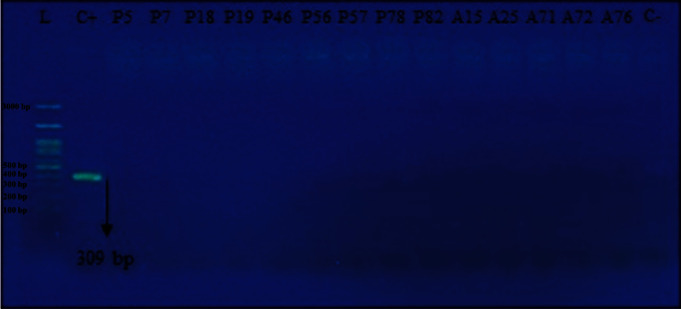
The present study aimed to characterize the susceptibility profile of and spp. clinical isolates to polymyxin B in a public hospital in Recife-PE, Brazil, between the years of 2018 and 2019, as well as to search for the presence of the -1 gene and evaluate the interaction between polymyxin B and usnic acid against these isolates. The strains were identified using the BD Phoenix™ automated system and the agar-spot test was used to determine the susceptibility profile to polymyxin B. The minimum inhibitory concentrations (MICs) of usnic acid and polymyxin B were determined through the broth microdilution method according to the Clinical and Laboratory Standards Institute (CLSI). Subsequently, Polymerase Chain Reaction (PCR) was performed to detect the -1 gene in the isolates. The interaction between usnic acid and polymyxin B was evaluated by the Checkerboard assay. Among 34 isolates of , 26.5% (9/34) were positive for the polymyxin B agar-spot test, and 11.8% (4/34) presented an intermediate susceptibility (MIC = 4 g/mL), while 14.7% (5/34) presented antimicrobial resistance with MIC values ranging from 8 to 32 g/mL. Among 38 isolates of spp., 13.2% (5/38) were positive for the polymyxin B agar-spot test and all of them were resistant to polymyxin B with a MIC value > 32 g/mL. The -1 gene was not detected in the clinical isolates. Regarding usnic acid, it presented a moderate antibacterial activity against two isolates (MIC = 250 g/mL) and no activity was detected against the others. A synergistic effect between usnic acid and polymyxin B was observed against three clinical isolates of which were resistant to polymyxin B (FICI ≤ 0.5). Therefore, it was possible to observe that usnic acid is a promising candidate to be used in combination with polymyxin B against infections caused by resistant .
本研究旨在描述2018年至2019年间巴西累西腓-伯南布哥州一家公立医院中 菌和 菌临床分离株对多粘菌素B的药敏谱,同时寻找-1基因的存在情况,并评估多粘菌素B与松萝酸对这些分离株的相互作用。使用BD Phoenix™自动化系统鉴定菌株,采用琼脂斑点试验确定对多粘菌素B的药敏谱。根据临床和实验室标准协会(CLSI)的方法,通过肉汤微量稀释法测定松萝酸和多粘菌素B的最低抑菌浓度(MIC)。随后,进行聚合酶链反应(PCR)以检测分离株中的-1基因。通过棋盘法评估松萝酸和多粘菌素B之间的相互作用。在34株 菌分离株中,26.5%(9/34)的多粘菌素B琼脂斑点试验呈阳性,11.8%(4/34)表现为中度敏感(MIC = 4 μg/mL),而14.7%(5/34)表现为耐药,MIC值范围为8至32 μg/mL。在38株 菌分离株中,13.2%(5/38)的多粘菌素B琼脂斑点试验呈阳性,且所有菌株对多粘菌素B耐药,MIC值>32 μg/mL。临床分离株中未检测到-1基因。关于松萝酸,它对两株 菌分离株表现出中度抗菌活性(MIC = 250 μg/mL),对其他分离株未检测到活性。观察到松萝酸和多粘菌素B对三株对多粘菌素B耐药的 菌临床分离株有协同作用(FICI≤0.5)。因此,可以观察到松萝酸有望与多粘菌素B联合用于治疗由耐药 菌引起的感染。