Drury James, Rychahou Piotr G, He Daheng, Jafari Naser, Wang Chi, Lee Eun Y, Weiss Heidi L, Evers Bernard Mark, Zaytseva Yekaterina Y
Department of Toxicology and Cancer Biology, University of Kentucky, Lexington, KY, United States.
Markey Cancer Center, University of Kentucky, Lexington, KY, United States.
Front Oncol. 2020 Jul 31;10:1185. doi: 10.3389/fonc.2020.01185. eCollection 2020.
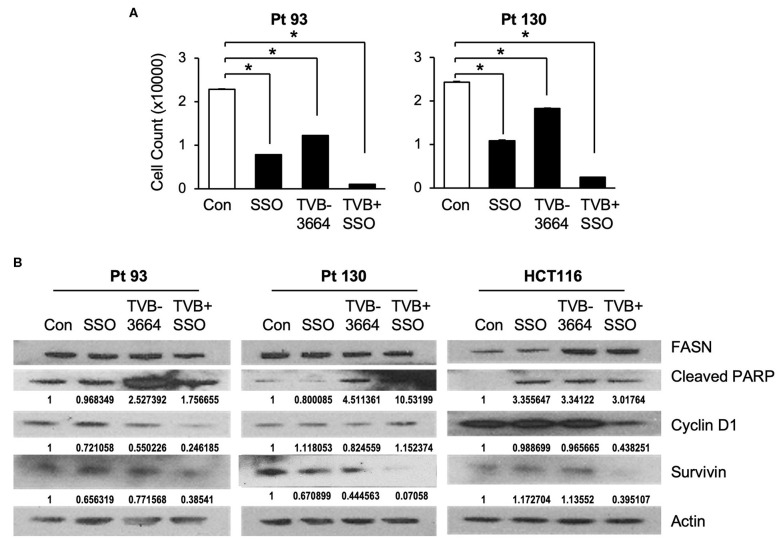
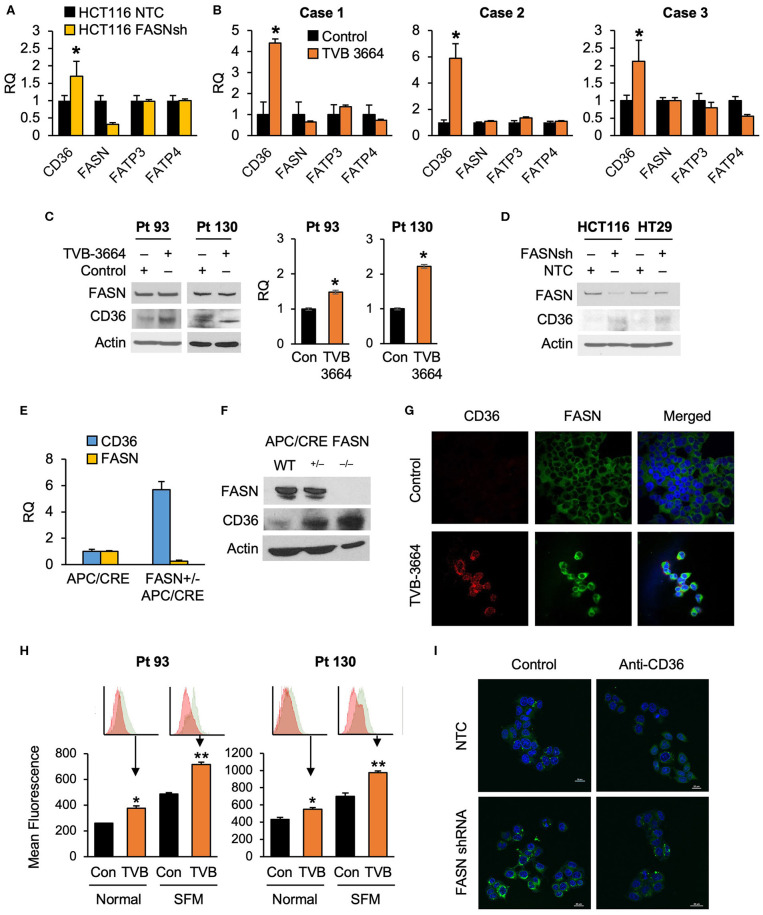
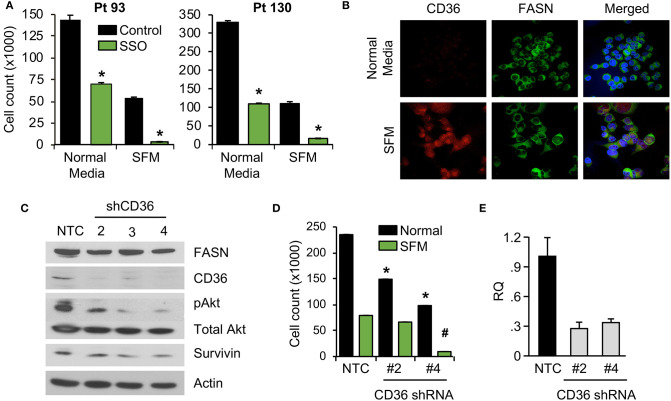
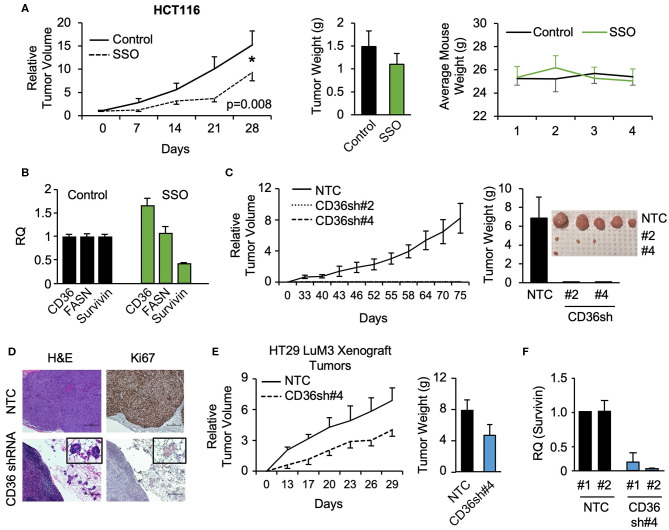
Fatty acid synthase, a key enzyme of lipogenesis, is an attractive therapeutic target in cancer. The novel fatty acid synthase inhibitor, TVB-3664, shows anti-cancer activity in multiple cancers including colorectal cancer; however, it is unclear whether uptake of exogeneous fatty acids can compensate for the effect of fatty acid synthase inhibition. This study demonstrates that inhibition of fatty acid synthase selectively upregulates fatty acid translocase (CD36), a fatty acid transporter, in multiple colorectal cancer models including colorectal cancer cells with shRNA mediated knockdown of fatty acid synthase and genetically modified mouse tissues with heterozygous and homozygous deletion of fatty acid synthase. Furthermore, human colorectal cancer tissues treated with TVB-3664 show a significant and selective upregulation of CD36 mRNA. shRNA-mediated knockdown of CD36 and inhibition of CD36 via sulfosuccinimidyl oleate, a chemical inhibitor of CD36, decreased cell proliferation and reduced tumor growth in subcutaneous xenograft models. Isogenic cell populations established from patient derived xenografts and expressing high levels of CD36 show a significantly increased ability to grow tumors . The tumor-promoting effect of CD36 is associated with an increase in the levels of pAkt and survivin. Importantly, combinatorial treatment of primary and established colorectal cancer cells with TVB-3664 and sulfosuccinimidyl oleate shows a synergistic effect on cell proliferation. In summary, our study demonstrates that upregulation of CD36 expression is a potential compensatory mechanism for fatty acid synthase inhibition and that inhibition of CD36 can improve the efficacy of fatty acid synthase-targeted therapy.
脂肪酸合酶是脂肪生成的关键酶,是癌症中一个有吸引力的治疗靶点。新型脂肪酸合酶抑制剂TVB-3664在包括结直肠癌在内的多种癌症中显示出抗癌活性;然而,尚不清楚外源性脂肪酸的摄取是否能补偿脂肪酸合酶抑制的作用。本研究表明,在多种结直肠癌模型中,包括用shRNA介导敲低脂肪酸合酶的结直肠癌细胞以及脂肪酸合酶杂合和纯合缺失的基因工程小鼠组织中,脂肪酸合酶的抑制会选择性地上调脂肪酸转运蛋白脂肪酸转位酶(CD36)。此外,用TVB-3664处理的人结直肠癌组织显示CD36 mRNA有显著且选择性的上调。通过shRNA介导敲低CD36以及用CD36的化学抑制剂油酸琥珀酰亚胺酯抑制CD36,可降低皮下异种移植模型中的细胞增殖并减少肿瘤生长。从患者来源的异种移植中建立并表达高水平CD36的同基因细胞群体显示出显著增强的肿瘤生长能力。CD36的促肿瘤作用与pAkt和存活素水平的增加有关。重要的是,用TVB-3664和油酸琥珀酰亚胺酯联合处理原发性和已建立的结直肠癌细胞对细胞增殖显示出协同作用。总之,我们的研究表明,CD36表达上调是脂肪酸合酶抑制的一种潜在补偿机制,并且抑制CD36可以提高脂肪酸合酶靶向治疗的疗效。