Department of Pharmacy, Dessie Health Science Collage, Dessie, Ethiopia.
Department of Pharmacy, College of Medicine and Health Science, Wollo University, Dessie, Ethiopia.
Biomed Res Int. 2020 Aug 10;2020:8569314. doi: 10.1155/2020/8569314. eCollection 2020.
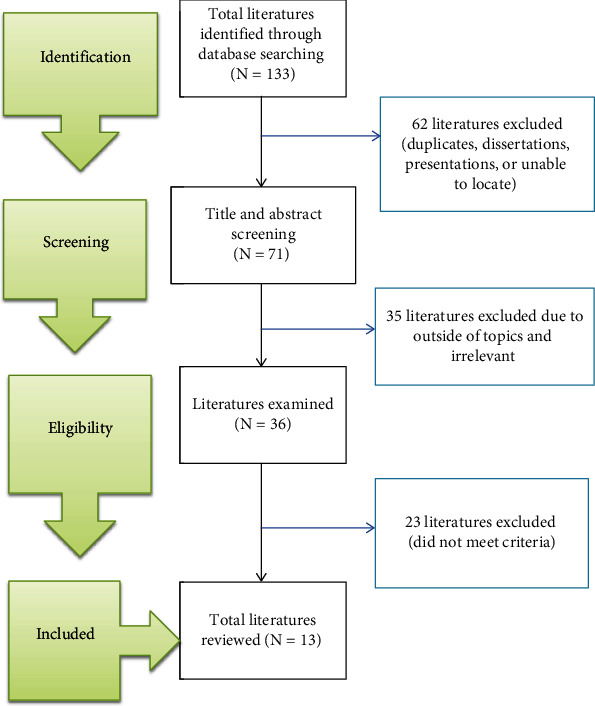
Adverse drug reactions are major global public health problems and an important cause of mortality. Problems related to medicines safety can emerge from real-life medication use due to increasing access to complex treatment of concomitant infectious and noncommunicable diseases, hence leading to a higher prevalence of drug-related problems. The objective of this review was to assess the knowledge, attitude, and practice of adverse drug reaction reporting among health care professionals in Ethiopia. Relevant literatures were searched from Google Scholar, PubMed, Hinari, Web of Science, Scopus, and Science Direct using inclusion and exclusion criteria. From 133 searched studies, 13 studies were reviewed. The knowledge and attitude of health care professionals towards adverse drug reaction reporting ranged from 22.68% -60.33% and 47.22% -67.14%, with averages of 41.50% and 57.18%, respectively. While 46.93% encountered adverse drug reactions and 41.8% reported in the last 12 months. One-third (34.15%) of health care professionals do not know how to report adverse drug reactions. Fearing to report, uncertainty about the adverse drug reaction, concern about reporting generating extra work, thinking that one report does not make any difference, nonavailability of reporting forms, and lack of feedback from regulatory authority were the stated reasons for underreporting. We conclude that the knowledge, attitude, and practice of health care professionals towards spontaneous ADR reporting were low. Conducting awareness and educational training and implementation of electronic reporting can improve the ADR reporting practice.
药物不良反应是全球性的主要公共卫生问题,也是导致死亡率的重要原因。由于越来越多的人能够获得复杂的传染病和非传染性疾病的治疗,与药物安全相关的问题可能会在现实生活中用药时出现,从而导致与药物相关的问题更为普遍。本研究旨在评估埃塞俄比亚卫生保健专业人员对药物不良反应报告的知识、态度和实践。使用纳入和排除标准,从 Google Scholar、PubMed、Hinari、Web of Science、Scopus 和 Science Direct 搜索相关文献。从 133 项搜索研究中,有 13 项研究进行了综述。卫生保健专业人员对药物不良反应报告的知识和态度范围从 22.68%至 60.33%和 47.22%至 67.14%,平均值分别为 41.50%和 57.18%。而 46.93%的人遇到过药物不良反应,41.8%的人在过去 12 个月内报告过。三分之一(34.15%)的卫生保健专业人员不知道如何报告药物不良反应。害怕报告、对药物不良反应不确定、担心报告会增加额外的工作、认为一份报告没有任何区别、没有报告表格、以及缺乏来自监管机构的反馈,这些是报告不足的原因。我们得出结论,卫生保健专业人员对自发药物不良反应报告的知识、态度和实践水平较低。开展意识和教育培训以及实施电子报告可以改进药物不良反应报告实践。