Department of Clinical Pharmacology, Medical University of Bialystok, Waszyngtona 15A, 15274 Bialystok, Poland.
Department of Experimental Pharmacology, Medical University of Bialystok, Szpitalna 37, 15295 Bialystok, Poland.
Cells. 2020 Aug 25;9(9):1963. doi: 10.3390/cells9091963.
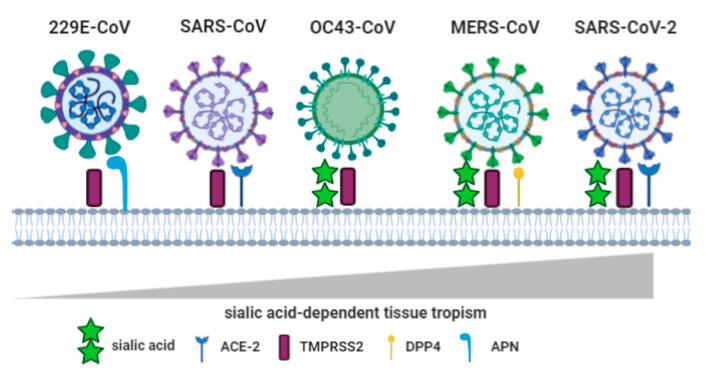
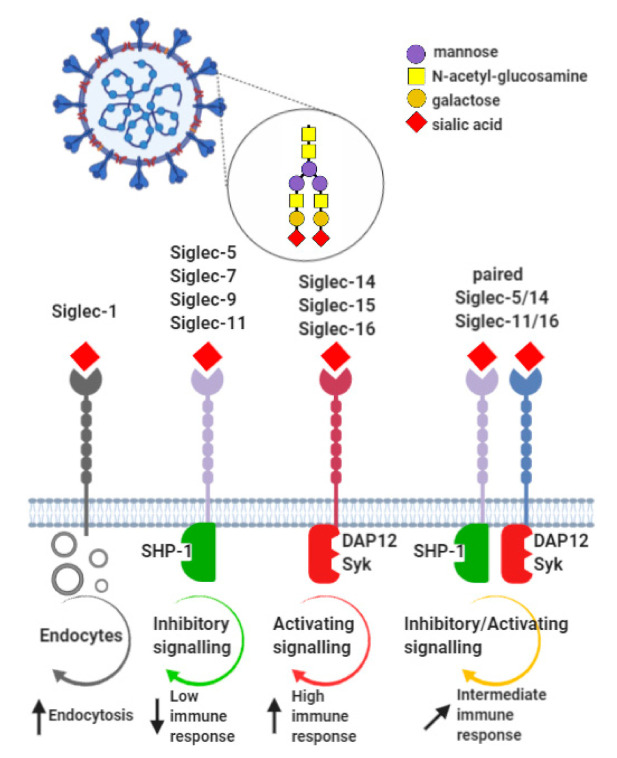
Coronaviruses (CoVs) are a diverse family of the enveloped human and animal viruses reported as causative agents for respiratory and intestinal infections. The high pathogenic potential of human CoVs, including SARS-CoV, MERS-CoV and SARS-CoV-2, is closely related to the invasion mechanisms underlying the attachment and entry of viral particles to the host cells. There is increasing evidence that sialylated compounds of cellular glycocalyx can serve as an important factor in the mechanism of CoVs infection. Additionally, the sialic acid-mediated cross-reactivity with the host immune lectins is known to exert the immune response of different intensity in selected pathological stages. Here, we focus on the last findings in the field of glycobiology in the context of the role of sialic acid in tissue tropism, viral entry kinetics and immune regulation in the CoVs infections.
冠状病毒(CoVs)是一类包膜的人类和动物病毒,被报道为引起呼吸道和肠道感染的病原体。包括 SARS-CoV、MERS-CoV 和 SARS-CoV-2 在内的高致病性人类 CoVs,与病毒颗粒附着和进入宿主细胞的入侵机制密切相关。越来越多的证据表明,细胞糖萼中的唾液酸化化合物可以作为 CoVs 感染机制中的一个重要因素。此外,唾液酸介导的与宿主免疫凝集素的交叉反应已知在选定的病理阶段发挥不同强度的免疫反应。在这里,我们重点关注糖生物学领域的最新发现,涉及唾液酸在 CoVs 感染中的组织嗜性、病毒进入动力学和免疫调节中的作用。