Wang Zihao, Gao Lu, Guo Xiaopeng, Wang Yaning, Wang Yu, Ma Wenbin, Guo Yi, Xing Bing
Department of Neurosurgery, Peking Union Medical College Hospital, Chinese Academy of Medical Sciences and Peking Union Medical College, Beijing 100730, P.R. China.
Aging (Albany NY). 2020 Aug 28;12(17):17038-17061. doi: 10.18632/aging.103626.
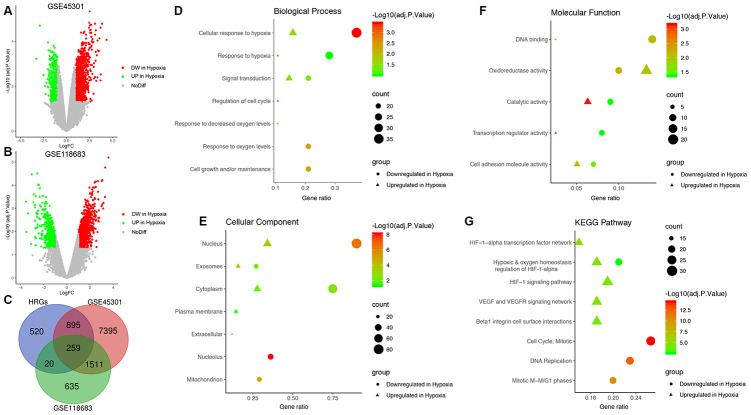
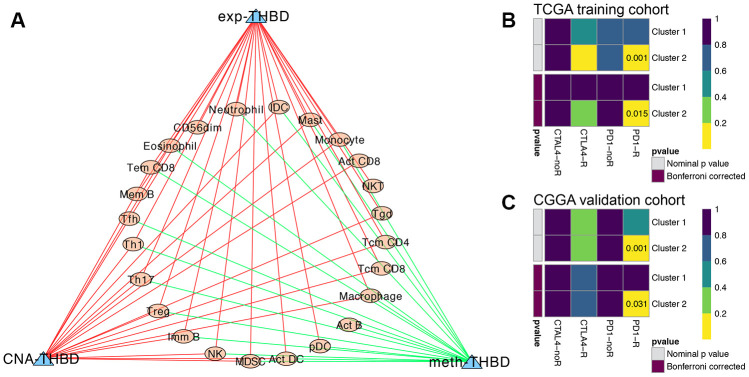
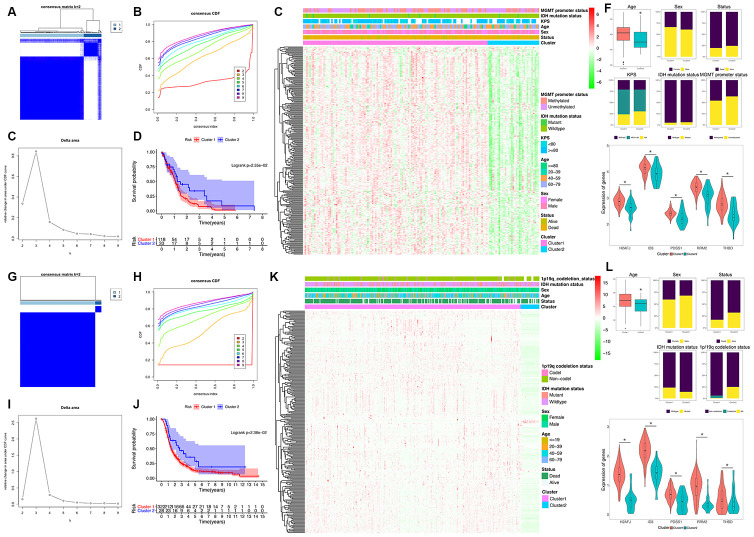
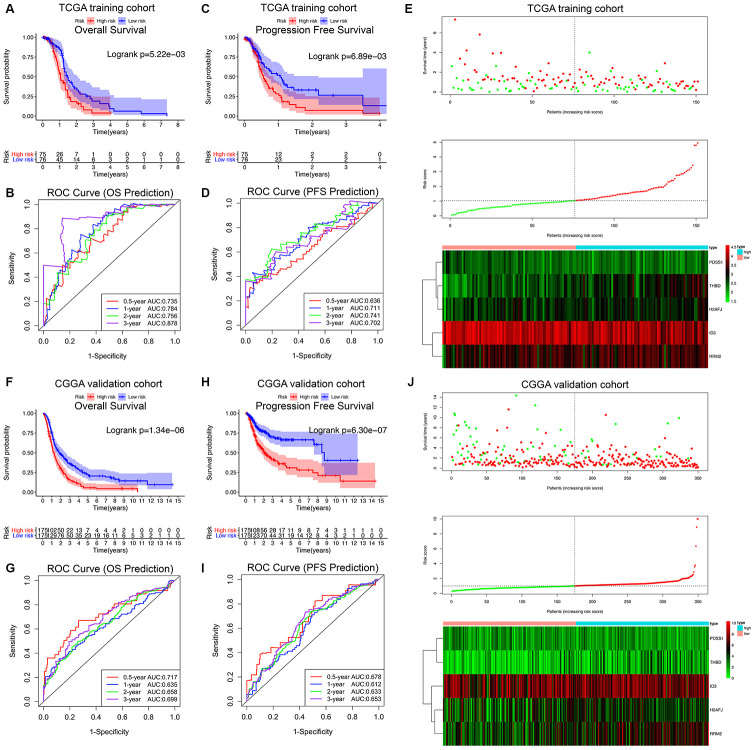
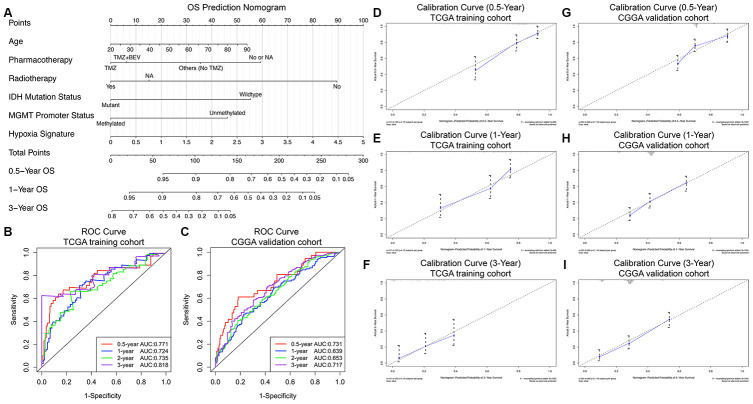
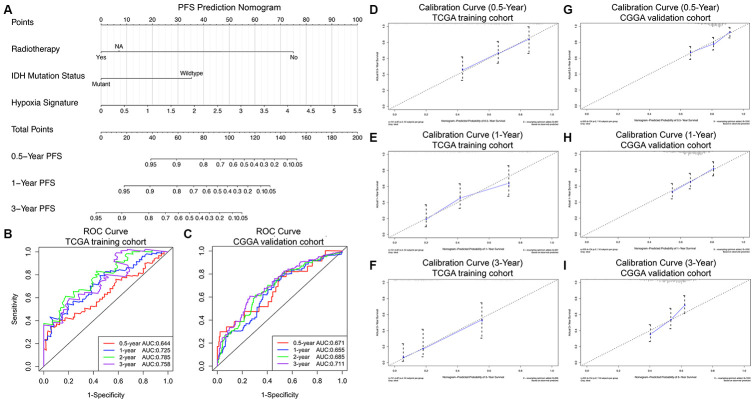
The hypoxic tumor microenvironment (TME) was reported to promote the aggressive phenotype, progression, recurrence, and chemoresistance of glioblastoma (GBM). We developed and validated a hypoxia gene signature for individualized prognostic prediction in GBM patients. In total, 259 GBM-specific hypoxia-related genes (HRGs) were obtained in hypoxic cultured GBM cells compared with normoxic cells. By applying the k-means algorithm, TCGA GBM patients were divided into two subgroups, and the patients in Cluster 1 exhibited high HRG expression patterns, older age, and poor prognosis, which was validated in the CGGA cohort. Cox regression analyses were performed to generate an HRG-based risk score model consisting of five HRGs, which could reliably discriminate the overall survival (OS) and progression-free survival (PFS) of high- and low-risk patients in both the TCGA training and CGGA validation cohorts. Then, nomograms with the hypoxia signature for OS and PFS prediction were constructed for individualized survival prediction, better treatment decision-making, and follow-up scheduling. Finally, functional enrichment, immune infiltration, immunotherapy response prediction and chemotherapy resistance analyses demonstrated the vital roles of the hypoxic TME in the development, progression, multitherpy resistance of GBM. The hypoxia gene signature could serve as a promising prognostic predictor and potential therapeutic target to combat chemoresistant GBM.
据报道,缺氧肿瘤微环境(TME)可促进胶质母细胞瘤(GBM)的侵袭性表型、进展、复发和化疗耐药性。我们开发并验证了一种缺氧基因特征,用于GBM患者的个体化预后预测。与常氧培养的GBM细胞相比,在缺氧培养的GBM细胞中总共获得了259个GBM特异性缺氧相关基因(HRGs)。通过应用k均值算法,将TCGA GBM患者分为两个亚组,第1组患者表现出高HRG表达模式、年龄较大且预后较差,这在CGGA队列中得到了验证。进行Cox回归分析以生成一个基于HRG的风险评分模型,该模型由五个HRG组成,能够可靠地区分TCGA训练队列和CGGA验证队列中高风险和低风险患者的总生存期(OS)和无进展生存期(PFS)。然后,构建了具有缺氧特征的OS和PFS预测列线图,用于个体化生存预测、更好的治疗决策和随访安排。最后,功能富集、免疫浸润、免疫治疗反应预测和化疗耐药性分析证明了缺氧TME在GBM的发生、发展、多药耐药中的重要作用。缺氧基因特征可作为一种有前景的预后预测指标和对抗化疗耐药GBM的潜在治疗靶点。