School of Geography and Water@Leeds, University of Leeds, Leeds, UK.
European Commission, Joint Research Centre, Ispra, Italy.
Nat Commun. 2020 Aug 28;11(1):4353. doi: 10.1038/s41467-020-18239-5.
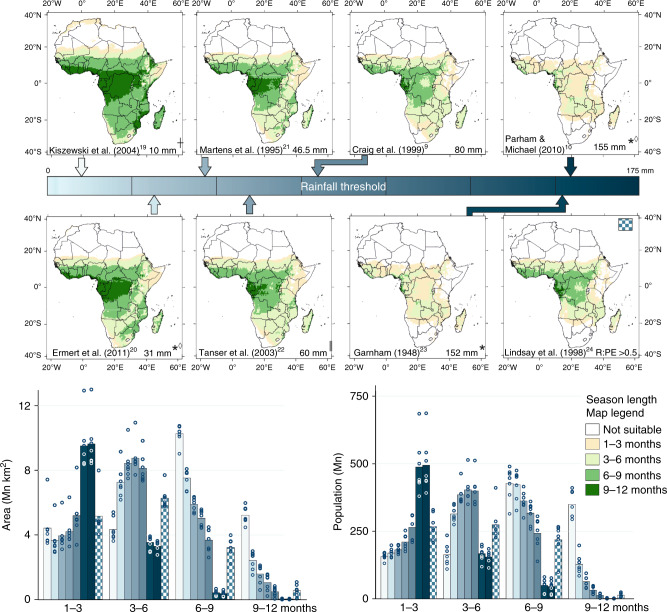
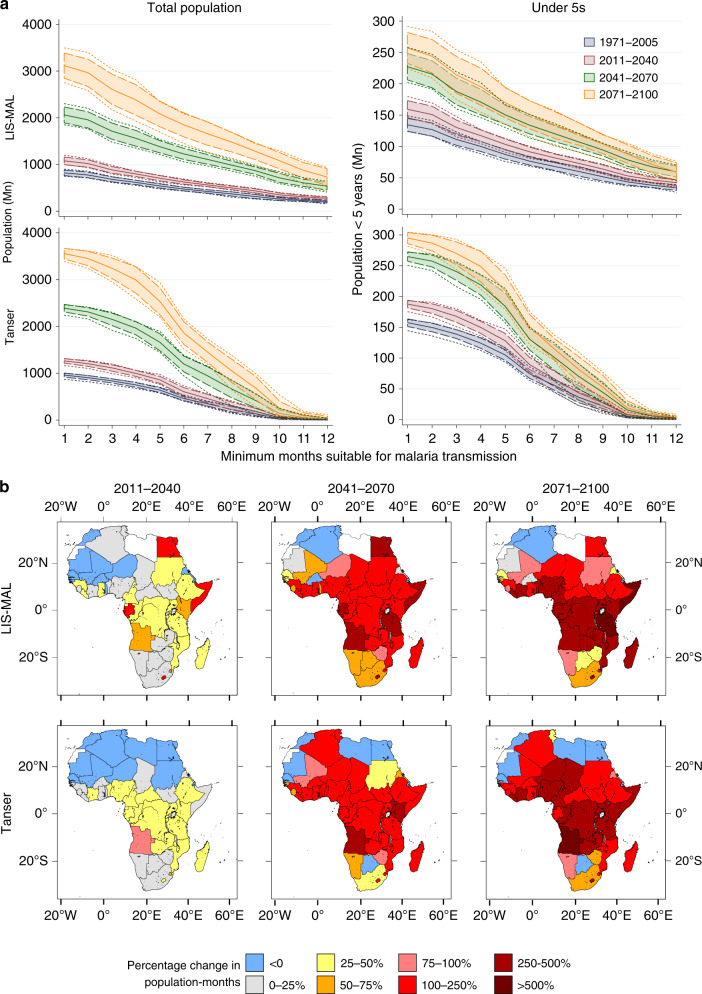
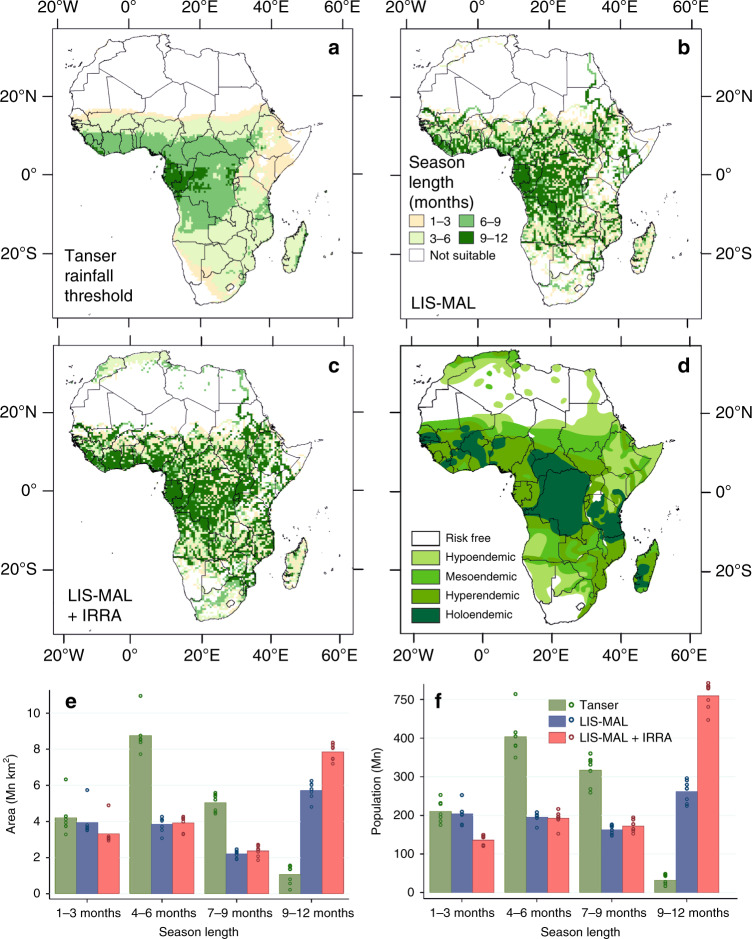
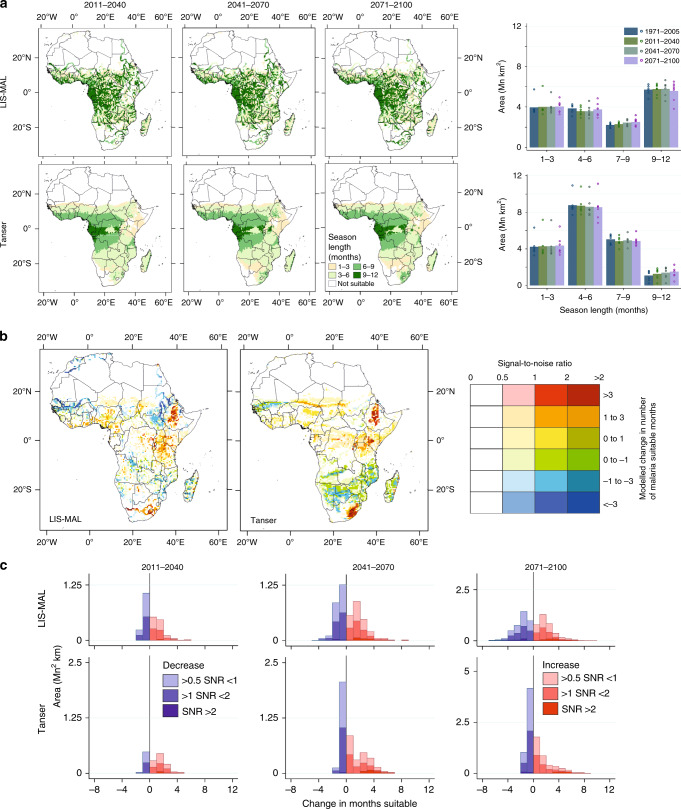
Continental-scale models of malaria climate suitability typically couple well-established temperature-response models with basic estimates of vector habitat availability using rainfall as a proxy. Here we show that across continental Africa, the estimated geographic range of climatic suitability for malaria transmission is more sensitive to the precipitation threshold than the thermal response curve applied. To address this problem we use downscaled daily climate predictions from seven GCMs to run a continental-scale hydrological model for a process-based representation of mosquito breeding habitat availability. A more complex pattern of malaria suitability emerges as water is routed through drainage networks and river corridors serve as year-round transmission foci. The estimated hydro-climatically suitable area for stable malaria transmission is smaller than previous models suggest and shows only a very small increase in state-of-the-art future climate scenarios. However, bigger geographical shifts are observed than with most rainfall threshold models and the pattern of that shift is very different when using a hydrological model to estimate surface water availability for vector breeding.
疟疾气候适宜性的大陆尺度模型通常将成熟的温度响应模型与基于降雨的基本媒介栖息地可用性估计相结合。在这里,我们表明,在整个非洲大陆,疟疾传播的气候适宜性的估计地理范围对降水阈值比应用的热响应曲线更为敏感。为了解决这个问题,我们使用来自七个 GCM 的下推的每日气候预测来运行一个大陆尺度的水文学模型,以基于过程的方式表示蚊子繁殖栖息地的可用性。随着水通过排水网络输送,以及河流走廊作为全年传播焦点,疟疾适宜性呈现出更为复杂的模式。估计的水气候适宜稳定疟疾传播的面积小于以前的模型所表明的面积,并且在最先进的未来气候情景中仅显示出非常小的增加。然而,与大多数降雨阈值模型相比,观察到更大的地理变化,并且当使用水文学模型来估计媒介繁殖的地表水可用性时,这种变化的模式非常不同。