Mycology Reference Centre Manchester, ECMM Centre of Excellence, Manchester University NHS Foundation Trust, Manchester Academic Health Science Centre, Wythenshawe Hospital, Manchester, UK.
The University of Manchester, Faculty of Biology, Medicine and Health, Division of Infection, Inflammation and Respiratory Medicine, Manchester, UK.
J Antimicrob Chemother. 2020 Dec 1;75(12):3501-3509. doi: 10.1093/jac/dkaa357.
Infections caused by triazole drug-resistant Aspergillus fumigatus are an increasing problem. The sensitivity of standard culture is poor, abrogating susceptibility testing. Early detection of resistance can improve patient outcomes, yet tools for this purpose are limited.
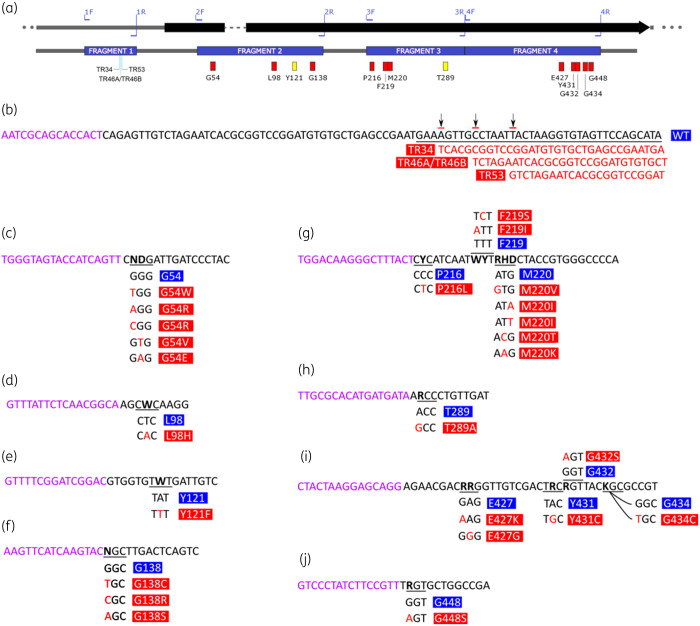
To develop and validate a pyrosequencing technique to detect resistance-conferring cyp51A polymorphisms from clinical respiratory specimens and A. fumigatus isolates.
Method validation was performed by Sanger sequencing and pyrosequencing of 50 A. fumigatus isolates with a spectrum of triazole susceptibility patterns. Then, 326 Aspergillus quantitative PCR (qPCR)-positive respiratory samples collected over a 27 month period (January 2017-March 2019) from 160 patients at the UK National Aspergillosis Centre were assessed by cyp51A pyrosequencing. The Sanger sequencing and pyrosequencing results were compared with those from high-volume culture and standard susceptibility testing.
The cyp51A genotypes of the 50 isolates analysed by pyrosequencing and Sanger sequencing matched. Of the 326 Aspergillus qPCR-positive respiratory specimens, 71.2% were reported with no A. fumigatus growth. Of these, 56.9% (132/232) demonstrated a WT cyp51A genotype and 31.5% (73/232) a resistant genotype by pyrosequencing. Pyrosequencing identified the environmental TR34/L98H mutation in 18.7% (61/326) of the samples in contrast to 6.4% (21/326) pan-azole resistance detected by culture. Importantly, pyrosequencing detected resistance earlier than culture in 23.3% of specimens.
The pyrosequencing assay described could detect a wide range of cyp51A polymorphisms associated with triazole resistance, including those not identified by commercial assays. This method allowed prompt recognition of resistance and the selection of appropriate antifungal treatment when culture was negative.
由三唑类药物耐药烟曲霉引起的感染是一个日益严重的问题。标准培养的敏感性较差,使药敏试验无法进行。早期检测耐药性可以改善患者的预后,但目前用于此目的的工具有限。
开发和验证一种焦磷酸测序技术,以检测来自临床呼吸道标本和烟曲霉分离株的耐药相关 cyp51A 多态性。
通过对具有不同三唑类药物敏感性模式的 50 株烟曲霉进行焦磷酸测序和 Sanger 测序,对方法进行验证。然后,对 2017 年 1 月至 2019 年 3 月期间英国国家曲霉病中心从 160 名患者收集的 326 份经过定量 PCR(qPCR)检测为阳性的呼吸道样本进行 cyp51A 焦磷酸测序分析。将 Sanger 测序和焦磷酸测序的结果与大容量培养和标准药敏试验的结果进行比较。
通过焦磷酸测序和 Sanger 测序分析的 50 株烟曲霉的 cyp51A 基因型相匹配。在 326 份经 qPCR 检测为阳性的呼吸道标本中,71.2%(232 份)无烟曲霉生长。其中,56.9%(132/232)通过焦磷酸测序显示为 WT cyp51A 基因型,31.5%(73/232)为耐药基因型。焦磷酸测序在 18.7%(61/326)的样本中检测到环境 TR34/L98H 突变,而培养检测到的泛唑类耐药性仅为 6.4%(21/326)。重要的是,焦磷酸测序在 23.3%的标本中比培养更早地检测到耐药性。
所描述的焦磷酸测序检测可检测到与三唑类耐药相关的广泛的 cyp51A 多态性,包括商业检测无法检测到的多态性。该方法可在培养为阴性时,快速识别耐药性并选择适当的抗真菌治疗。