Haque Syed Emdadul, Rahman Mosiur
Department of Research and Training, UChicago Research Bangladesh, Dhaka, Bangladesh.
Department of Population Science and Human Resource Development, University of Rajshahi, Rajshahi 6205, Bangladesh.
Environ Sci Policy. 2020 Dec;114:253-255. doi: 10.1016/j.envsci.2020.08.012. Epub 2020 Aug 25.
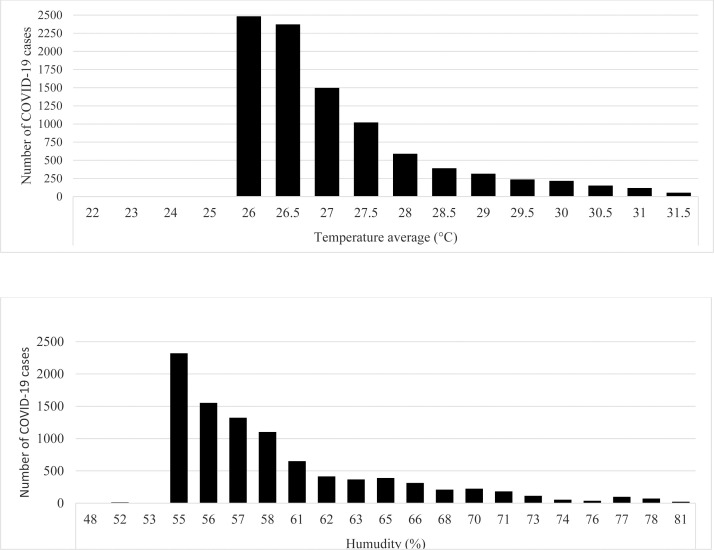
This study aimed to determine the association between average temperature and humidity with COVID-19 pandemic in Bangladesh. This study included 9,455 confirmed cases during the observation period (March 08, 2020 to May 03, 2020). The peak spread of COVID-19 occurred at an average temperature of 26 °C. We find, under a linear regression framework, high temperature and high humidity significantly reduce the transmission of COVID-19, respectively. It indicates that the arrival of summer and rainy season in Bangladesh can effectively reduce the transmission of the COVID-19. However, it is unlikely that the COVID-19 pandemic diminishes by summer since Bangladesh still have a high coronavirus transmission. Therefore, other public health interventions such as social distancing are still important for blocking the COVID-19 transmission.
本研究旨在确定孟加拉国的平均温度和湿度与新冠疫情之间的关联。本研究纳入了观察期(2020年3月8日至2020年5月3日)内的9455例确诊病例。新冠疫情的传播高峰出现在平均温度为26摄氏度时。我们发现在线性回归框架下,高温和高湿度分别显著降低了新冠病毒的传播。这表明孟加拉国夏季和雨季的到来可有效降低新冠病毒的传播。然而,由于孟加拉国的新冠病毒传播率仍然很高,新冠疫情不太可能在夏季减弱。因此,诸如保持社交距离等其他公共卫生干预措施对于阻断新冠病毒传播仍然很重要。