Jeon Oju, Lee Yu Bin, Jeong Hyoen, Lee Sang Jin, Wells Derrick, Alsberg Eben
Department of Biomedical Engineering, Case Western Reserve University, Cleveland, OH 44106.
Department of Orthopaedic Surgery, Case Western Reserve University, Cleveland, OH 44106.
Mater Horiz. 2019;6(8):1625-1631. doi: 10.1039/c9mh00375d. Epub 2019 Jun 5.
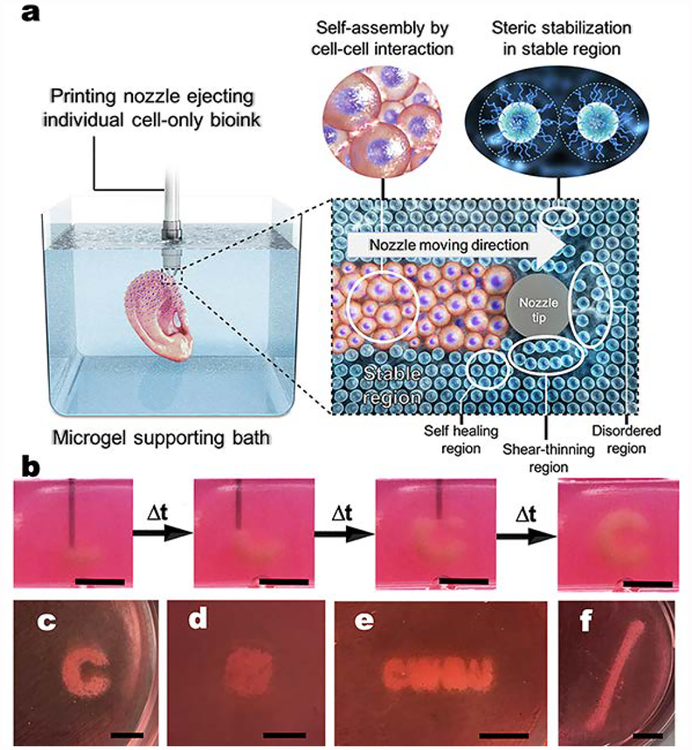
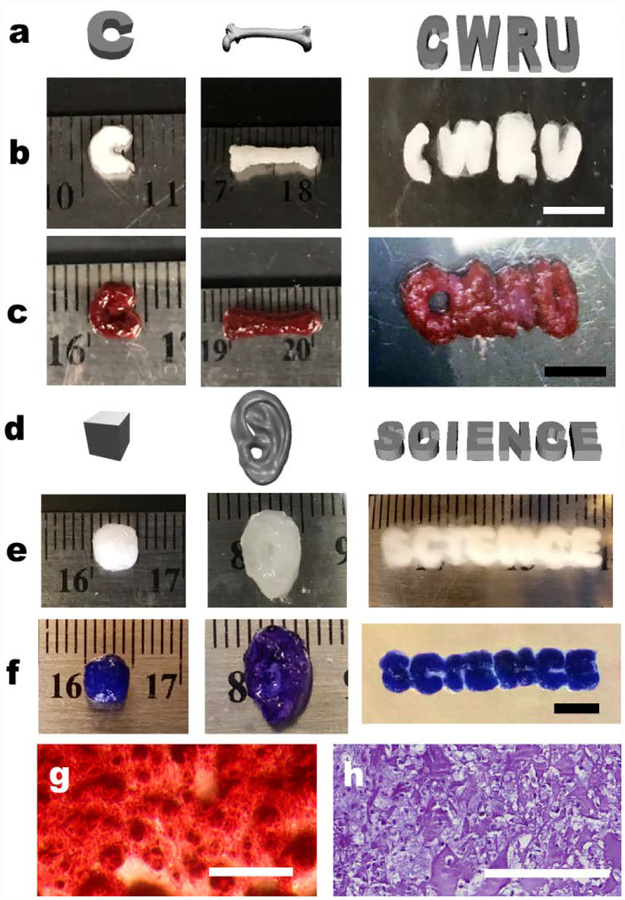
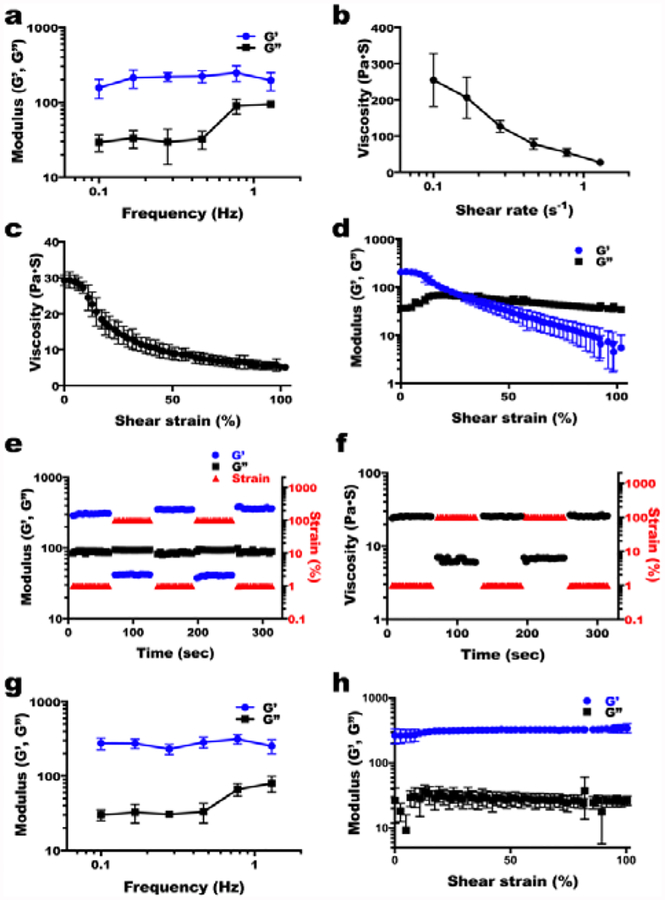
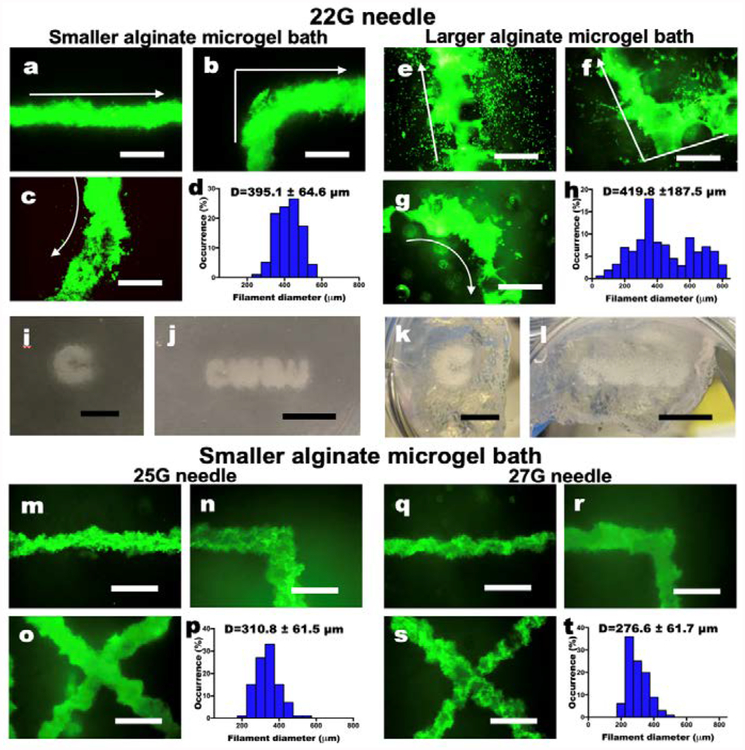
Scaffold-free engineering of three-dimensional (3D) tissue has focused on building sophisticated structures to achieve functional constructs. Although the development of advanced manufacturing techniques such as 3D printing has brought remarkable capabilities to the field of tissue engineering, technology to create and culture individual cell only-based high-resolution tissues, without an intervening biomaterial scaffold to maintain construct shape and architecture, has been unachievable to date. In this report, we introduce a cell printing platform which addresses the aforementioned challenge and permits 3D printing and long-term culture of a living cell-only bioink lacking a biomaterial carrier for functional tissue formation. A biodegradable and photocrosslinkable microgel supporting bath serves initially as a fluid, allowing free movement of the printing nozzle for high-resolution cell extrusion, while also presenting solid-like properties to sustain the structure of the printed constructs. The printed human stem cells, which are the only component of the bioink, couple together via transmembrane adhesion proteins and differentiate down tissue-specific lineages while being cultured in a further photocrosslinked supporting bath to form bone and cartilage tissue with precisely controlled structure. Collectively, this system, which is applicable to general 3D printing strategies, is a paradigm shift for printing of scaffold-free individual cells, cellular condensations and organoids, and may have far reaching impact in the fields of regenerative medicine, drug screening, and developmental biology.
三维(3D)无支架组织工程专注于构建复杂结构以实现功能性构建体。尽管3D打印等先进制造技术的发展给组织工程领域带来了卓越能力,但迄今为止,要创建并培养仅基于单个细胞的高分辨率组织,且没有生物材料支架来维持构建体形状和结构,仍是无法实现的技术难题。在本报告中,我们介绍了一种细胞打印平台,该平台解决了上述挑战,并允许对缺乏生物材料载体的仅含活细胞的生物墨水进行3D打印和长期培养,以形成功能性组织。一种可生物降解且可光交联的微凝胶支撑浴最初作为流体,允许打印喷嘴自由移动以进行高分辨率细胞挤出,同时还呈现出类似固体的特性以维持打印构建体的结构。作为生物墨水唯一成分的打印人类干细胞,通过跨膜粘附蛋白相互结合,并在进一步光交联的支撑浴中培养时分化为特定组织谱系,从而形成结构精确可控的骨和软骨组织。总体而言,该系统适用于一般的3D打印策略,是无支架单个细胞、细胞凝聚体和类器官打印的范式转变,可能会对再生医学、药物筛选和发育生物学领域产生深远影响。