Division of Cardiology, Department of Medicine.
Department of Pharmacology, and.
JCI Insight. 2020 Oct 2;5(19):141736. doi: 10.1172/jci.insight.141736.
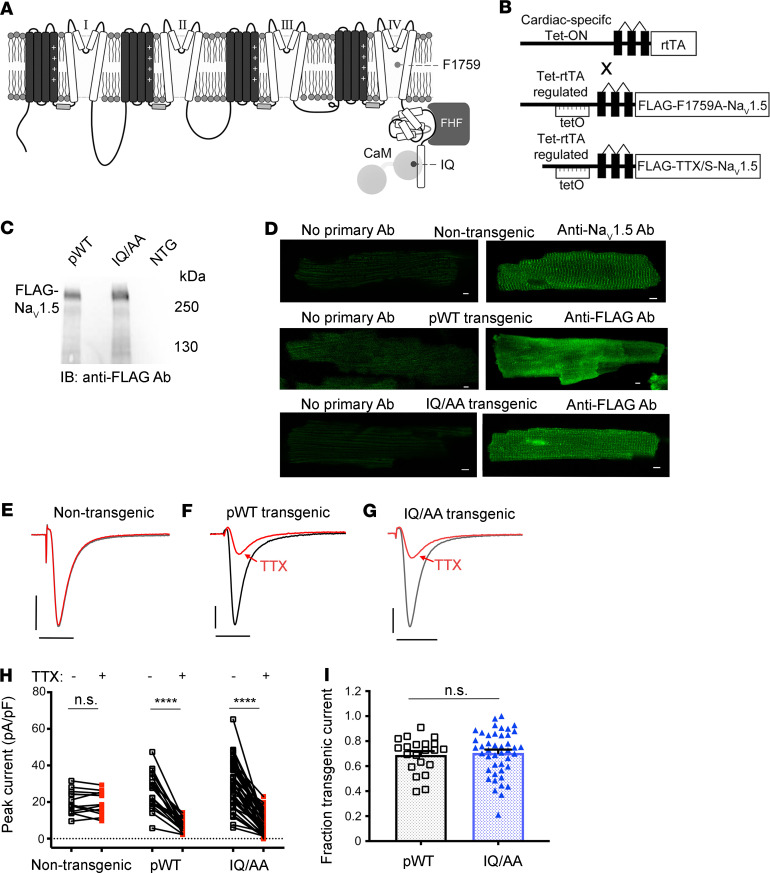
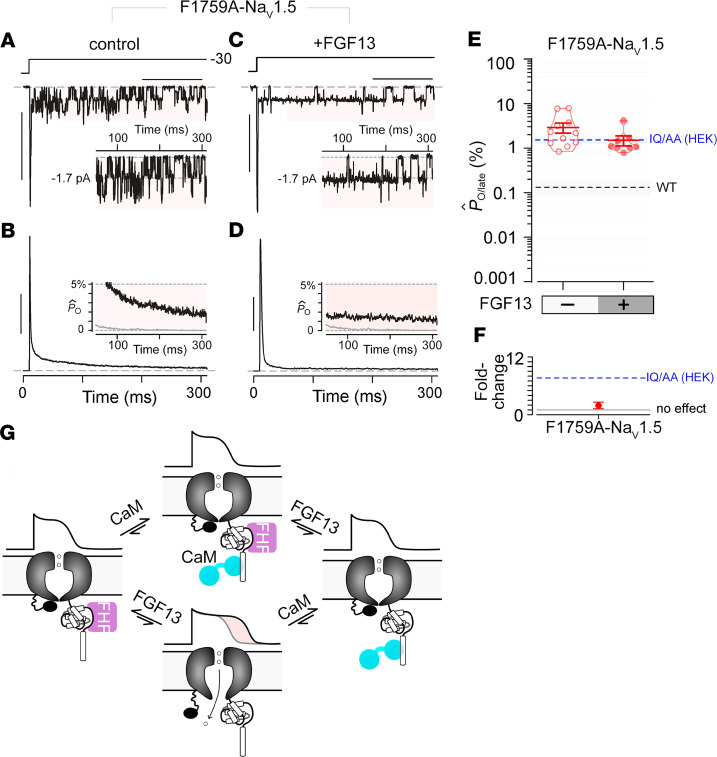
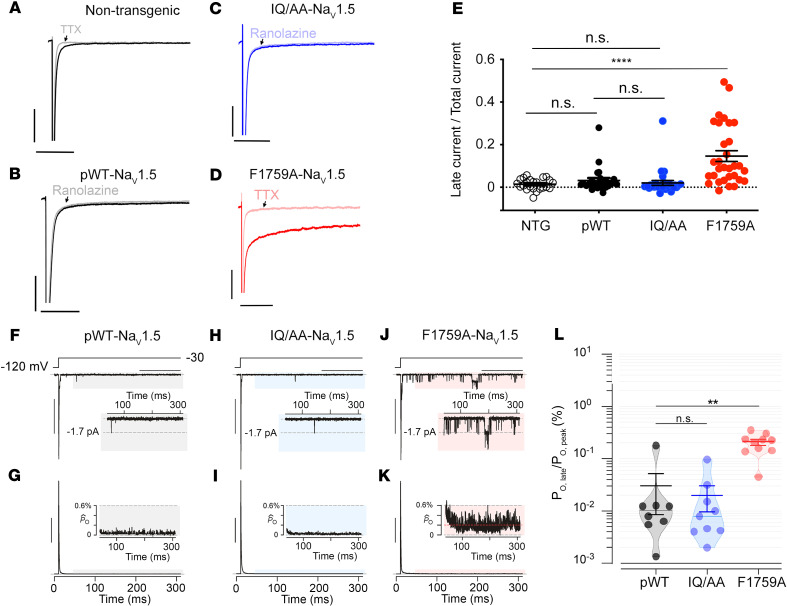
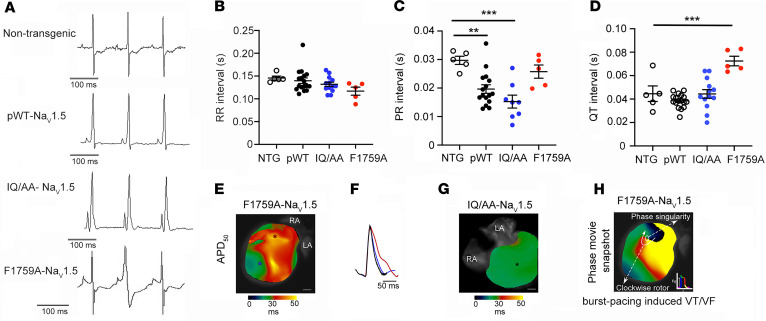
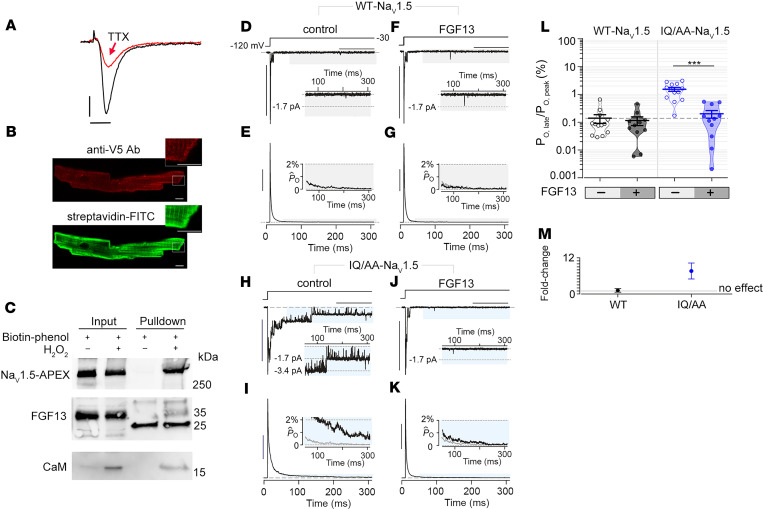
The Ca2+-binding protein calmodulin has emerged as a pivotal player in tuning Na+ channel function, although its impact in vivo remains to be resolved. Here, we identify the role of calmodulin and the NaV1.5 interactome in regulating late Na+ current in cardiomyocytes. We created transgenic mice with cardiac-specific expression of human NaV1.5 channels with alanine substitutions for the IQ motif (IQ/AA). The mutations rendered the channels incapable of binding calmodulin to the C-terminus. The IQ/AA transgenic mice exhibited normal ventricular repolarization without arrhythmias and an absence of increased late Na+ current. In comparison, transgenic mice expressing a lidocaine-resistant (F1759A) human NaV1.5 demonstrated increased late Na+ current and prolonged repolarization in cardiomyocytes, with spontaneous arrhythmias. To determine regulatory factors that prevent late Na+ current for the IQ/AA mutant channel, we considered fibroblast growth factor homologous factors (FHFs), which are within the NaV1.5 proteomic subdomain shown by proximity labeling in transgenic mice expressing NaV1.5 conjugated to ascorbate peroxidase. We found that FGF13 diminished late current of the IQ/AA but not F1759A mutant cardiomyocytes, suggesting that endogenous FHFs may serve to prevent late Na+ current in mouse cardiomyocytes. Leveraging endogenous mechanisms may furnish an alternative avenue for developing novel pharmacology that selectively blunts late Na+ current.
钙结合蛋白钙调蛋白已成为调节钠通道功能的关键因素,尽管其在体内的影响仍有待解决。在这里,我们确定钙调蛋白和 NaV1.5 相互作用组在调节心肌细胞晚期钠电流中的作用。我们创建了具有心脏特异性表达人 NaV1.5 通道的转基因小鼠,其 IQ 基序(IQ/AA)发生了丙氨酸取代。这些突变使通道无法将钙调蛋白结合到 C 末端。IQ/AA 转基因小鼠表现出正常的心室复极,没有心律失常,也没有晚期钠电流增加。相比之下,表达利多卡因抗性(F1759A)人 NaV1.5 的转基因小鼠在心肌细胞中表现出增加的晚期钠电流和延长的复极,并自发出现心律失常。为了确定防止 IQ/AA 突变通道晚期钠电流的调节因子,我们考虑了成纤维细胞生长因子同源物(FHFs),它们位于 NaV1.5 蛋白质组学亚域内,通过在表达与抗坏血酸过氧化物酶偶联的 NaV1.5 的转基因小鼠中的邻近标记显示。我们发现 FGF13 减少了 IQ/AA 但不是 F1759A 突变心肌细胞的晚期电流,表明内源性 FHFs 可能有助于防止小鼠心肌细胞中的晚期钠电流。利用内源性机制可能为开发选择性减弱晚期钠电流的新型药理学提供另一种途径。