Fan Chao, Zhang Liangzhi, Fu Haibo, Liu Chuanfa, Li Wenjing, Cheng Qi, Zhang He, Jia Shangang, Zhang Yanming
Key Laboratory of Adaptation and Evolution of Plateau Biota, Northwest Institute of Plateau Biology, Chinese Academy of Sciences, Xining 810008, China.
Qinghai Provincial Key Laboratory of Animal Ecological Genomics, Xining 810008, China.
Microorganisms. 2020 Aug 28;8(9):1311. doi: 10.3390/microorganisms8091311.
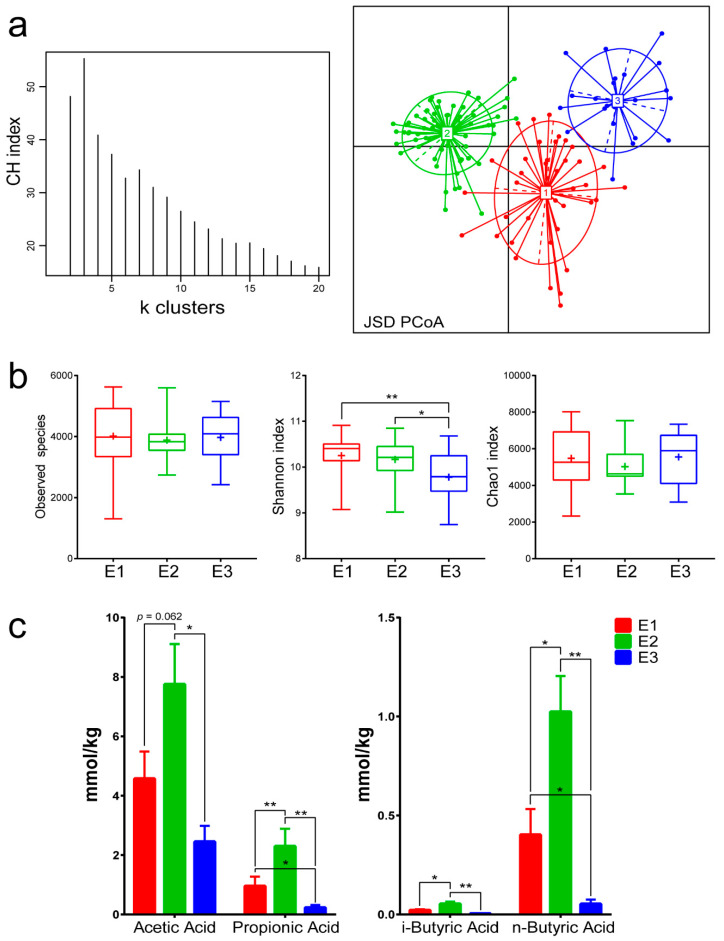
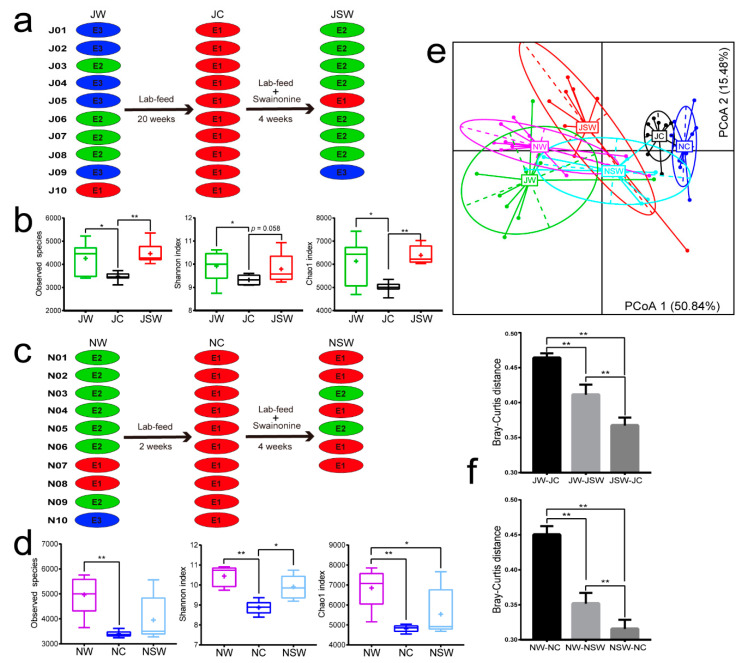
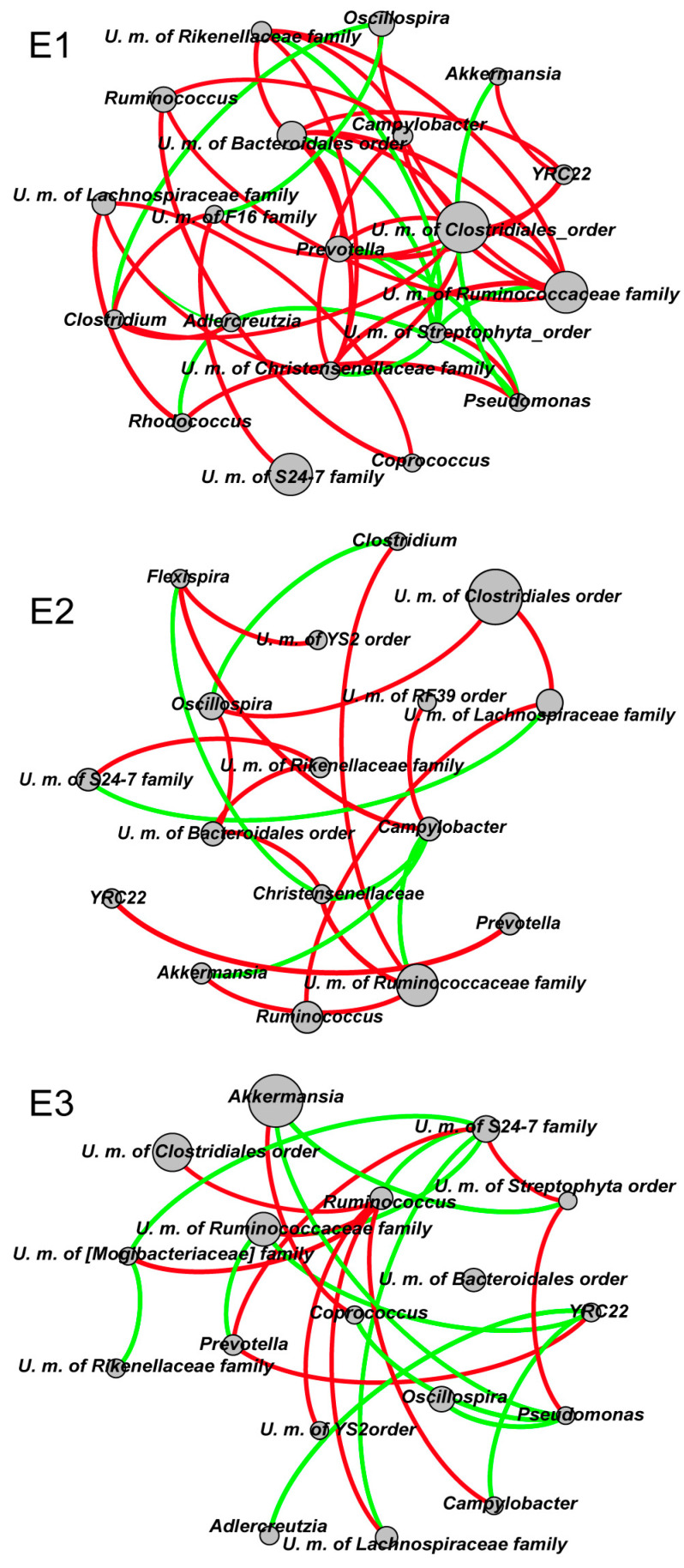
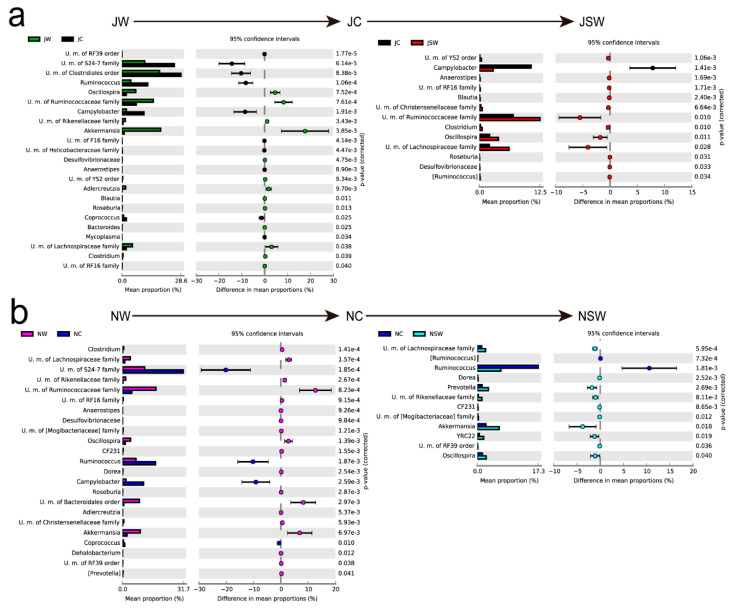
Animal gut microbiomes can be clustered into "enterotypes" characterized by an abundance of signature genera. The characteristic determinants, stability, and resilience of these community clusters remain poorly understood. We used plateau pika () as a model and identified three enterotypes by 16S rDNA sequencing. Among the top 15 genera, 13 showed significantly different levels of abundance between the enterotypes combined with different microbial functions and distinct fecal short-chain fatty acids. We monitored changes in the microbial community associated with the transfer of plateau pikas from field to laboratory and observed that feeding them a single diet reduced microbial diversity, resulting in a single enterotype with an altered composition of the dominant bacteria. However, microbial diversity, an abundance of some changed dominant genera, and enterotypes were partially restored after adding swainsonine (a plant secondary compound found in the natural diet of plateau pikas) to the feed. These results provide strong evidence that gut microbial diversity and enterotypes are directly related to specific diet, thereby indicating that the formation of different enterotypes can help animals adapt to complex food conditions. Additionally, natural plant secondary compounds can maintain dominant bacteria and inter-individual differences of gut microbiota and promote the resilience of enterotypes in small herbivorous mammals.
动物肠道微生物群可聚类为以特征性优势菌属为特征的“肠型”。这些群落聚类的特征决定因素、稳定性和恢复力仍知之甚少。我们以高原鼠兔为模型,通过16S rDNA测序鉴定出三种肠型。在前15个菌属中,有13个菌属在不同肠型之间表现出显著不同的丰度水平,同时伴有不同的微生物功能和独特的粪便短链脂肪酸。我们监测了高原鼠兔从野外转移到实验室过程中微生物群落的变化,观察到给它们单一饮食会降低微生物多样性,导致形成一种优势细菌组成改变的单一肠型。然而,在饲料中添加苦马豆素(高原鼠兔天然饮食中发现的一种植物次生化合物)后,微生物多样性、一些变化的优势菌属的丰度以及肠型都得到了部分恢复。这些结果提供了有力证据,表明肠道微生物多样性和肠型与特定饮食直接相关,从而表明不同肠型的形成有助于动物适应复杂的食物条件。此外,天然植物次生化合物可以维持肠道微生物群的优势细菌和个体差异,并促进小型食草哺乳动物肠型的恢复力。