PIONEER HDR-UK Hub, University of Birmingham, Birmingham, West Midlands, UK
Acute Medicine, University Hospitals Birmingham NHS Foundation Trust, Birmingham, UK.
BMJ Open Respir Res. 2020 Sep;7(1). doi: 10.1136/bmjresp-2020-000644.
Studies suggest that certain black and Asian minority ethnic groups experience poorer outcomes from COVID-19, but these studies have not provided insight into potential reasons for this. We hypothesised that outcomes would be poorer for those of South Asian ethnicity hospitalised from a confirmed SARS-CoV-2 infection, once confounding factors, health-seeking behaviours and community demographics were considered, and that this might reflect a more aggressive disease course in these patients.
Patients with confirmed SARS-CoV-2 infection requiring admission to University Hospitals Birmingham NHS Foundation Trust (UHB) in Birmingham, UK between 10 March 2020 and 17 April 2020 were included. Standardised admission ratio (SAR) and standardised mortality ratio (SMR) were calculated using observed COVID-19 admissions/deaths and 2011 census data. Adjusted HR for mortality was estimated using Cox proportional hazard model adjusting and propensity score matching.
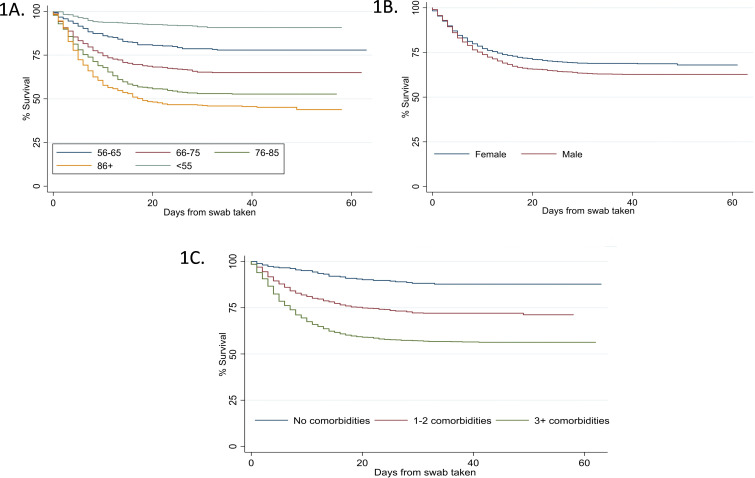
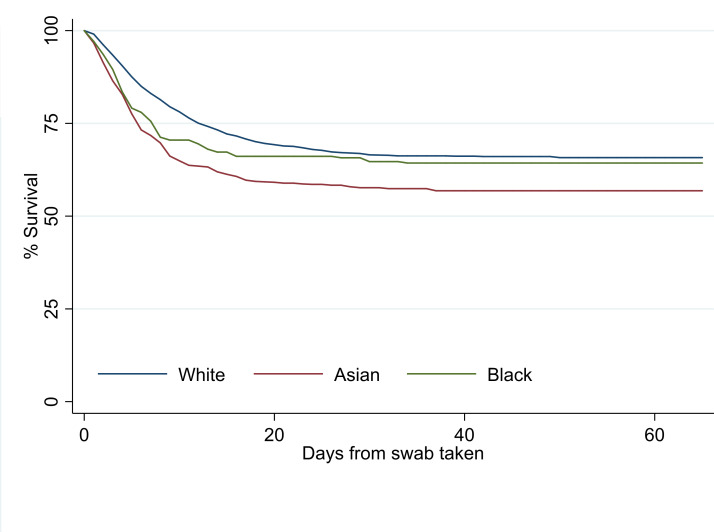
All patients admitted to UHB with COVID-19 during the study period were included (2217 in total). 58% were male, 69.5% were white and the majority (80.2%) had comorbidities. 18.5% were of South Asian ethnicity, and these patients were more likely to be younger and have no comorbidities, but twice the prevalence of diabetes than white patients. SAR and SMR suggested more admissions and deaths in South Asian patients than would be predicted and they were more likely to present with severe disease despite no delay in presentation since symptom onset. South Asian ethnicity was associated with an increased risk of death, both by Cox regression (HR 1.4, 95% CI 1.2 to 1.8), after adjusting for age, sex, deprivation and comorbidities, and by propensity score matching, matching for the same factors but categorising ethnicity into South Asian or not (HR 1.3, 95% CI 1.0 to 1.6).
Those of South Asian ethnicity appear at risk of worse COVID-19 outcomes. Further studies need to establish the underlying mechanistic pathways.
研究表明,某些黑人和亚裔少数族裔群体在 COVID-19 中的预后较差,但这些研究并未深入了解其潜在原因。我们假设,一旦考虑到混杂因素、就医行为和社区人口统计学因素,从确诊 SARS-CoV-2 感染住院的南亚裔患者的预后会更差,这可能反映出这些患者的疾病进程更为激进。
纳入 2020 年 3 月 10 日至 4 月 17 日期间在英国伯明翰大学医院 NHS 信托基金会(UHB)因 COVID-19 入院的患者。使用观察到的 COVID-19 入院人数/死亡人数和 2011 年人口普查数据计算标准化入院率(SAR)和标准化死亡率(SMR)。使用 Cox 比例风险模型调整和倾向评分匹配来估计死亡率的调整 HR。
研究期间 UHB 所有 COVID-19 入院患者均纳入研究(共 2217 例)。58%为男性,69.5%为白人,大多数(80.2%)合并症。18.5%为南亚裔,这些患者更年轻,且无合并症,但糖尿病患病率是白人患者的两倍。SAR 和 SMR 表明南亚裔患者的住院人数和死亡人数高于预期,尽管从发病到就诊的时间没有延迟,但他们更有可能出现重症疾病。南亚裔患者死亡风险增加,Cox 回归分析(HR 1.4,95%CI 1.2 至 1.8)和倾向评分匹配(将相同因素进行匹配,但将族裔分为南亚裔或非南亚裔)均显示,在校正年龄、性别、贫困和合并症后(HR 1.3,95%CI 1.0 至 1.6)。
南亚裔患者似乎有 COVID-19 预后不良的风险。需要进一步研究来确定潜在的机制途径。