Krzywański Jarosław, Pokrywka Andrzej, Młyńczak Marcel, Mikulski Tomasz
National Centre for Sports Medicine, Warsaw, Poland.
Department of Biochemistry and Pharmacogenomics, Faculty of Pharmacy, Medical University of Warsaw, Warsaw, Poland.
Biol Sport. 2020 Sep;37(3):229-237. doi: 10.5114/biolsport.2020.95633. Epub 2020 May 25.
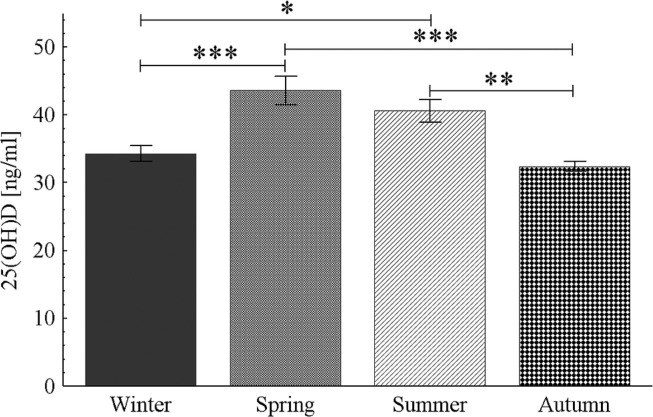
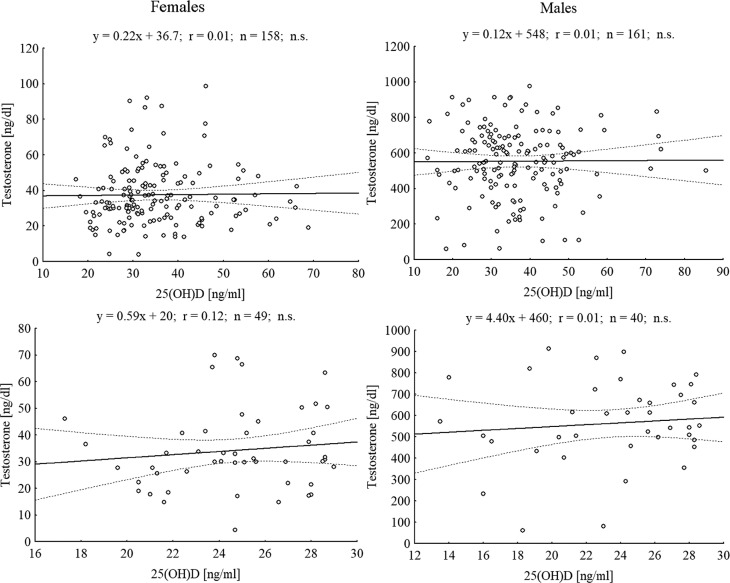
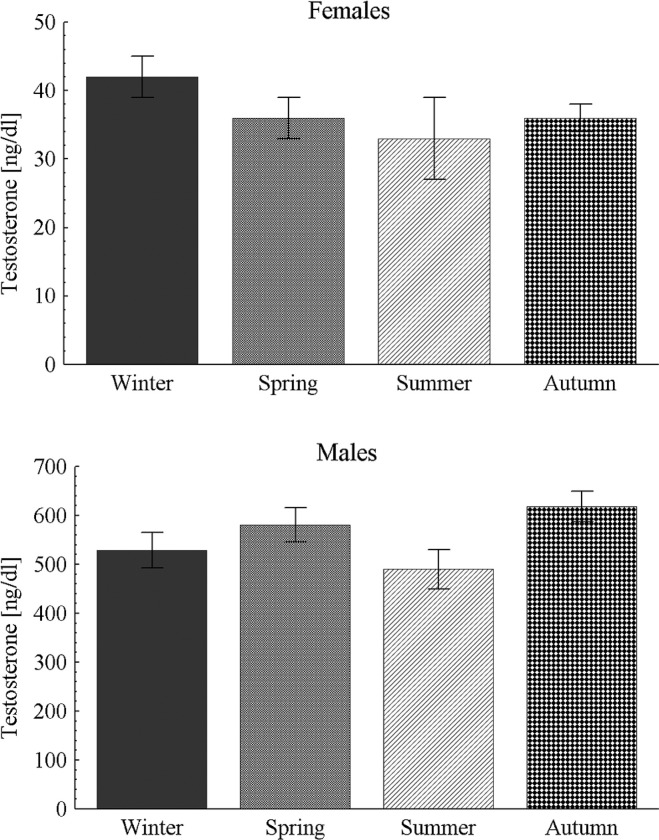
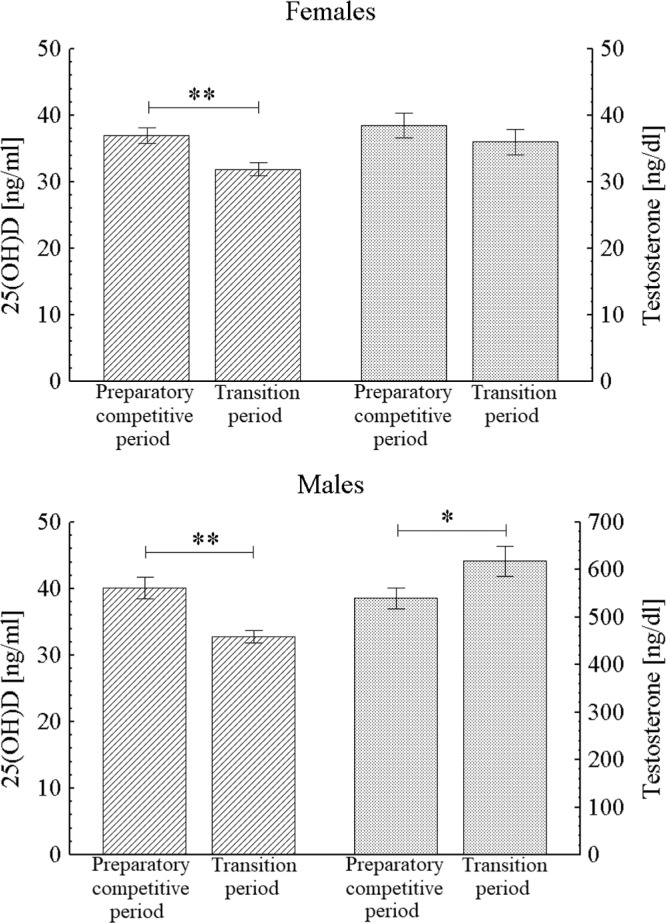
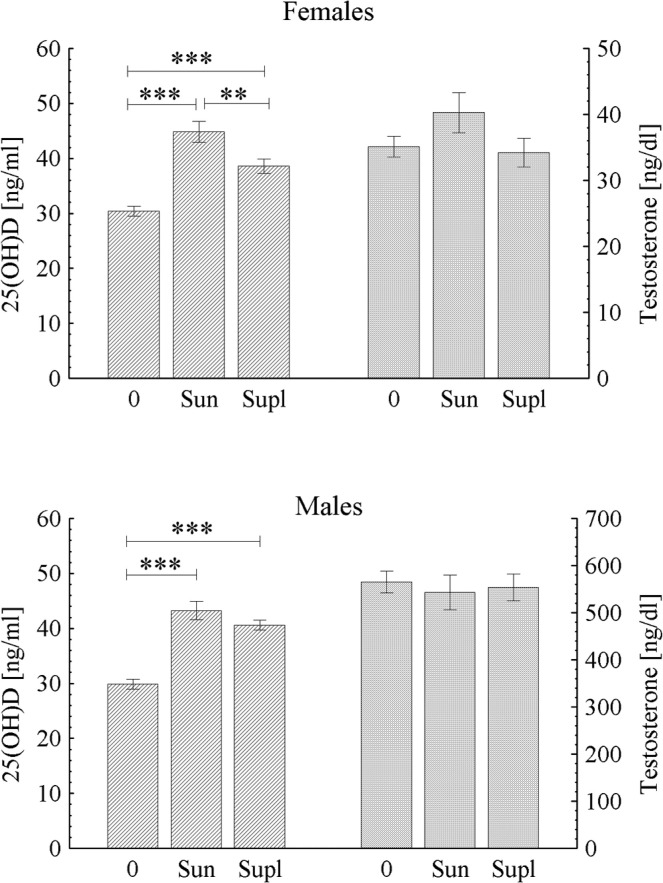
Vitamin D is a nutrient whose active form affects tissues as a hormone and possibly enhances performance. One plausible mechanism is by increasing testosterone concentration, which is established as an important factor for athletic performance. Therefore the aim of the study was to examine the relationship between plasma concentration of 25(OH)D and testosterone in Polish elite track and field athletes depending on vitamin D status, season, training period, body composition, sex, type of training, sun exposure and vitamin D supplementation. Plasma concentrations of 25(OH)D and testosterone were measured in all seasons within two years in athletes (70 females, 79 males) who represent strength (n = 103) and endurance (n = 46) kinds of sports, in the preparatorycompetitive season and transition period. There were no differences in 25(OH)D concentration between male and female athletes, insufficiency [25(OH)D < 30 ng/ml] was observed in 32.9%, whereas deficiency [25(OH)D < 20 ng/ ml] in 3.2%. Circannual rhythm was noted for vitamin D but not for testosterone concentration; no correlations between them were found either in strength or endurance athletes or between 25(OH)D and body composition. Testosterone concentration was higher in the transition period than in the preparatory-competition period only in male athletes. Higher 25(OH)D was observed in athletes who trained during winter in Africa (higher sun exposure) or used oral supplementation, whereas the respective testosterone levels were unchanged. In athletes, testosterone concentration did not reflect vitamin D status. The widespread of inadequate vitamin D status among athletes, makes it vital to recommend them the regular monitoring of 25(OH)D concentration and use of reasonable supplementation.
维生素D是一种营养素,其活性形式作为一种激素影响组织,并可能提高运动表现。一种合理的机制是通过增加睾酮浓度,而睾酮浓度已被确认为影响运动表现的重要因素。因此,本研究的目的是根据维生素D状态、季节、训练阶段、身体成分、性别、训练类型、日照情况和维生素D补充情况,研究波兰优秀田径运动员血浆25(OH)D浓度与睾酮之间的关系。在两年内的所有季节中,对代表力量型(n = 103)和耐力型(n = 46)运动项目的运动员(70名女性,79名男性)在准备-比赛季和过渡期测量血浆25(OH)D和睾酮浓度。男女运动员之间的25(OH)D浓度没有差异,32.9%的运动员存在不足[25(OH)D < 30 ng/ml],而3.2%的运动员存在缺乏[25(OH)D < 20 ng/ml]。观察到维生素D有年节律,但睾酮浓度没有;在力量型或耐力型运动员中,以及在25(OH)D与身体成分之间均未发现它们之间的相关性。仅在男性运动员中,过渡期的睾酮浓度高于准备-比赛期。在冬季于非洲训练(日照更多)或使用口服补充剂的运动员中观察到较高的25(OH)D水平,而相应的睾酮水平未改变。在运动员中,睾酮浓度不能反映维生素D状态。运动员中维生素D状态不足的情况普遍存在,因此建议他们定期监测25(OH)D浓度并合理使用补充剂至关重要。