Markphan Wattananarong, Mamimin Chonticha, Suksong Wantanasak, Prasertsan Poonsuk, O-Thong Sompong
Environmental Program, Faculty of Sciences and Technology, Nakhon Si Thammarat Rajabhat University, Nakhon Si Thammarat, Thailand.
Research and Development Office, Prince of Songkla University, Songkhla, Thailand.
PeerJ. 2020 Aug 19;8:e9693. doi: 10.7717/peerj.9693. eCollection 2020.
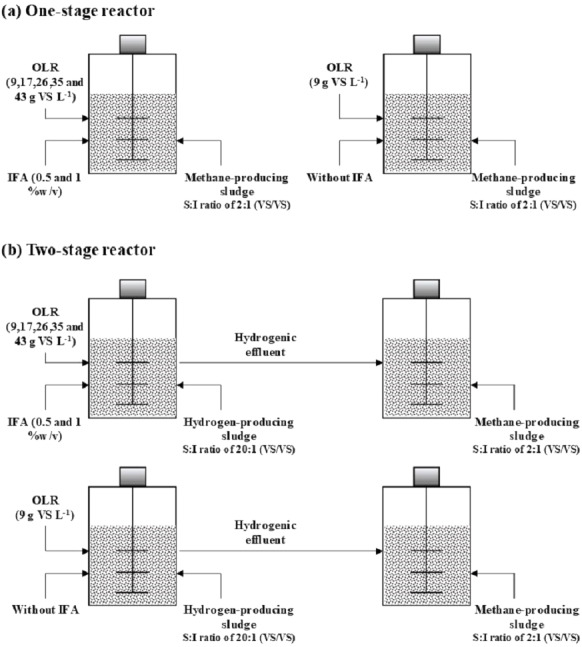
Anaerobic digestion (AD) is a suitable process for treating high moisture MSW with biogas and biofertilizer production. However, the low stability of AD performance and low methane production results from high moisture MSW due to the fast acidify of carbohydrate fermentation. The effects of organic loading and incineration fly ash addition as a pH adjustment on methane production from high moisture MSW in the single-stage AD and two-stage AD processes were investigated.
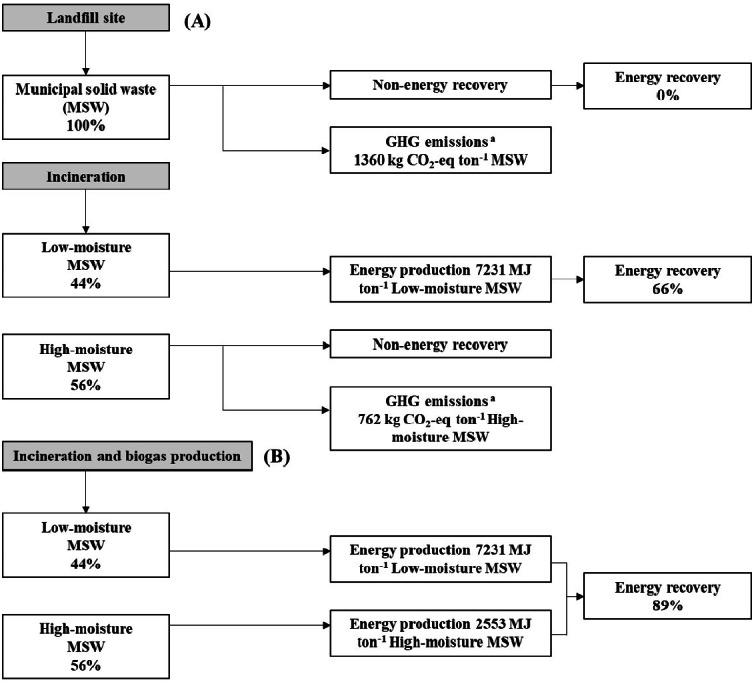
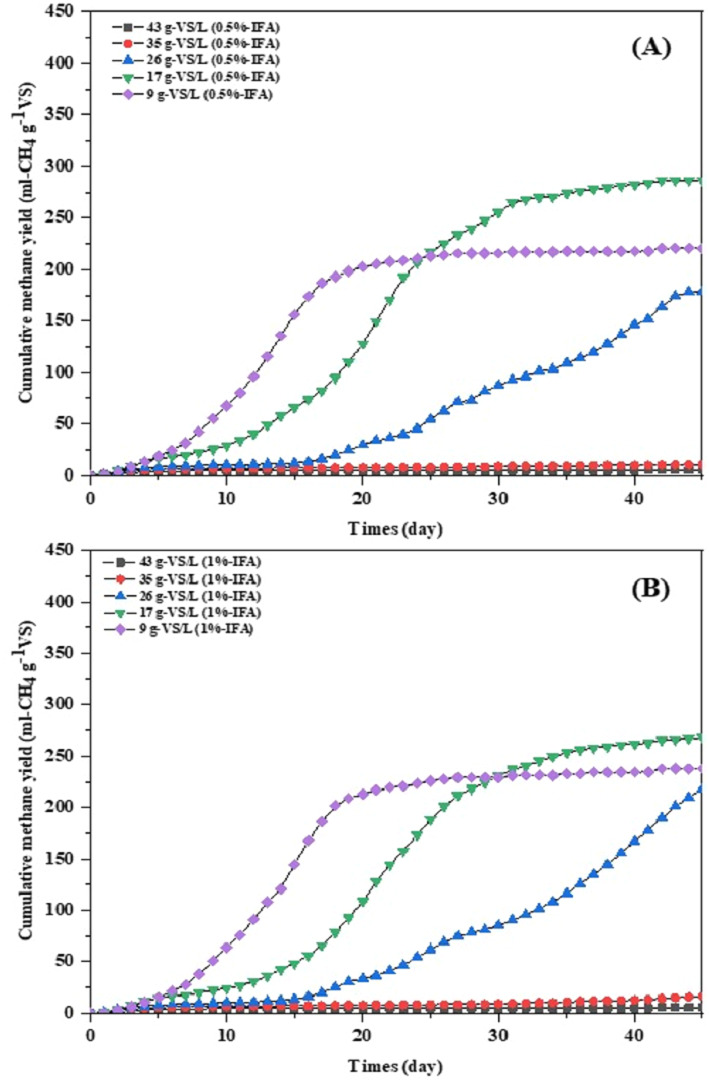
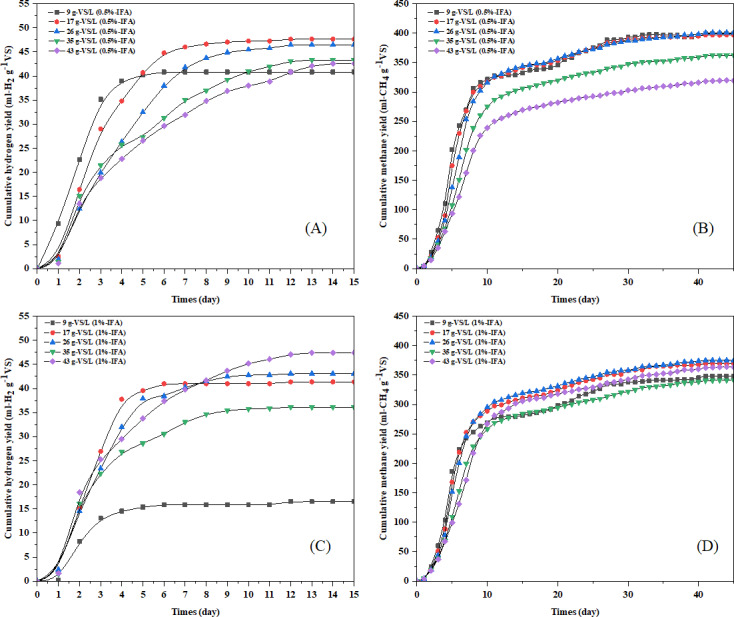
Suitable initial organic loading of the single-stage AD process was 17 gVS L at incineration fly ash (IFA) addition of 0.5% with methane yield of 287 mL CH g VS. Suitable initial organic loading of the two-stage AD process was 43 gVS L at IFA addition of 1% with hydrogen and methane yield of 47.4 ml H g VS and 363 mL CH g VS, respectively. The highest hydrogen and methane production of 8.7 m H ton of high moisture MSW and 66.6 m CH ton of high moisture MSW was achieved at organic loading of 43 gVS L at IFA addition of 1% by two-stage AD process. Biogas production by the two-stage AD process enabled 18.5% higher energy recovery than single-stage AD. The 1% addition of IFA into high moisture MSW was useful for controlling pH of the two-stage AD process with enhanced biogas production between 87-92% when compared to without IFA addition. Electricity production and energy recovery from MSW using the coupled incineration with biogas production by two-stage AD process were 9,874 MJ ton MSW and 89%, respectively.
The two-stage AD process with IFA addition for pH adjustment could improve biogas production from high moisture MSW, as well as reduce lag phase and enhance biodegradability efficiency. The coupled incineration process with biogas production using the two-stage AD process was suitable for the management of MSW with low area requirement, low greenhouse gas emissions, and high energy recovery.
厌氧消化(AD)是处理高水分城市固体废弃物并生产沼气和生物肥料的合适工艺。然而,由于碳水化合物发酵快速酸化,高水分城市固体废弃物导致AD性能稳定性低且甲烷产量低。研究了有机负荷和添加焚烧飞灰作为pH调节剂对单级AD和两级AD工艺中高水分城市固体废弃物甲烷产量的影响。
单级AD工艺的合适初始有机负荷为17 gVS/L,焚烧飞灰(IFA)添加量为0.5%,甲烷产量为287 mL CH₄/g VS。两级AD工艺的合适初始有机负荷为43 gVS/L,IFA添加量为1%,氢气和甲烷产量分别为47.4 mL H₂/g VS和363 mL CH₄/g VS。在两级AD工艺中,IFA添加量为1%、有机负荷为43 gVS/L时,高水分城市固体废弃物的氢气和甲烷产量最高,分别为8.7 m³H₂/吨高水分城市固体废弃物和66.6 m³CH₄/吨高水分城市固体废弃物。两级AD工艺的沼气产量比单级AD工艺的能量回收率高18.5%。向高水分城市固体废弃物中添加1%的IFA有助于控制两级AD工艺的pH值,与不添加IFA相比,沼气产量提高87-92%。采用两级AD工艺耦合焚烧与沼气生产,城市固体废弃物的发电量和能量回收率分别为9874 MJ/吨城市固体废弃物和89%。
添加IFA进行pH调节的两级AD工艺可以提高高水分城市固体废弃物的沼气产量,减少延迟期并提高生物降解效率。采用两级AD工艺耦合焚烧与沼气生产的工艺适用于城市固体废弃物管理,占地面积小、温室气体排放低且能量回收率高。