Department of Environmental and Safety Engineering, Ajou University, Suwon 16499, Korea.
Department of Nuclear Engineering, Pakistan Institute of Engineering and Applied Sciences, Islamabad 45650, Pakistan.
Molecules. 2020 Sep 1;25(17):3985. doi: 10.3390/molecules25173985.
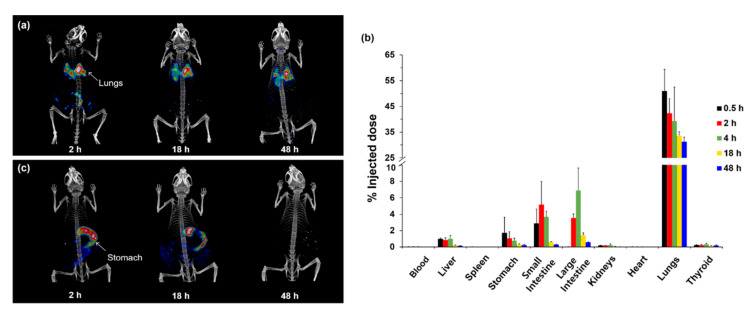
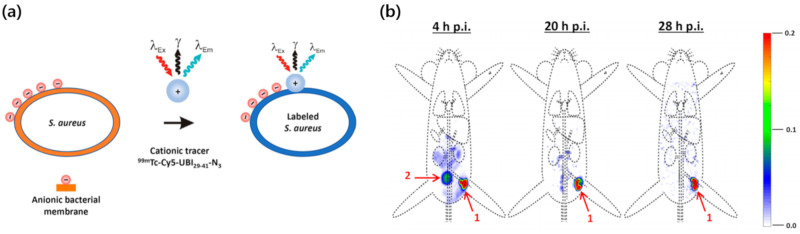
Concern about environmental exposure to hazardous substances has grown over the past several decades, because these substances have adverse effects on human health. Methods used to monitor the biological uptake of hazardous substances and their spatiotemporal behavior in vivo must be accurate and reliable. Recent advances in radiolabeling chemistry and radioanalytical methodologies have facilitated the quantitative analysis of toxic substances, and whole-body imaging can be achieved using nuclear imaging instruments. Herein, we review recent literature on the radioanalytical methods used to study the biological distribution, changes in the uptake and accumulation of hazardous substances, including industrial chemicals, nanomaterials, and microorganisms. We begin with an overview of the radioisotopes used to prepare radiotracers for in vivo experiments. We then summarize the results of molecular imaging studies involving radiolabeled toxins and their quantitative assessment. We conclude the review with perspectives on the use of radioanalytical methods for future environmental research.
过去几十年,人们对环境中有害物质暴露的担忧日益加剧,因为这些物质会对人类健康造成不良影响。因此,必须采用准确可靠的方法来监测有害物质的生物摄取及其在体内的时空调控行为。放射性标记化学和放射性分析方法的最新进展促进了对有毒物质的定量分析,并且可以使用核成像仪器进行全身成像。本文综述了用于研究包括工业化学品、纳米材料和微生物在内的有害物质的生物分布、摄取和积累变化的放射性分析方法的最新文献。我们首先概述了用于制备体内实验示踪剂的放射性同位素。然后,我们总结了涉及放射性标记毒素的分子成像研究及其定量评估的结果。最后,我们从未来环境研究的角度展望了放射性分析方法的应用。