Department of Critical Care Medicine, Zhongda Hospital, School of Medicine, Southeast University, Nanjing, 210009, China.
Stem Cell Res Ther. 2020 Sep 3;11(1):378. doi: 10.1186/s13287-020-01894-2.
Sepsis remains a leading cause of death in critically ill patients. It is well known that mesenchymal stem cells (MSCs) are a promising therapy partly due to their paracrine-mediated immunoregulatory function. Previous study demonstrated that transforming growth factor-beta1 (TGF-β1) is an important cytokine secreted by MSCs and that it participates in MSC-mediated macrophage phenotype switch from pro-inflammatory to pro-resolution. In addition, the transformation of macrophage phenotype may be a potential treatment for sepsis. However, the therapeutic effect of overexpressing TGF-β1 in MSCs (MSC-TGF-β1) on sepsis is not well understood. Therefore, this study aimed to evaluate the effects of TGF-β1 overexpressing MSCs on organ injury in cecal ligation and puncture (CLP)-induced septic mice and to detect the changes in macrophage phenotype during this process.
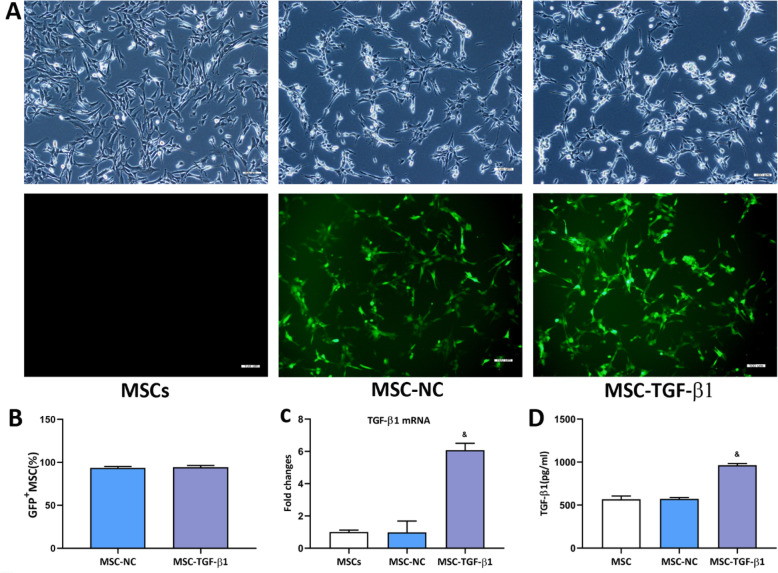
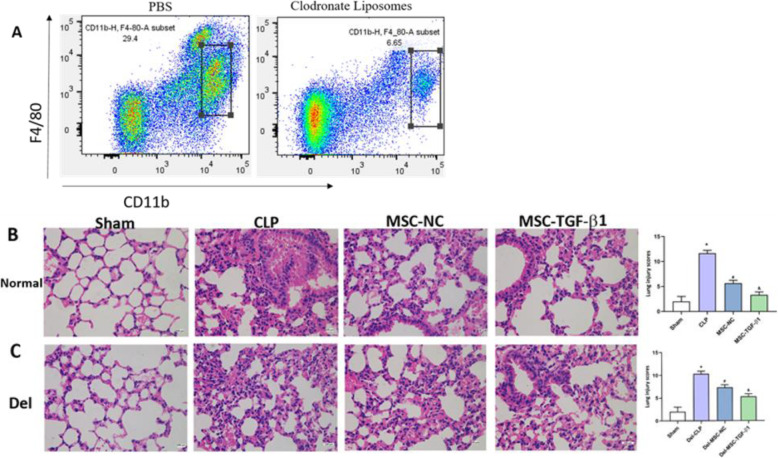
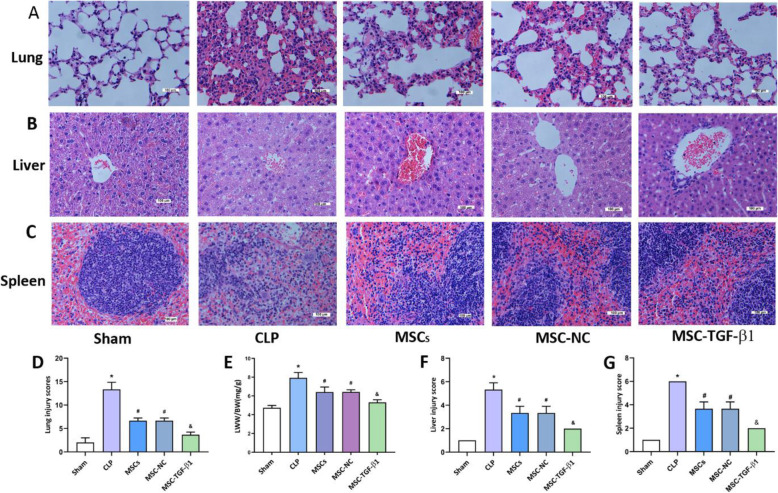
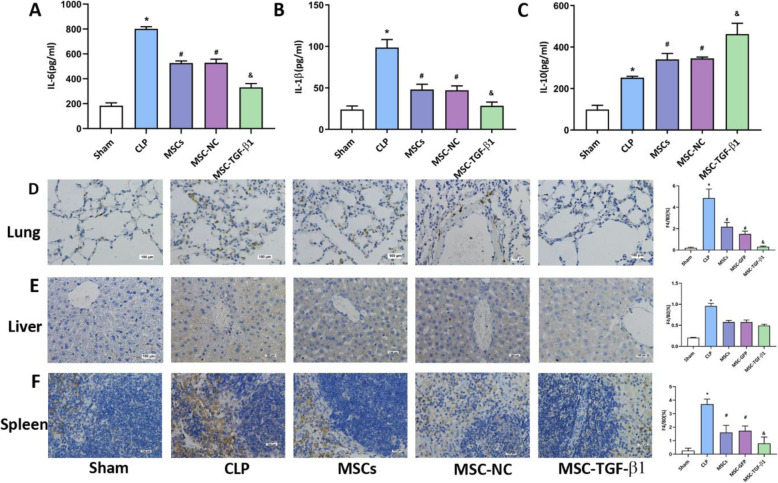
Mouse MSCs stably transfected with TGF-β1 were constructed and injected into CLP-induced septic mice via tail vein. After 24 h, the mice were sacrificed; then, the histopathology of the organ was evaluated by hematoxylin-eosin (H&E) staining. Inflammatory cytokines were detected by ELISA. Macrophage infiltration and phenotype transformation in the tissues were determined by immunohistochemistry and flow cytometry. In addition, we performed adoptive transfer of mouse peritoneal macrophage pretreated with TGF-β1 overexpressing MSCs in septic mice.
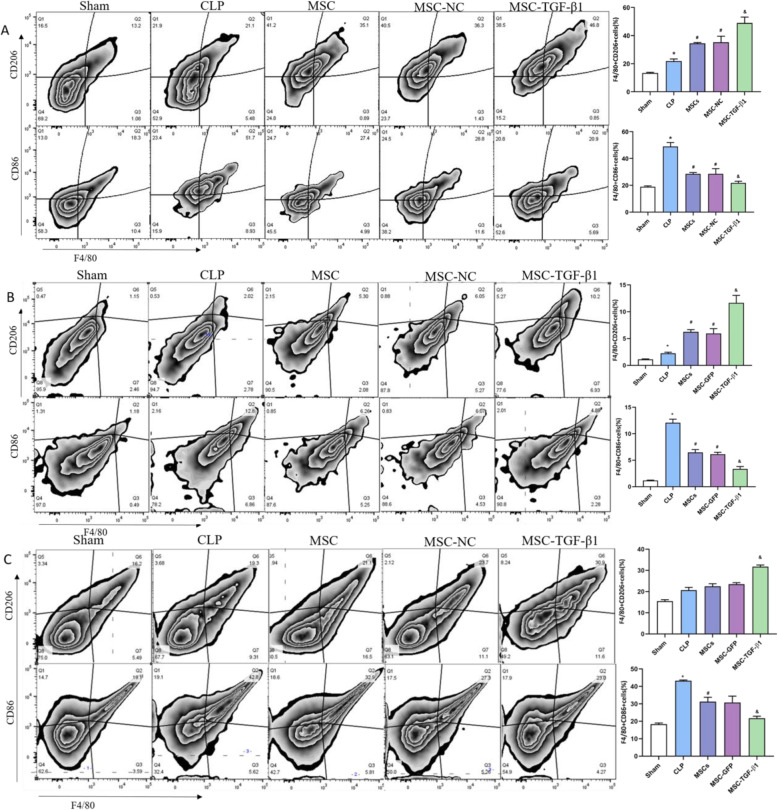
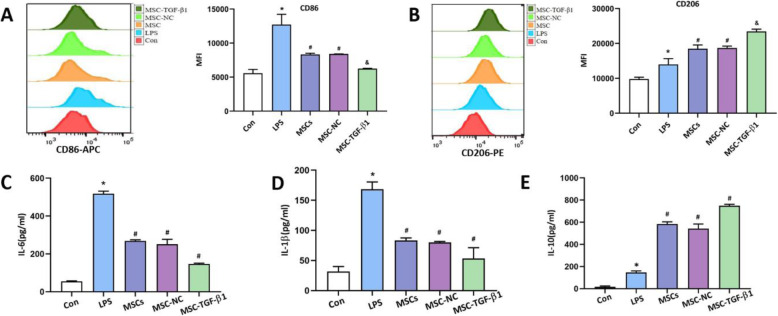
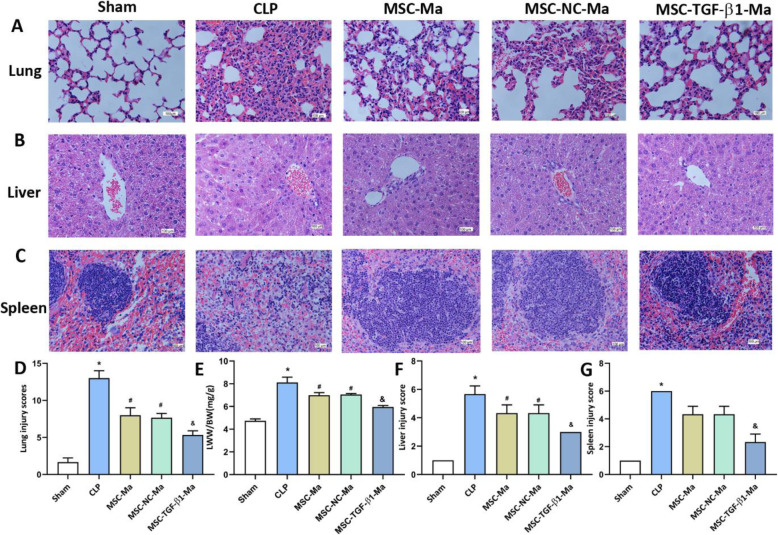
We found that infusion of TGF-β1 overexpressing MSCs attenuated the histopathological impairment of the organ, decreased the pro-inflammatory cytokine levels and inhibited macrophage infiltration in tissues. TGF-β1 overexpressing MSCs induced macrophage phenotypes changed from pro-inflammatory to pro-resolution in inflammatory environment. The adoptive transfer of mouse peritoneal macrophages pretreated with TGF-β1 overexpressing MSCs also relieved organ damage in CLP-induced septic mice.
Under septic conditions, TGF-β1 overexpressing MSCs can enhance the therapeutic effects of MSCs on organ injury and inflammation as a result of reduced macrophage infiltration and induced macrophages transformation, the adoptive transfer of macrophages treated with TGF-β1 overexpressing MSCs also relieved organ damage. This will provide new hope for the treatment of sepsis.
脓毒症仍然是危重病患者死亡的主要原因。众所周知,间充质干细胞(MSCs)是一种很有前途的治疗方法,部分原因是其旁分泌介导的免疫调节功能。先前的研究表明,转化生长因子-β1(TGF-β1)是 MSC 分泌的一种重要细胞因子,它参与 MSC 介导的巨噬细胞表型从促炎向促解决的转变。此外,巨噬细胞表型的转化可能是脓毒症的一种潜在治疗方法。然而,过表达 TGF-β1 的 MSC(MSC-TGF-β1)对脓毒症的治疗效果尚不清楚。因此,本研究旨在评估过表达 TGF-β1 的 MSC 对盲肠结扎穿刺(CLP)诱导的脓毒症小鼠器官损伤的影响,并在此过程中检测巨噬细胞表型的变化。
构建了过表达 TGF-β1 的小鼠 MSC 稳定转染细胞,并通过尾静脉注射到 CLP 诱导的脓毒症小鼠中。24 小时后,处死小鼠,用苏木精-伊红(H&E)染色评估器官的组织病理学变化。通过 ELISA 检测炎症细胞因子。通过免疫组化和流式细胞术检测组织中巨噬细胞浸润和表型转化。此外,我们对脓毒症小鼠进行了过表达 TGF-β1 的 MSC 预处理的小鼠腹腔巨噬细胞的过继转移实验。
我们发现,输注过表达 TGF-β1 的 MSC 可减轻器官组织学损伤,降低促炎细胞因子水平,并抑制组织中巨噬细胞浸润。TGF-β1 过表达 MSC 在炎症环境中诱导巨噬细胞表型从促炎向促解决转化。过继转移经过表达 TGF-β1 的 MSC 预处理的小鼠腹腔巨噬细胞也可减轻 CLP 诱导的脓毒症小鼠的器官损伤。
在脓毒症条件下,过表达 TGF-β1 的 MSC 可通过减少巨噬细胞浸润和诱导巨噬细胞转化来增强 MSC 对器官损伤和炎症的治疗效果,过继转移经过表达 TGF-β1 的 MSC 预处理的巨噬细胞也可减轻器官损伤。这为脓毒症的治疗提供了新的希望。