The Nuffield Department of Orthopaedics, Rheumatology and Musculoskeletal Sciences, Botnar Research Centre, Windmill Road, Oxford, OX3 7LD, UK.
Nuffield Orthopaedic Centre, Windmill Road, Oxford, OX3 7LD, UK.
Sci Rep. 2020 Sep 3;10(1):13939. doi: 10.1038/s41598-020-70786-5.
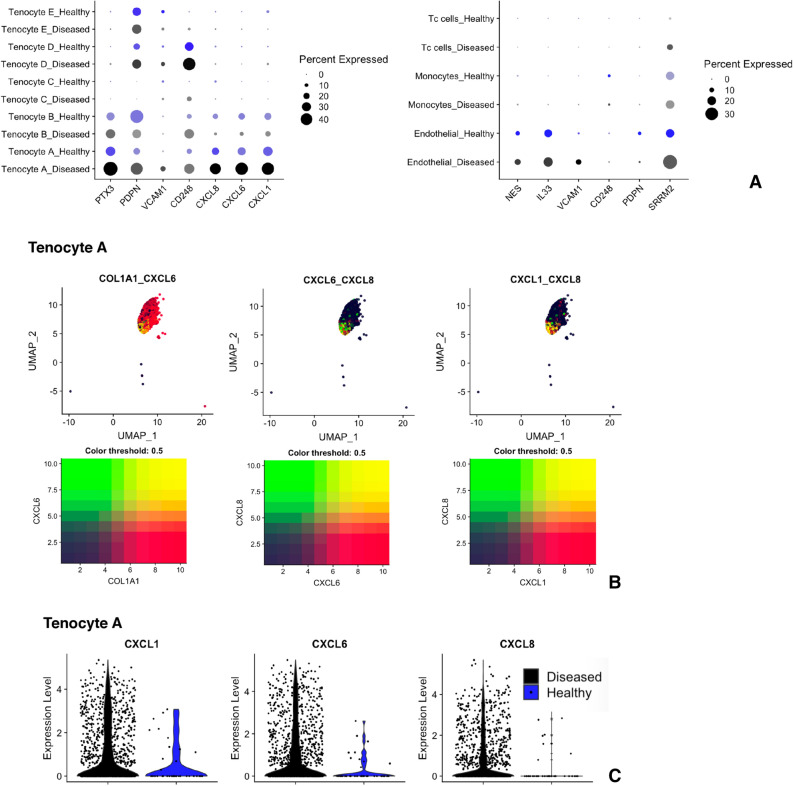
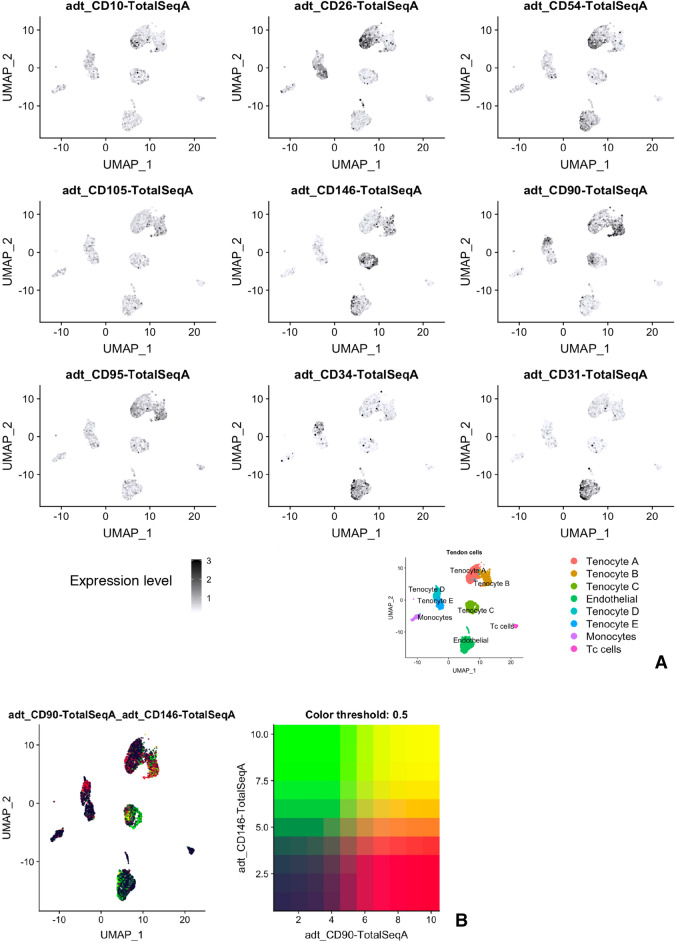
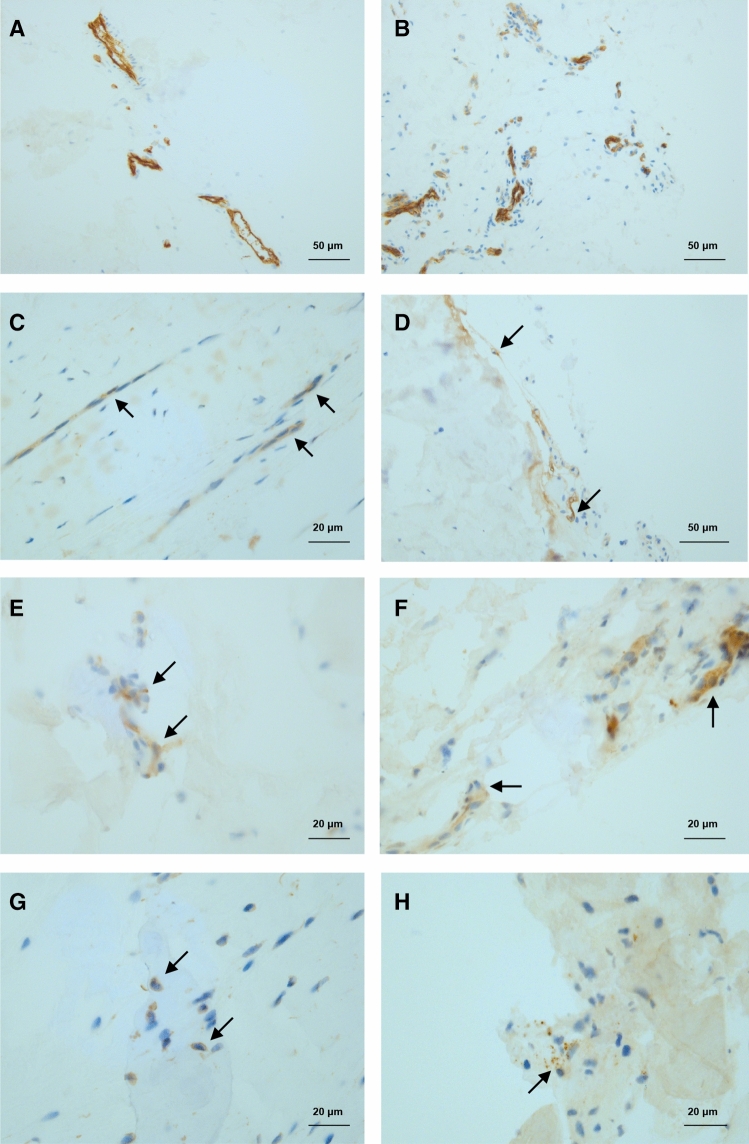
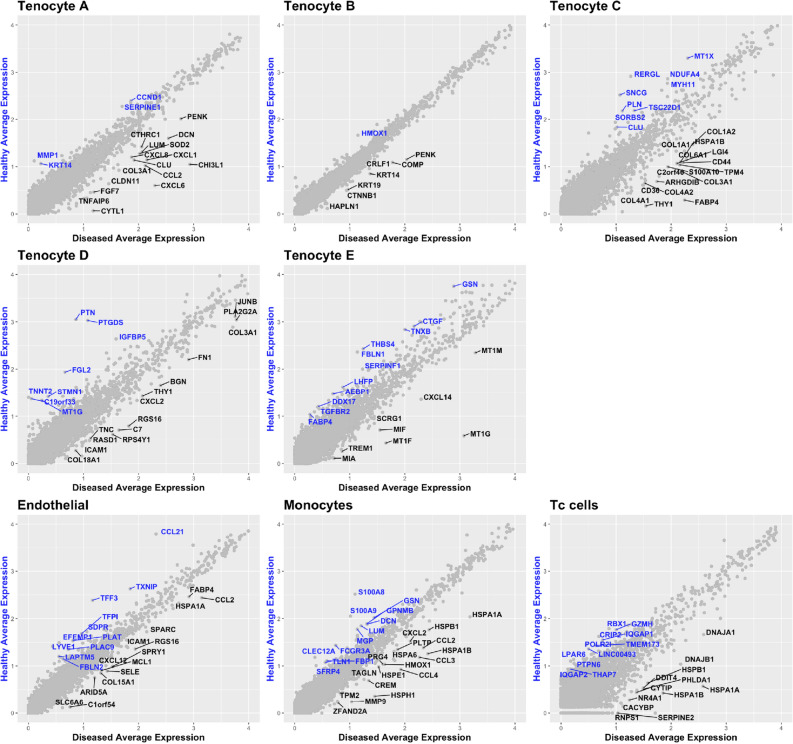
Tendinopathy accounts for over 30% of primary care consultations and represents a growing healthcare challenge in an active and increasingly ageing population. Recognising critical cells involved in tendinopathy is essential in developing therapeutics to meet this challenge. Tendon cells are heterogenous and sparsely distributed in a dense collagen matrix; limiting previous methods to investigate cell characteristics ex vivo. We applied next generation CITE-sequencing; combining surface proteomics with in-depth, unbiased gene expression analysis of > 6400 single cells ex vivo from 11 chronically tendinopathic and 8 healthy human tendons. Immunohistochemistry validated the single cell findings. For the first time we show that human tendon harbours at least five distinct COL1A1/2 expressing tenocyte populations in addition to endothelial cells, T-cells, and monocytes. These consist of KRT7/SCX+ cells expressing microfibril associated genes, PTX3+ cells co-expressing high levels of pro-inflammatory markers, APOD+ fibro-adipogenic progenitors, TPPP3/PRG4+ chondrogenic cells, and ITGA7+ smooth muscle-mesenchymal cells. Surface proteomic analysis identified markers by which these sub-classes could be isolated and targeted in future. Chronic tendinopathy was associated with increased expression of pro-inflammatory markers PTX3, CXCL1, CXCL6, CXCL8, and PDPN by microfibril associated tenocytes. Diseased endothelium had increased expression of chemokine and alarmin genes including IL33.
肌腱病占初级保健咨询的 30%以上,在活跃且日益老龄化的人群中,代表着医疗保健面临的一个日益严峻的挑战。认识到与肌腱病相关的关键细胞对于开发治疗方法应对这一挑战至关重要。肌腱细胞在密集的胶原基质中呈异质性和稀疏分布;这限制了之前用于研究细胞特性的方法在体外进行。我们应用了下一代 CITE-seq 技术;将表面蛋白质组学与对来自 11 例慢性肌腱病和 8 例健康人肌腱的 6400 多个单细胞进行的深入、无偏倚的基因表达分析相结合。免疫组织化学验证了单细胞的发现。我们首次表明,人类肌腱除了内皮细胞、T 细胞和单核细胞外,还至少含有五种不同的 COL1A1/2 表达的腱细胞群体。这些群体包括表达微纤维相关基因的 KRT7/SCX+细胞、同时表达高水平促炎标志物的 PTX3+细胞、APOD+成纤维脂肪祖细胞、TPPP3/PRG4+软骨细胞和 ITGA7+平滑肌间充质细胞。表面蛋白质组学分析鉴定了可用于未来分离和靶向这些亚类的标志物。慢性肌腱病与微纤维相关腱细胞中促炎标志物 PTX3、CXCL1、CXCL6、CXCL8 和 PDPN 的表达增加有关。患病的内皮细胞增加了趋化因子和警报素基因的表达,包括 IL33。