Xu Haoran, Li Peiyao, Yang Zhicheng, Liu Xiaoli, Wang Zhao, Yan Wei, He Maoqing, Chu Wenya, She Yingjia, Li Yuzhu, Cao Desen, Yan Muyang, Zhang Zhengbo
Medical School of Chinese PLA, Beijing, China.
Medical Sergeant School, Army Medical University, Hebei, China.
J Med Syst. 2020 Sep 4;44(10):182. doi: 10.1007/s10916-020-01653-z.
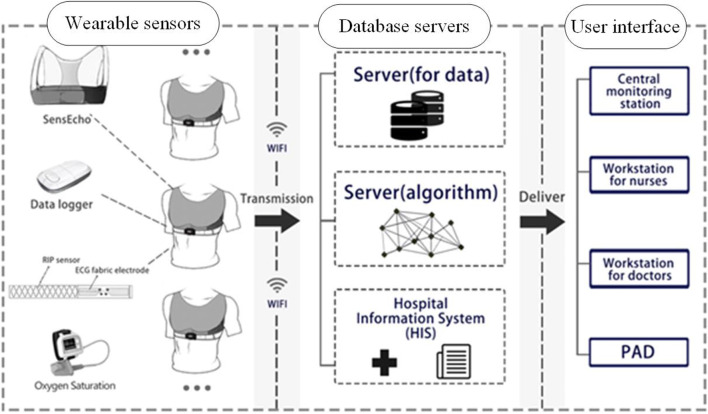
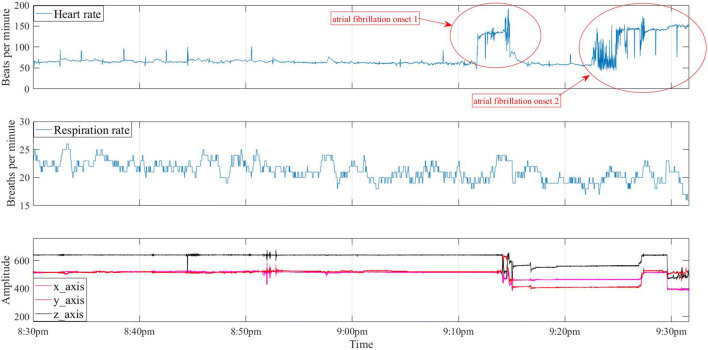
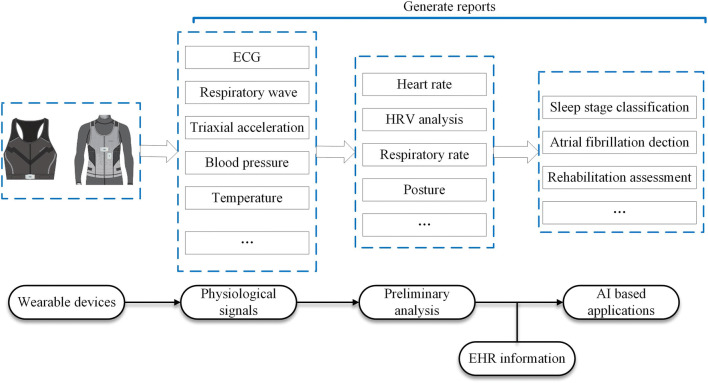
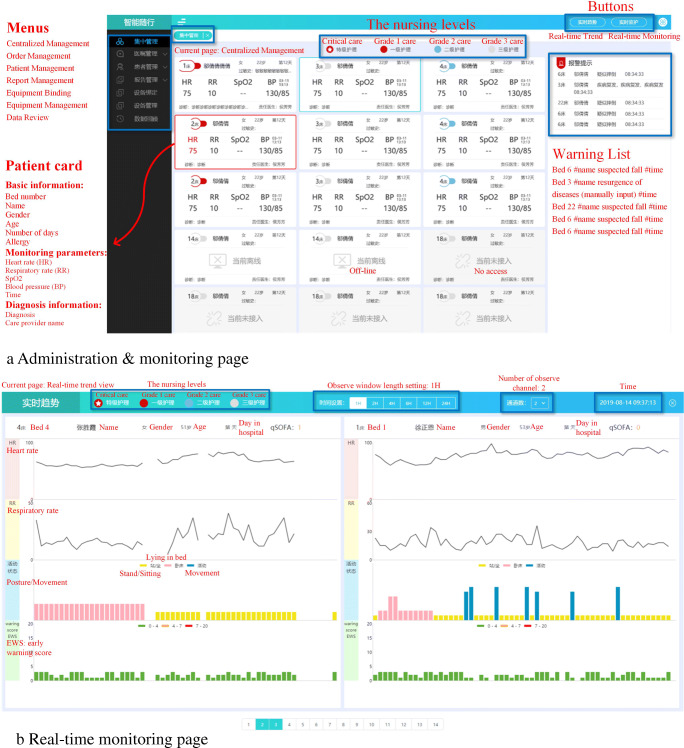
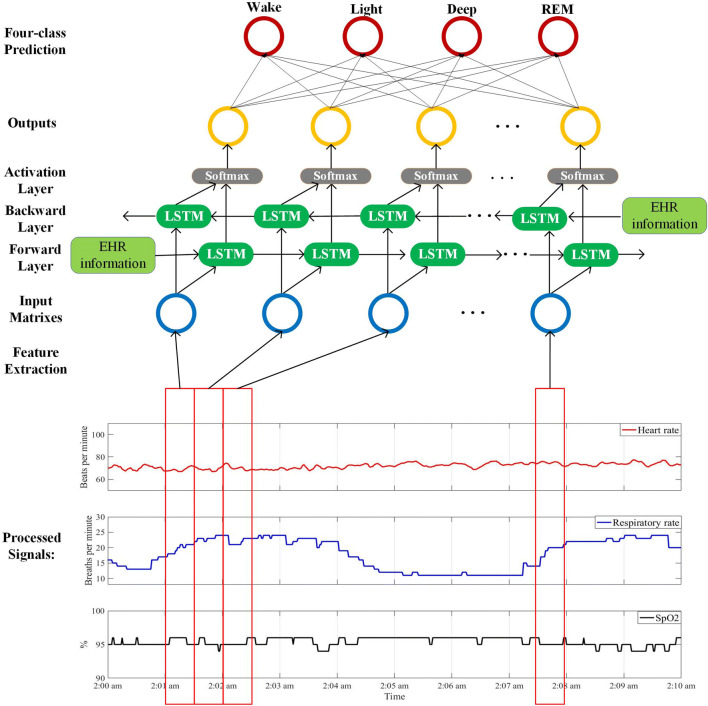
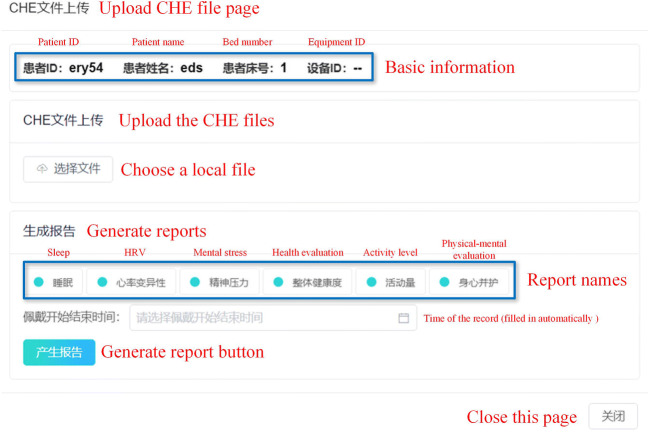
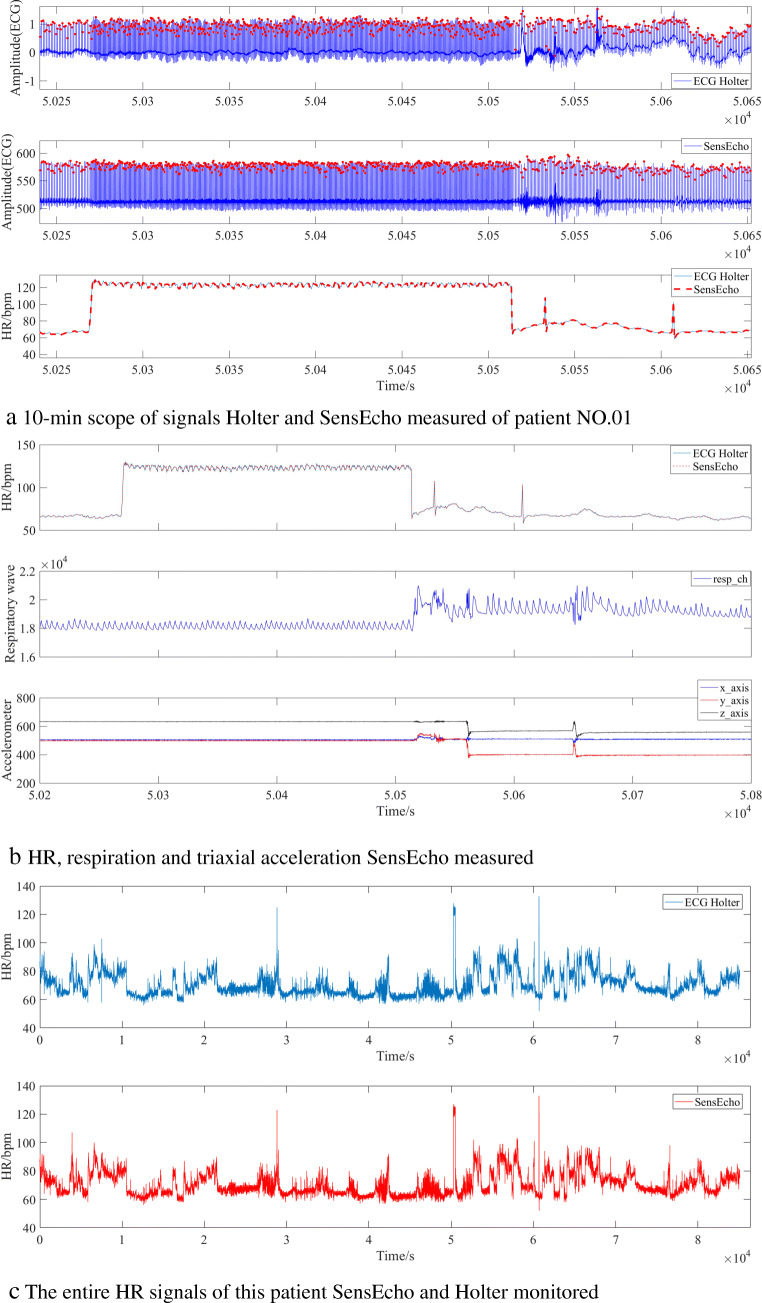
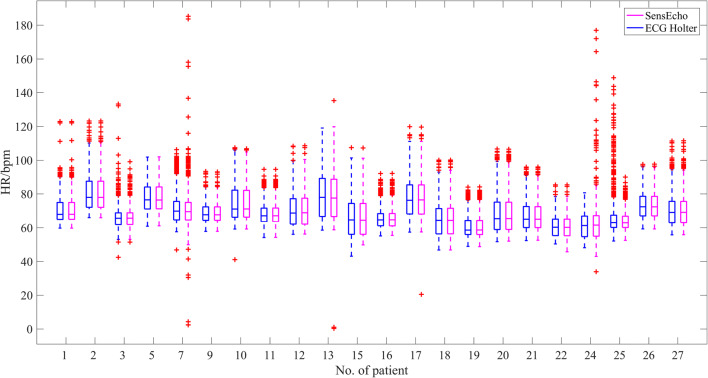
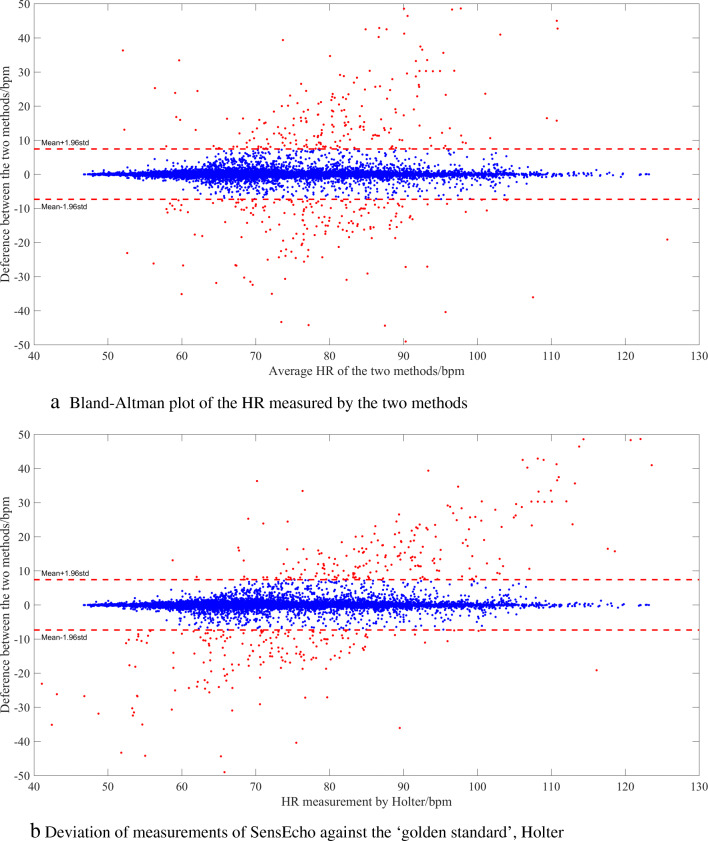
Physiological signals can contain abundant personalized information and indicate health status and disease deterioration. However, in current medical practice, clinicians working in the general wards are usually lack of plentiful means and tools to continuously monitor the physiological signals of the inpatients. To address this problem, we here presented a medical-grade wireless monitoring system based on wearable and artificial intelligence technology. The system consists of a multi-sensor wearable device, database servers and user interfaces. It can monitor physiological signals such as electrocardiography and respiration and transmit data wirelessly. We highly integrated the system with the existing hospital information system and explored a set of processes of physiological signal acquisition, storage, analysis, and combination with electronic health records. Multi-scale information extracted from physiological signals and related to the deterioration or abnormality of patients could be shown on the user interfaces, while a variety of reports could be provided daily based on time-series signal processing technology and machine learning to make more information accessible to clinicians. Apart from an initial attempt to implement the system in a realistic clinical environment, we also conducted a preliminary validation of the core processes in the workflow. The heart rate veracity validation of 22 patient volunteers showed that the system had a great consistency with ECG Holter, and bias for heart rate was 0.04 (95% confidence interval: -7.34 to 7.42) beats per minute. The Bland-Altman analysis showed that 98.52% of the points were located between Mean ± 1.96SD. This system has been deployed in the general wards of the Hyperbaric Oxygen Department and Respiratory Medicine Department and has collected more than 1000 cases from the clinic. The whole system will continue to be updated based on clinical feedback. It has been demonstrated that this system can provide reliable physiological monitoring for patients in general wards and has the potential to generate more personalized pathophysiological information related to disease diagnosis and treatment from the continuously monitored physiological data.
生理信号可以包含丰富的个人信息,并指示健康状况和疾病恶化情况。然而,在当前的医疗实践中,普通病房的临床医生通常缺乏丰富的手段和工具来持续监测住院患者的生理信号。为了解决这个问题,我们在此展示了一种基于可穿戴和人工智能技术的医疗级无线监测系统。该系统由多传感器可穿戴设备、数据库服务器和用户界面组成。它可以监测心电图和呼吸等生理信号,并无线传输数据。我们将该系统与现有的医院信息系统高度集成,并探索了一套生理信号采集、存储、分析以及与电子健康记录相结合的流程。从生理信号中提取的与患者病情恶化或异常相关的多尺度信息可以在用户界面上显示,同时基于时间序列信号处理技术和机器学习每天提供各种报告,以便临床医生获取更多信息。除了在实际临床环境中实施该系统的初步尝试外,我们还对工作流程中的核心流程进行了初步验证。对22名患者志愿者的心率准确性验证表明,该系统与心电图动态监测仪具有高度一致性,心率偏差为每分钟0.04次(95%置信区间:-7.34至7.42次)。Bland-Altman分析表明,98.52%的点位于均值±1.96标准差之间。该系统已部署在高压氧科和呼吸内科的普通病房,并已从临床收集了1000多例病例。整个系统将根据临床反馈持续更新。事实证明,该系统可以为普通病房的患者提供可靠的生理监测,并有可能从持续监测的生理数据中生成更多与疾病诊断和治疗相关的个性化病理生理信息。