• 文献检索
  • 文档翻译
  • 深度研究
  • 学术资讯
  • Suppr Zotero 插件Zotero 插件
  • 邀请有礼
  • 套餐&价格
  • 历史记录
应用&插件
Suppr Zotero 插件Zotero 插件浏览器插件Mac 客户端Windows 客户端微信小程序
定价
高级版会员购买积分包购买API积分包
服务
文献检索文档翻译深度研究API 文档MCP 服务
关于我们
关于 Suppr公司介绍联系我们用户协议隐私条款
关注我们

Suppr 超能文献

核心技术专利:CN118964589B侵权必究
粤ICP备2023148730 号-1Suppr @ 2026

文献检索

告别复杂PubMed语法,用中文像聊天一样搜索,搜遍4000万医学文献。AI智能推荐,让科研检索更轻松。

立即免费搜索

文件翻译

保留排版,准确专业,支持PDF/Word/PPT等文件格式,支持 12+语言互译。

免费翻译文档

深度研究

AI帮你快速写综述,25分钟生成高质量综述,智能提取关键信息,辅助科研写作。

立即免费体验

机器学习在医疗保健组织中的应用实施:实证研究的系统回顾。

Implementation of Machine Learning Applications in Health Care Organizations: Systematic Review of Empirical Studies.

机构信息

Center for Research on Health and Social Care Management (CERGAS), SDA Bocconi School of Management, Milan, Italy.

Department of Social and Political Sciences, Bocconi University, Milan, Italy.

出版信息

J Med Internet Res. 2024 Nov 25;26:e55897. doi: 10.2196/55897.

DOI:10.2196/55897
PMID:39586084
原文链接:https://pmc.ncbi.nlm.nih.gov/articles/PMC11629039/
Abstract

BACKGROUND

There is a growing enthusiasm for machine learning (ML) among academics and health care practitioners. Despite the transformative potential of ML-based applications for patient care, their uptake and implementation in health care organizations are sporadic. Numerous challenges currently impede or delay the widespread implementation of ML in clinical practice, and limited knowledge is available regarding how these challenges have been addressed.

OBJECTIVE

This work aimed to (1) examine the characteristics of ML-based applications and the implementation process in clinical practice, using the Consolidated Framework for Implementation Research (CFIR) for theoretical guidance and (2) synthesize the strategies adopted by health care organizations to foster successful implementation of ML.

METHODS

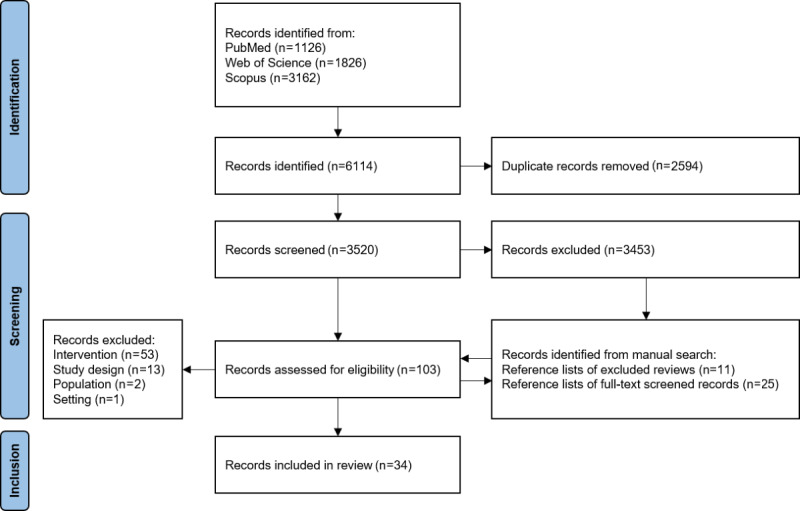
A systematic literature review was conducted based on the PRISMA (Preferred Reporting Items for Systematic Reviews and Meta-Analyses) guidelines. The search was conducted in PubMed, Scopus, and Web of Science over a 10-year period (2013-2023). The search strategy was built around 4 blocks of keywords (artificial intelligence, implementation, health care, and study type). Only empirical studies documenting the implementation of ML applications in clinical settings were considered. The implementation process was investigated using a thematic analysis and coding procedure.

RESULTS

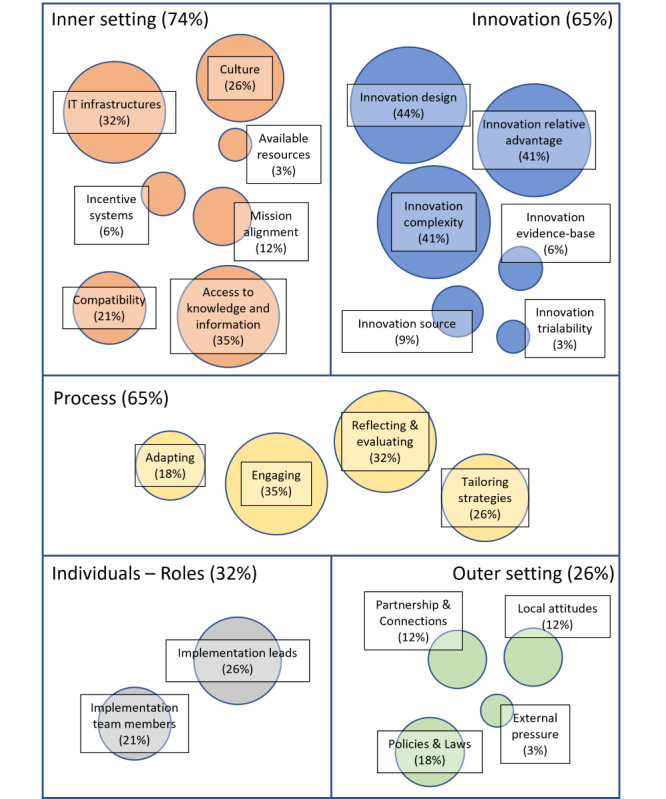
Thirty-four studies were selected for data synthesis. Selected papers were relatively recent, with only 9% (3/34) of records published before 2019. ML-based applications were implemented mostly within hospitals (29/34, 85%). In terms of clinical workflow, ML-based applications supported mostly prognosis (20/34, 59%) and diagnosis (10/34, 29%). The implementation efforts were analyzed using CFIR domains. As for the inner setting domain, access to knowledge and information (12/34, 35%), information technology infrastructure (11/34, 32%), and organizational culture (9/34, 26%) were among the most observed dimensions influencing the success of implementation. As for the ML innovation itself, factors deemed relevant were its design (15/34, 44%), the relative advantage with respect to existing clinical practice (14/34, 41%), and perceived complexity (14/34, 41%). As for the other domains (ie, processes, roles, and outer setting), stakeholder engagement (12/34, 35%), reflecting and evaluating practices (11/34, 32%), and the presence of implementation leaders (9/34, 26%) were the main factors identified as important.

CONCLUSIONS

This review sheds some light on the factors that are relevant and that should be accounted for in the implementation process of ML-based applications in health care. While the relevance of ML-specific dimensions, like trust, emerges clearly across several implementation domains, the evidence from this review highlighted that relevant implementation factors are not necessarily specific for ML but rather transversal for digital health technologies. More research is needed to further clarify the factors that are relevant to implementing ML-based applications at the organizational level and to support their uptake within health care organizations.

TRIAL REGISTRATION

PROSPERO 403873; https://www.crd.york.ac.uk/prospero/display_record.php?RecordID=403873.

INTERNATIONAL REGISTERED REPORT IDENTIFIER (IRRID): RR2-10.2196/47971.
https://cdn.ncbi.nlm.nih.gov/pmc/blobs/9a76/11629039/02603d47dc62/jmir_v26i1e55897_fig2.jpg
https://cdn.ncbi.nlm.nih.gov/pmc/blobs/9a76/11629039/b84624ef6808/jmir_v26i1e55897_fig1.jpg
https://cdn.ncbi.nlm.nih.gov/pmc/blobs/9a76/11629039/02603d47dc62/jmir_v26i1e55897_fig2.jpg
https://cdn.ncbi.nlm.nih.gov/pmc/blobs/9a76/11629039/b84624ef6808/jmir_v26i1e55897_fig1.jpg
https://cdn.ncbi.nlm.nih.gov/pmc/blobs/9a76/11629039/02603d47dc62/jmir_v26i1e55897_fig2.jpg
摘要

背景

机器学习(ML)在学术界和医疗保健从业者中越来越受欢迎。尽管基于 ML 的应用程序在患者护理方面具有变革性的潜力,但它们在医疗保健组织中的采用和实施仍零星存在。目前有许多挑战阻碍或延迟了 ML 在临床实践中的广泛实施,并且对于这些挑战是如何被解决的,我们的了解是有限的。

目的

本研究旨在(1)使用实施研究整合框架(CFIR)进行理论指导,研究基于 ML 的应用程序在临床实践中的特征和实施过程,以及(2)综合医疗保健组织采用的策略,以促进 ML 的成功实施。

方法

根据 PRISMA(系统评价和荟萃分析的首选报告项目)指南进行了系统文献综述。在 10 年的时间内(2013-2023 年),在 PubMed、Scopus 和 Web of Science 中进行了搜索。该搜索策略围绕着 4 个关键字块(人工智能、实施、医疗保健和研究类型)构建。仅考虑记录 ML 应用程序在临床环境中实施情况的实证研究。使用主题分析和编码程序来调查实施过程。

结果

选择了 34 项研究进行数据综合。所选论文相对较新,只有 9%(3/34)的记录发表于 2019 年之前。基于 ML 的应用程序主要在医院内实施(29/34,85%)。就临床工作流程而言,基于 ML 的应用程序主要支持预后(20/34,59%)和诊断(10/34,29%)。使用 CFIR 领域分析实施工作。就内部环境领域而言,获得知识和信息(12/34,35%)、信息技术基础设施(11/34,32%)和组织文化(9/34,26%)是影响实施成功的最常见维度。就 ML 创新本身而言,被认为相关的因素包括其设计(15/34,44%)、相对于现有临床实践的相对优势(14/34,41%)和感知复杂性(14/34,41%)。就其他领域(即流程、角色和外部环境)而言,利益相关者的参与(12/34,35%)、反思和评估实践(11/34,32%)以及实施领导者的存在(9/34,26%)是确定为重要的主要因素。

结论

本综述揭示了与医疗保健中基于 ML 的应用程序实施过程相关且应考虑的因素。虽然 ML 特定维度的相关性,如信任,在几个实施领域中清晰可见,但本综述的证据强调,相关的实施因素不一定是 ML 特有的,而是数字健康技术的普遍因素。需要进一步研究,以进一步澄清与组织层面实施 ML 相关的因素,并支持其在医疗保健组织中的采用。

相似文献

1
Implementation of Machine Learning Applications in Health Care Organizations: Systematic Review of Empirical Studies.机器学习在医疗保健组织中的应用实施:实证研究的系统回顾。
J Med Internet Res. 2024 Nov 25;26:e55897. doi: 10.2196/55897.
2
Health professionals' experience of teamwork education in acute hospital settings: a systematic review of qualitative literature.医疗专业人员在急症医院环境中团队合作教育的经验:对定性文献的系统综述
JBI Database System Rev Implement Rep. 2016 Apr;14(4):96-137. doi: 10.11124/JBISRIR-2016-1843.
3
Home treatment for mental health problems: a systematic review.心理健康问题的居家治疗:一项系统综述
Health Technol Assess. 2001;5(15):1-139. doi: 10.3310/hta5150.
4
Signs and symptoms to determine if a patient presenting in primary care or hospital outpatient settings has COVID-19.在基层医疗机构或医院门诊环境中,如果患者出现以下症状和体征,可判断其是否患有 COVID-19。
Cochrane Database Syst Rev. 2022 May 20;5(5):CD013665. doi: 10.1002/14651858.CD013665.pub3.
5
Implementation strategies for WHO guidelines to prevent, detect, and treat postpartum hemorrhage.世界卫生组织预防、诊断和治疗产后出血指南的实施策略
Cochrane Database Syst Rev. 2025 Feb 26;2(2):CD016223. doi: 10.1002/14651858.CD016223.
6
Falls prevention interventions for community-dwelling older adults: systematic review and meta-analysis of benefits, harms, and patient values and preferences.社区居住的老年人跌倒预防干预措施:系统评价和荟萃分析的益处、危害以及患者的价值观和偏好。
Syst Rev. 2024 Nov 26;13(1):289. doi: 10.1186/s13643-024-02681-3.
7
[Volume and health outcomes: evidence from systematic reviews and from evaluation of Italian hospital data].[容量与健康结果:来自系统评价和意大利医院数据评估的证据]
Epidemiol Prev. 2013 Mar-Jun;37(2-3 Suppl 2):1-100.
8
Sexual Harassment and Prevention Training性骚扰与预防培训
9
Behavioral interventions to reduce risk for sexual transmission of HIV among men who have sex with men.降低男男性行为者中艾滋病毒性传播风险的行为干预措施。
Cochrane Database Syst Rev. 2008 Jul 16(3):CD001230. doi: 10.1002/14651858.CD001230.pub2.
10
How to Implement Digital Clinical Consultations in UK Maternity Care: the ARM@DA Realist Review.如何在英国产科护理中实施数字临床会诊:ARM@DA实证主义综述
Health Soc Care Deliv Res. 2025 May 21:1-77. doi: 10.3310/WQFV7425.

引用本文的文献

1
Diagnostic performance of deep learning for predicting glioma isocitrate dehydrogenase and 1p/19q co-deletion in MRI: a systematic review and meta-analysis.深度学习在磁共振成像中预测胶质瘤异柠檬酸脱氢酶和1p/19q共缺失的诊断性能:一项系统评价和荟萃分析
Eur Radiol. 2025 Aug 16. doi: 10.1007/s00330-025-11898-2.
2
Adoption of artificial intelligence applications in clinical practice: Insights from a Survey of Healthcare Organizations in Lombardy, Italy.意大利伦巴第地区医疗保健组织调查的见解:人工智能应用在临床实践中的采用情况
Digit Health. 2025 Jul 10;11:20552076251355680. doi: 10.1177/20552076251355680. eCollection 2025 Jan-Dec.
3

本文引用的文献

1
Systematic reviews of machine learning in healthcare: a literature review.系统综述在医疗保健中的机器学习:文献综述。
Expert Rev Pharmacoecon Outcomes Res. 2024 Jan;24(1):63-115. doi: 10.1080/14737167.2023.2279107. Epub 2024 Jan 18.
2
A Framework to Guide Implementation of AI in Health Care: Protocol for a Cocreation Research Project.指导医疗保健领域人工智能实施的框架:共创研究项目方案
JMIR Res Protoc. 2023 Nov 8;12:e50216. doi: 10.2196/50216.
3
Implementation of Machine Learning Applications in Health Care Organizations: Protocol for a Systematic Review of Empirical Studies.
Organization of services for severe chronic Noncommunicable diseases at first-level hospitals in nine lower-income countries: Results from a Baseline assessment of PEN-Plus initiation.
九个低收入国家一级医院严重慢性非传染性疾病服务的组织: PEN-Plus启动基线评估结果
PLOS Glob Public Health. 2025 May 5;5(5):e0004552. doi: 10.1371/journal.pgph.0004552. eCollection 2025.
4
Diagnostic Accuracy of Deep Learning Models in Predicting Glioma Molecular Markers: A Systematic Review and Meta-Analysis.深度学习模型预测胶质瘤分子标志物的诊断准确性:系统评价与Meta分析
Diagnostics (Basel). 2025 Mar 21;15(7):797. doi: 10.3390/diagnostics15070797.
机器学习应用在医疗保健机构中的实施:实证研究系统评价方案
JMIR Res Protoc. 2023 Sep 12;12:e47971. doi: 10.2196/47971.
4
Collaborative strategies for deploying AI-based physician decision support systems: challenges and deployment approaches.部署基于人工智能的医生决策支持系统的协作策略:挑战与部署方法
NPJ Digit Med. 2023 Aug 5;6(1):137. doi: 10.1038/s41746-023-00889-6.
5
Deployment of machine learning algorithms to predict sepsis: systematic review and application of the SALIENT clinical AI implementation framework.部署机器学习算法预测脓毒症:SALIENT 临床人工智能实施框架的系统评价与应用。
J Am Med Inform Assoc. 2023 Jun 20;30(7):1349-1361. doi: 10.1093/jamia/ocad075.
6
Realizing the potential of artificial intelligence in healthcare: Learning from intervention, innovation, implementation and improvement sciences.认识到人工智能在医疗保健领域的潜力:借鉴干预、创新、实施与改进科学。
Front Health Serv. 2022 Sep 15;2:961475. doi: 10.3389/frhs.2022.961475. eCollection 2022.
7
Implemented machine learning tools to inform decision-making for patient care in hospital settings: a scoping review.实施机器学习工具以在医院环境中为患者护理决策提供信息:范围综述。
BMJ Open. 2023 Feb 7;13(2):e065845. doi: 10.1136/bmjopen-2022-065845.
8
Making machine learning matter to clinicians: model actionability in medical decision-making.让机器学习对临床医生产生重要影响:医学决策中的模型可操作性。
NPJ Digit Med. 2023 Jan 24;6(1):7. doi: 10.1038/s41746-023-00753-7.
9
Machine learning-driven clinical decision support system for concept-based searching: a field trial in a Norwegian hospital.基于机器学习的临床决策支持系统用于基于概念的搜索:挪威医院的现场试验。
BMC Med Inform Decis Mak. 2023 Jan 10;23(1):5. doi: 10.1186/s12911-023-02101-x.
10
Stakeholder Perspectives of Clinical Artificial Intelligence Implementation: Systematic Review of Qualitative Evidence.利益相关者对临床人工智能实施的观点:定性证据的系统评价。
J Med Internet Res. 2023 Jan 10;25:e39742. doi: 10.2196/39742.