Laboratory of Tumor Inflammation and Angiogenesis, Center for Cancer Biology (CCB), VIB, Leuven, Belgium.
Laboratory of Tumor Inflammation and Angiogenesis, Department of Oncology, KU Leuven, Leuven, Belgium.
EMBO Mol Med. 2020 Oct 7;12(10):e11210. doi: 10.15252/emmm.201911210. Epub 2020 Sep 4.
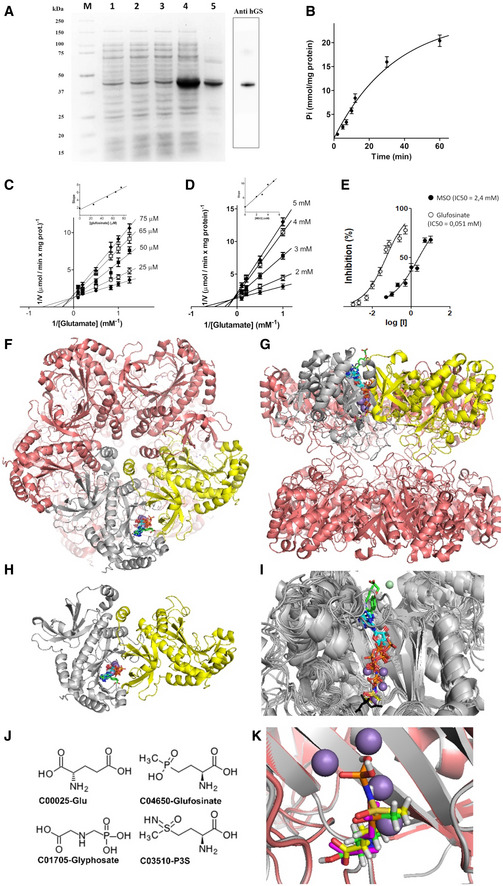
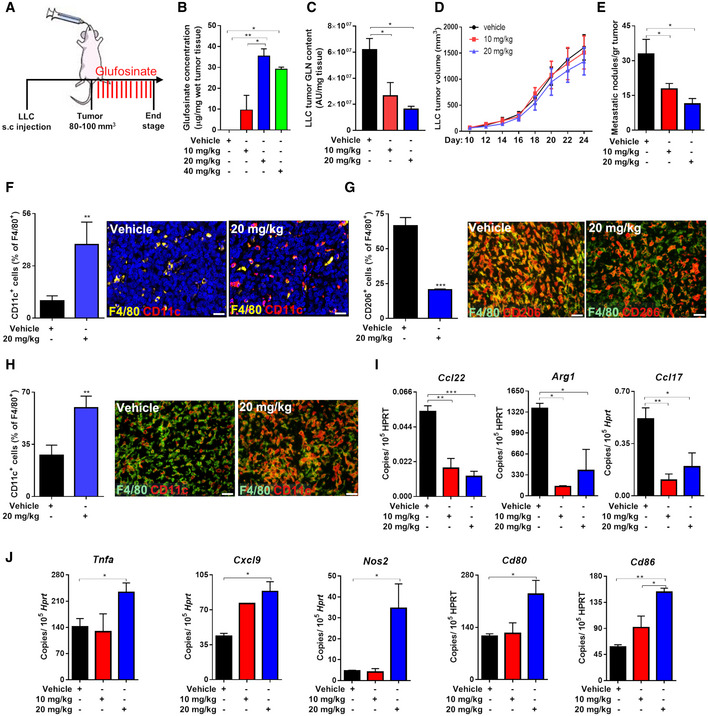
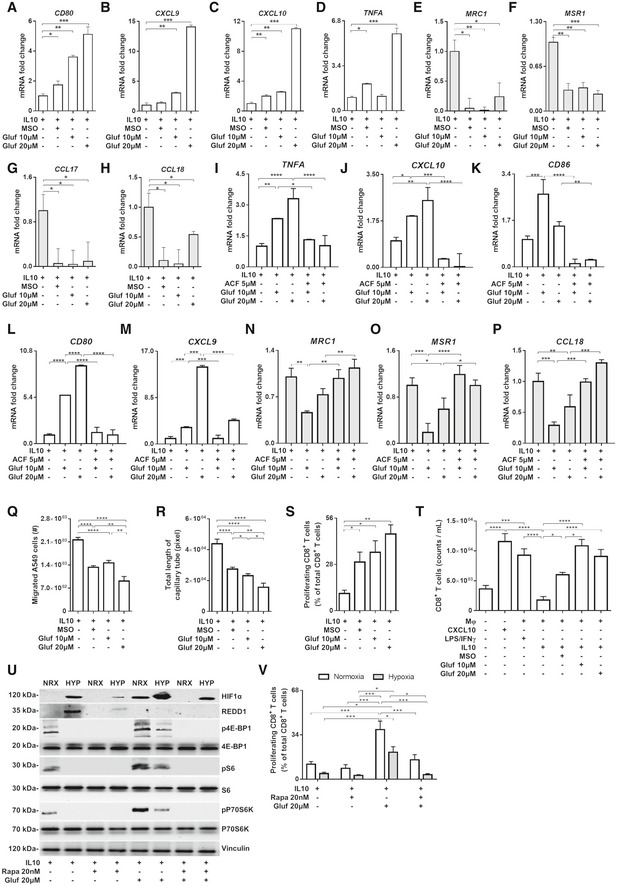
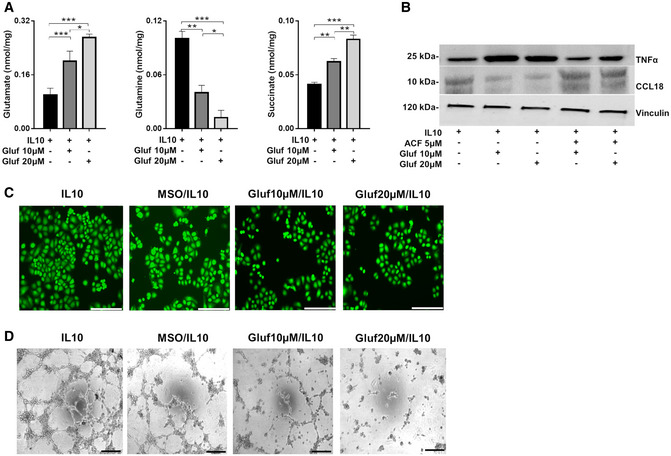
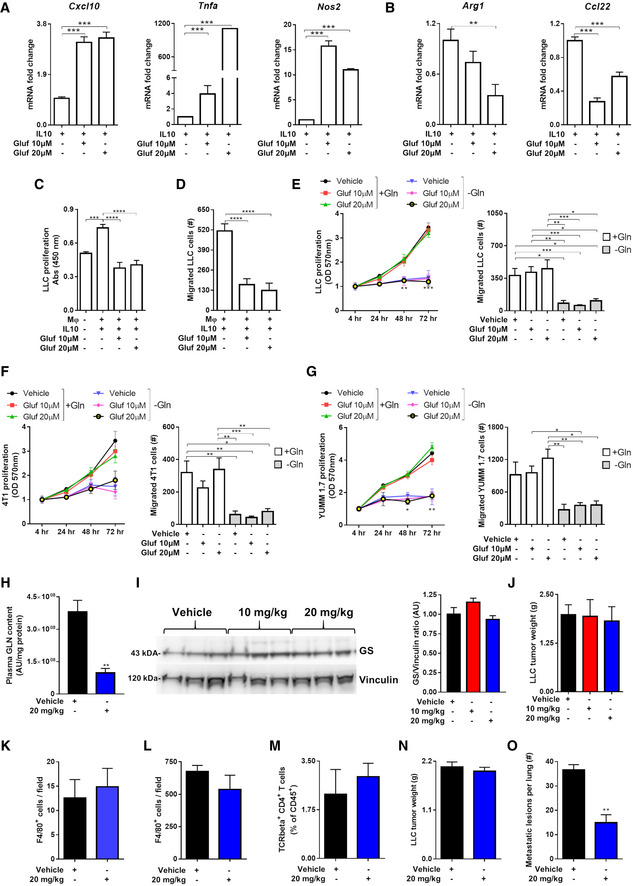
Glutamine synthetase (GS) generates glutamine from glutamate and controls the release of inflammatory mediators. In macrophages, GS activity, driven by IL10, associates to the acquisition of M2-like functions. Conditional deletion of GS in macrophages inhibits metastasis by boosting the formation of anti-tumor, M1-like, tumor-associated macrophages (TAMs). From this basis, we evaluated the pharmacological potential of GS inhibitors in targeting metastasis, identifying glufosinate as a specific human GS inhibitor. Glufosinate was tested in both cultured macrophages and on mice bearing metastatic lung, skin and breast cancer. We found that glufosinate rewires macrophages toward an M1-like phenotype both at the primary tumor and metastatic site, countering immunosuppression and promoting vessel sprouting. This was also accompanied to a reduction in cancer cell intravasation and extravasation, leading to synchronous and metachronous metastasis growth inhibition, but no effects on primary tumor growth. Glufosinate treatment was well-tolerated, without liver and brain toxicity, nor hematopoietic defects. These results identify GS as a druggable enzyme to rewire macrophage functions and highlight the potential of targeting metabolic checkpoints in macrophages to treat cancer metastasis.
谷氨酰胺合成酶(GS)将谷氨酸转化为谷氨酰胺,并控制炎症介质的释放。在巨噬细胞中,由 IL10 驱动的 GS 活性与获得 M2 样功能相关。条件性敲除巨噬细胞中的 GS 可通过促进抗肿瘤、M1 样、肿瘤相关巨噬细胞(TAMs)的形成来抑制转移。在此基础上,我们评估了 GS 抑制剂在靶向转移方面的药理潜力,发现草铵膦是一种特异性的人 GS 抑制剂。草铵膦在培养的巨噬细胞和携带转移性肺癌、皮肤癌和乳腺癌的小鼠中进行了测试。我们发现草铵膦在原发性肿瘤和转移部位将巨噬细胞重新编程为 M1 样表型,从而抵抗免疫抑制并促进血管生成。这也伴随着癌细胞浸润和渗出的减少,导致同步和异时转移生长抑制,但对原发性肿瘤生长没有影响。草铵膦治疗耐受性良好,无肝毒性和脑毒性,也无造血缺陷。这些结果表明 GS 是一种可成药的酶,可重新编程巨噬细胞功能,并强调了靶向巨噬细胞代谢检查点治疗癌症转移的潜力。