Department of Occupational Health, Faculty of Public Health, Mahidol University, Bangkok, Thailand.
Center for Environmental and Respiratory Health Research, University of Oulu, P.O. Box 5000, FI-90014, Oulu, Finland.
BMC Public Health. 2020 Sep 4;20(1):1357. doi: 10.1186/s12889-020-09272-6.
Few studies have examined cold-related symptoms among cold workplace workers in Thailand. This study aimed to determine the prevalence of cold-related cardiorespiratory, circulatory, and general symptoms and performance degradation among Thai chicken industry workers and identify vulnerable groups.
Overall, 422 workers aged from 18 to 57 years at four chicken meat factories in Thailand were interviewed for cold-related symptoms and complaints. The results were expressed in terms of model-based adjusted prevalence and prevalence differences (PDs) in percentage points (pp) with 95% confidence intervals (CIs).
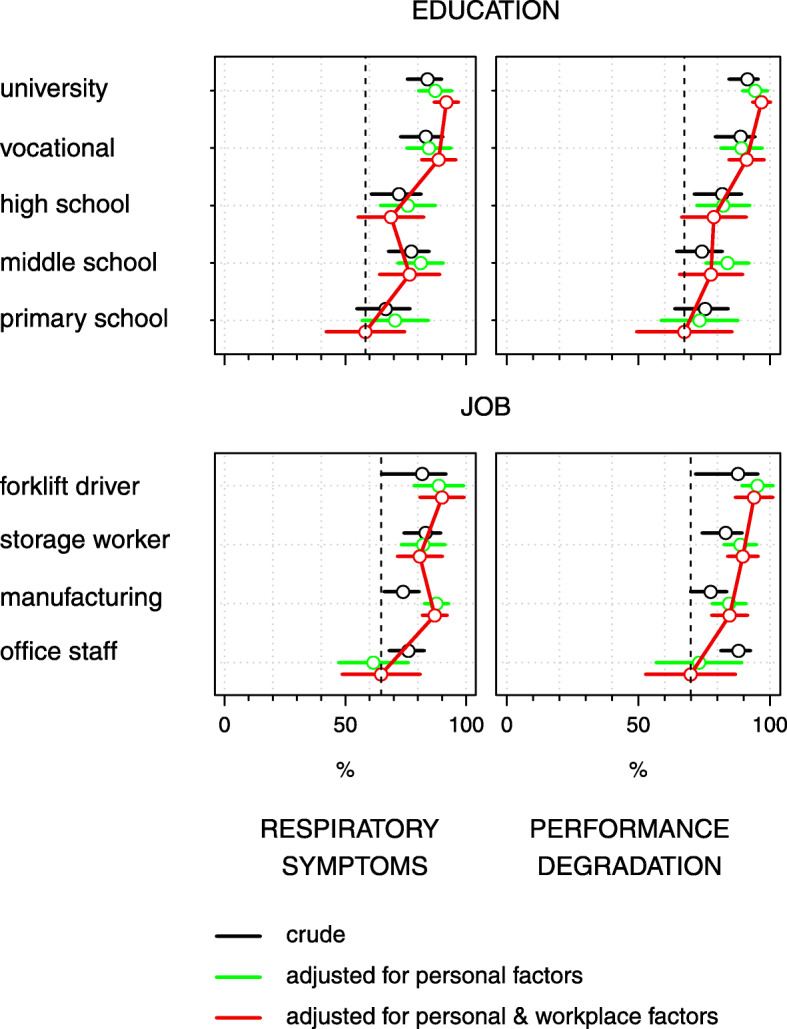
In total, 76.1% of the respondents reported cold-related respiratory symptoms, 24.6% reported cardiac symptoms, 68.6% reported circulatory symptoms, and 72.1% reported general symptoms. In addition, 82.7% of the respondents reported performance degradation. Cold-related respiratory symptoms increased by PD 29.0 pp. (95% CI 23.4-34.6) from the lowest to the highest educational group, with a similar pattern observed in performance degradation. Forklift drivers and storage and manufacturing workers complained of cold-related respiratory symptoms more than office staff (PD 22.1 pp., 95% CI 12.8-31.3; 12.0 pp., 95% CI 2.4-21.6; and 17.5 pp., 95% CI 11.5-23.6, respectively); they also reported more performance degradation (PD 24.1 pp., 95% CI 17.0-31.2; 19.8 pp., 95% CI 14.1-25.6; and 14.8 pp., 95% CI 8.0-22.6, respectively). Weekly alcohol consumers reported more performance problems owing to cold (PD 18.2 pp., 95% CI 13.9-22.6) than non-consumers of alcohol. Cardiac and circulation symptoms were more common in women than men (PD 10.0 pp., 95% CI 1.1-18.9; and 8.4 pp., 95% CI 0.5-16.4, respectively). The age trend in performance issues was curved, with the highest prevalence among those aged 35-44 years, while the oldest workers (45-57 years) perceived less cold-related symptoms, particularly thirst.
Cold-related symptoms and performance degradation were found to be common in this industry, with vulnerable groups comprising of highly educated workers, forklift drivers, storage and manufacturing workers, weekly alcohol consumers, aging workers, and women. The results demonstrate a need for further research on the adequacy of protection provided against the cold, particularly given that global warming will increase the contrast between cold workplaces and outdoor heat.
鲜有研究调查过泰国冷环境工作者的冷相关症状。本研究旨在确定泰国鸡肉产业工人中冷相关心肺、循环和一般症状以及表现下降的流行率,并确定易受影响的人群。
总体而言,在泰国的四家鸡肉加工厂,对 422 名年龄在 18 至 57 岁的工人进行了冷相关症状和抱怨的访谈。结果以模型调整后的患病率(以百分比表示)和(95%置信区间)表示。
共有 76.1%的受访者报告了冷相关呼吸道症状,24.6%报告了心脏症状,68.6%报告了循环症状,72.1%报告了一般症状。此外,82.7%的受访者报告了表现下降。冷相关呼吸道症状从教育程度最低组到最高组增加了 29.0 个百分点(95%CI 23.4-34.6),表现下降也呈现出类似的模式。叉车司机、仓储和制造业工人比办公室工作人员抱怨更多的冷相关呼吸道症状(22.1 个百分点,95%CI 12.8-31.3;12.0 个百分点,95%CI 2.4-21.6;17.5 个百分点,95%CI 11.5-23.6);他们还报告了更多的表现下降(24.1 个百分点,95%CI 17.0-31.2;19.8 个百分点,95%CI 14.1-25.6;14.8 个百分点,95%CI 8.0-22.6)。每周饮酒者因冷而报告的表现问题比不饮酒者多(18.2 个百分点,95%CI 13.9-22.6)。女性比男性更容易出现心脏和循环症状(10.0 个百分点,95%CI 1.1-18.9;8.4 个百分点,95%CI 0.5-16.4)。表现问题的年龄趋势呈曲线状,35-44 岁的人群患病率最高,而年龄最大的工人(45-57 岁)感知到的冷相关症状较少,尤其是口渴。
本研究发现,该行业普遍存在冷相关症状和表现下降的情况,易受影响的人群包括高学历工人、叉车司机、仓储和制造业工人、每周饮酒者、老年工人和女性。研究结果表明,需要进一步研究针对寒冷提供的保护措施是否充足,特别是考虑到全球变暖将增加冷工作场所与户外高温之间的差异。