Associated Laboratory for Energy, Transports and Aeronautics, LAETA (PROA), Faculty of Engineering, University of Porto, 4200-465 Porto, Portugal.
Porto Biomechanics Laboratory, Faculty of Sport, University of Porto, 4200-450 Porto, Portugal.
Sensors (Basel). 2021 Oct 30;21(21):7249. doi: 10.3390/s21217249.
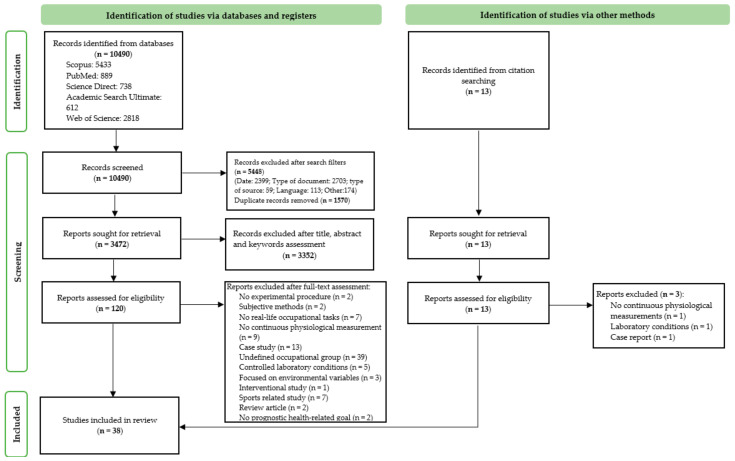
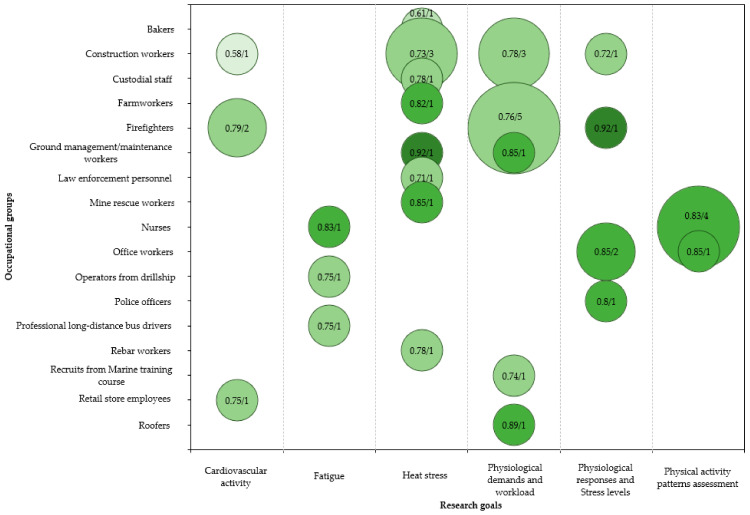
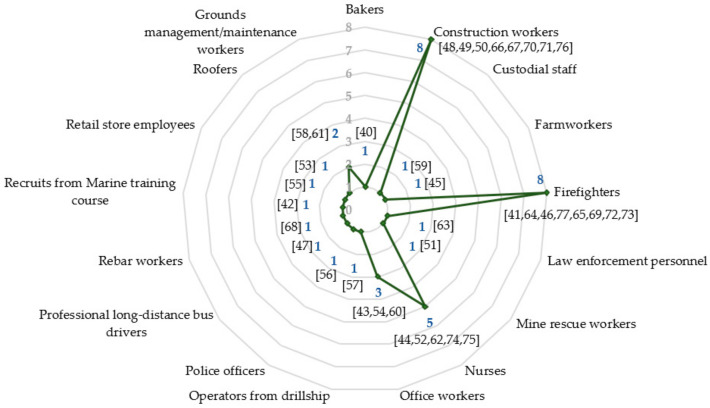
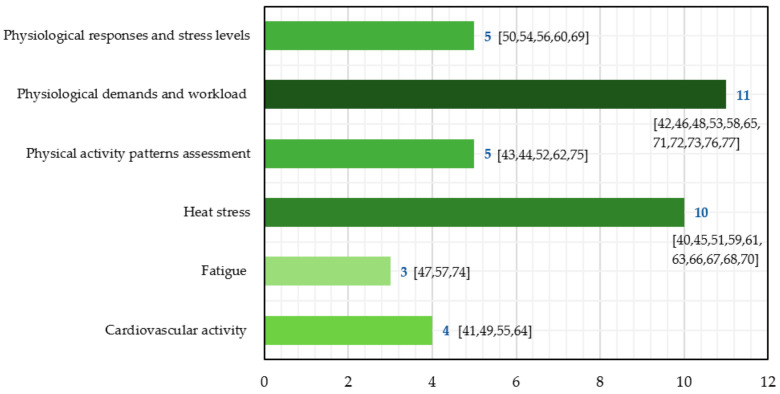
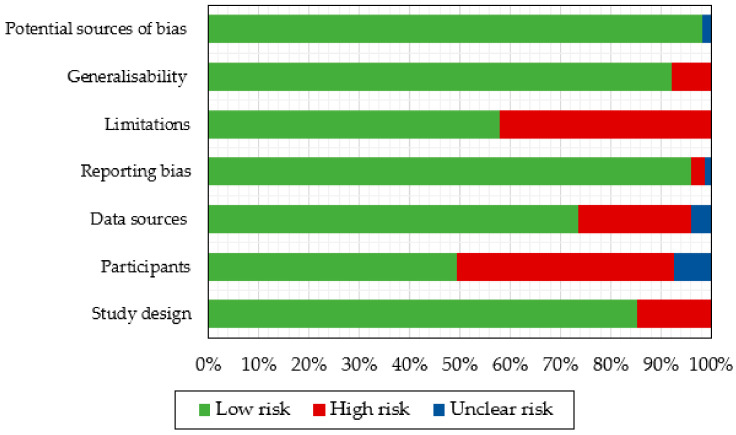
The emergence of physiological monitoring technologies has produced exceptional opportunities for real-time collection and analysis of workers' physiological information. To benefit from these safety and health prognostic opportunities, research efforts have explored the applicability of these devices to control workers' wellbeing levels during occupational activities. A systematic review is proposed to summarise up-to-date progress in applying physiological monitoring systems for occupational groups. Adhering with the PRISMA Statement, five databases were searched from 2014 to 2021, and 12 keywords were combined, concluding with the selection of 38 articles. Sources of risk of bias were assessed regarding randomisation procedures, selective outcome reporting and generalisability of results. Assessment procedures involving non-invasive methods applied with health and safety-related goals were filtered. Working-age participants from homogeneous occupational groups were selected, with these groups primarily including firefighters and construction workers. Research objectives were mainly directed to assess heat stress and physiological workload demands. Heart rate related variables, thermal responses and motion tracking through accelerometry were the most common approaches. Overall, wearable sensors proved to be valid tools for assessing physiological status in working environments. Future research should focus on conducting sensor fusion assessments, engaging wearables in real-time evaluation methods and giving continuous feedback to workers and practitioners.
生理监测技术的出现为实时采集和分析工人的生理信息提供了绝佳的机会。为了利用这些安全和健康预测的机会,研究工作已经探索了这些设备在职业活动中控制工人健康水平的适用性。本文提出了一项系统评价,以总结目前将生理监测系统应用于职业人群的最新进展。根据 PRISMA 声明,从 2014 年到 2021 年,对五个数据库进行了搜索,并结合了 12 个关键词,最终选择了 38 篇文章。对随机分组程序、选择性结果报告和结果的可推广性进行了偏倚风险源的评估。筛选了针对健康和安全相关目标应用的非侵入性方法的评估程序。选择了来自同质职业群体的工作年龄参与者,这些群体主要包括消防员和建筑工人。研究目标主要是评估热应激和生理工作量需求。心率相关变量、通过加速度计进行的热响应和运动跟踪是最常见的方法。总的来说,可穿戴传感器被证明是评估工作环境中生理状态的有效工具。未来的研究应集中在进行传感器融合评估、将可穿戴设备应用于实时评估方法以及向工人和从业人员提供持续反馈上。