Department of Respiratory Medicine, Sir Run Run Shaw Hospital and Institute of Translational Medicine, Zhejiang University School of Medicine, Zhejiang, 310029, Hangzhou, China.
Center for Uterine Cancer Diagnosis & Therapy Research of Zhejiang Province, Women's Reproductive Health Key Laboratory of Zhejiang Province, Department of Gynecologic Oncology, Women's Hospital and Institute of Translational Medicine, Zhejiang University School of Medicine, Hangzhou, China.
J Hematol Oncol. 2020 Sep 4;13(1):121. doi: 10.1186/s13045-020-00955-6.
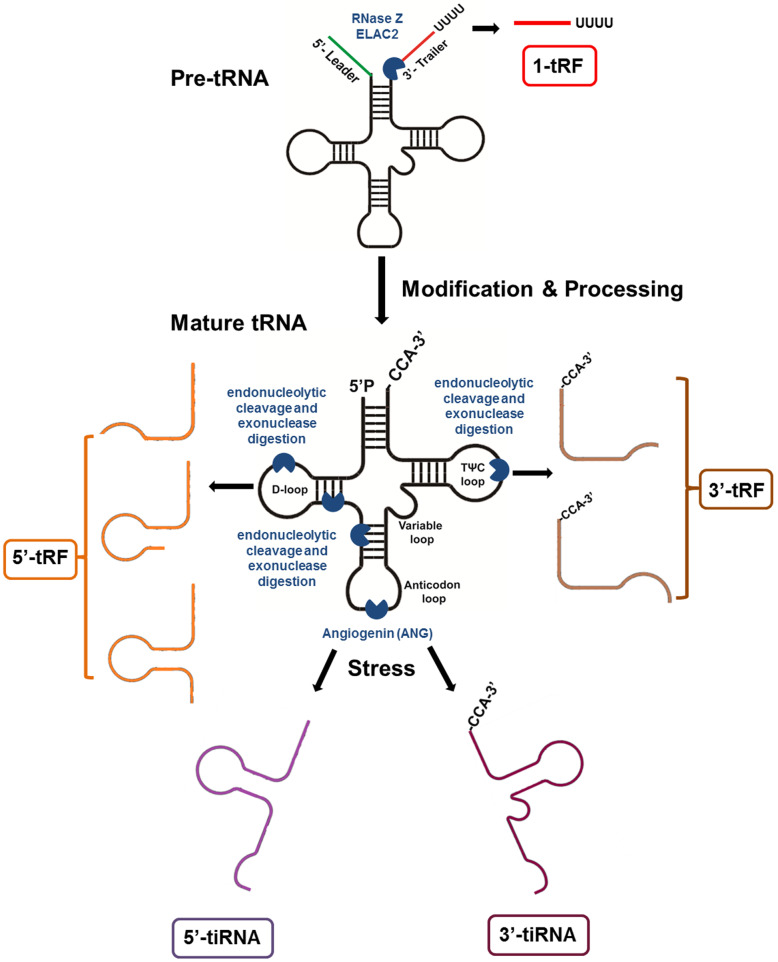
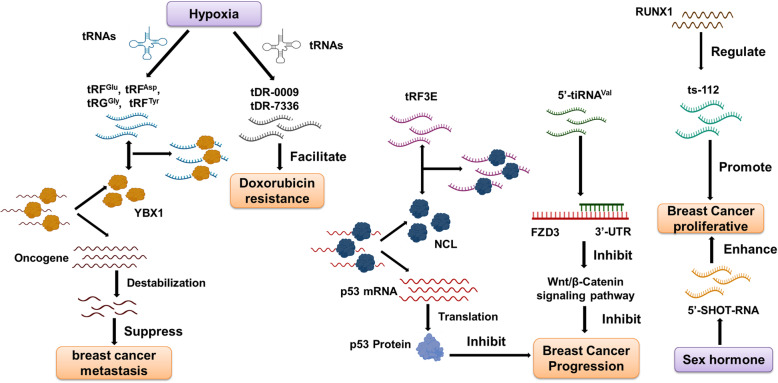
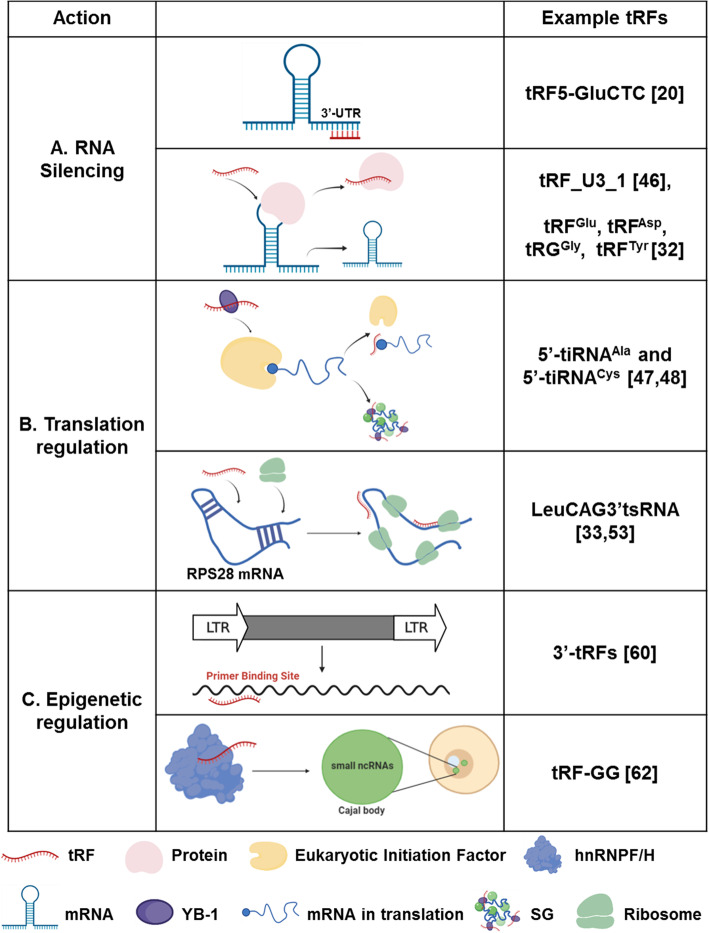
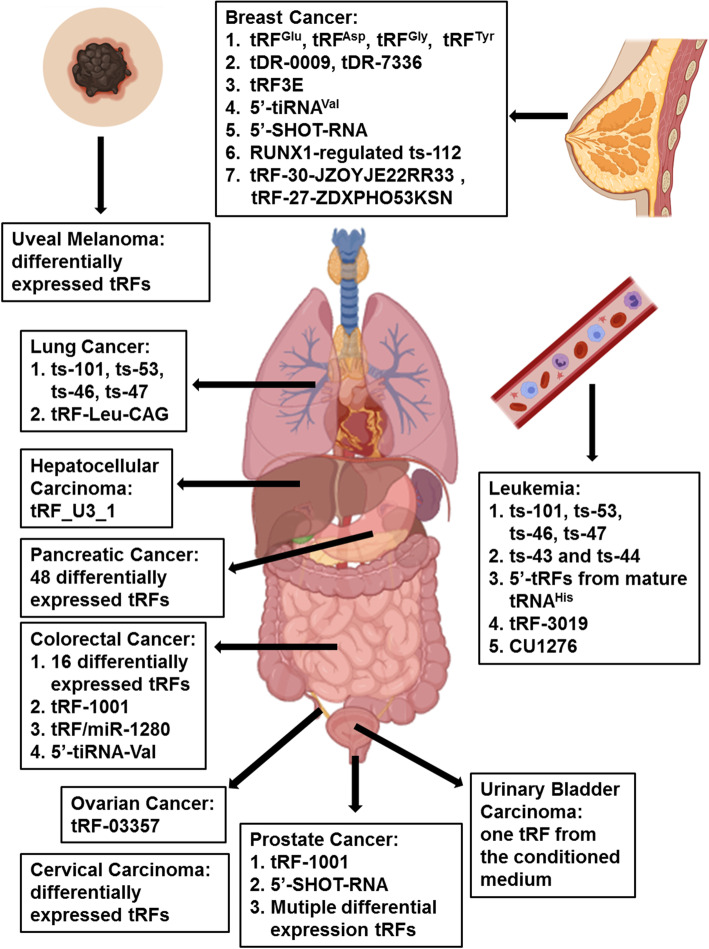
Non-coding RNAs (ncRNAs) have been the focus of many studies over the last few decades, and their fundamental roles in human diseases have been well established. Transfer RNAs (tRNAs) are housekeeping ncRNAs that deliver amino acids to ribosomes during protein biosynthesis. tRNA fragments (tRFs) are a novel class of small ncRNAs produced through enzymatic cleavage of tRNAs and have been shown to play key regulatory roles similar to microRNAs. Development and application of high-throughput sequencing technologies has provided accumulating evidence of dysregulated tRFs in cancer. Aberrant expression of tRFs has been found to participate in cell proliferation, invasive metastasis, and progression in several human malignancies. These newly identified functional tRFs also have great potential as new biomarkers and therapeutic targets for cancer treatment. In this review, we focus on the major biological functions of tRFs including RNA silencing, translation regulation, and epigenetic regulation; summarize recent research on the roles of tRFs in different types of cancer; and discuss the potential of using tRFs as clinical biomarkers for cancer diagnosis and prognosis and as therapeutic targets for cancer treatment.
非编码 RNA(ncRNAs)是过去几十年来许多研究的焦点,它们在人类疾病中的基本作用已得到充分证实。转运 RNA(tRNA)是一种管家 ncRNA,在蛋白质生物合成过程中向核糖体输送氨基酸。tRNA 片段(tRFs)是一类通过 tRNA 酶切产生的新型小 ncRNA,已被证明具有类似于 microRNA 的关键调节作用。高通量测序技术的发展和应用为癌症中失调的 tRFs 提供了越来越多的证据。异常表达的 tRFs 已被发现参与了几种人类恶性肿瘤中的细胞增殖、侵袭转移和进展。这些新发现的功能 tRFs 也有可能成为癌症治疗的新生物标志物和治疗靶点。在这篇综述中,我们重点介绍了 tRFs 的主要生物学功能,包括 RNA 沉默、翻译调节和表观遗传调节;总结了最近关于 tRFs 在不同类型癌症中的作用的研究;并讨论了将 tRFs 用作癌症诊断和预后的临床生物标志物以及癌症治疗的治疗靶点的潜力。