Department of Hepatobiliary Surgery, Affiliated Dongyang Hospital of Wenzhou Medical University, Dongyang, Zhejiang, People's Republic of China.
Surg Laparosc Endosc Percutan Tech. 2020 Sep 2;31(1):104-112. doi: 10.1097/SLE.0000000000000846.
The efficacy and safety of open distal pancreatectomy (DP), laparoscopic DP, robot-assisted laparoscopic DP, and robotic DP have not been established. The authors aimed to comprehensively compare these 4 surgical methods using a network meta-analysis.
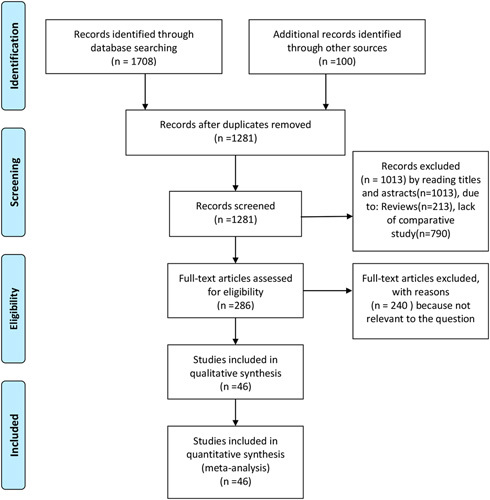
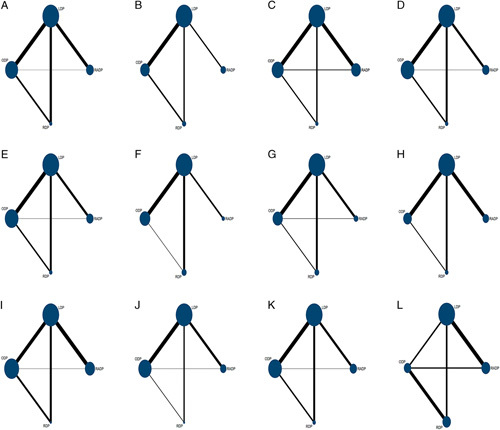
The authors systematically searched MEDLINE, Scopus, Web of Science, the Cochrane Central Register of Controlled Trials, and ClinicalTrials.gov for studies that evaluated at least 2 of the following pancreatectomy techniques: robot-assisted DP, laparoscopic DP, open DP, and robotic DP. The surface under the cumulative ranking curve (SUCRA) was applied to show the probability that each method would be the best for each outcome.
Altogether, 46 trials with 8377 patients were included in this network meta-analysis. Robotic DP showed the highest probability of having the least estimated blood loss (SUCRA, 90.9%), the lowest incidences of postoperative pancreatic fistula (SUCRA, 94.5%), clinically related postoperative pancreatic fistula (SUCRA, 94.6%), postoperative bleeding (SUCRA, 75.3%), reoperation (SUCRA, 96.4%), overall complications (SUCRA, 86.9%), and major complications (SUCRA, 99.3%), and the lowest mortality (SUCRA, 83.4%). Robotic DP also proved to be the best approach regarding the attainment of R0 resection (SUCRA, 75.4%) and the number of lymph nodes harvested (SUCRA, 64.1%).
Robotic DP seems to offer clinical and oncological advantages compared with other DP methods for addressing diseases of the pancreatic body and tail, although it may require a longer operation time and learning curve. The present results require confirmation in future head-to-head randomized controlled trials.
开腹远端胰腺切除术(DP)、腹腔镜 DP、机器人辅助腹腔镜 DP 和机器人 DP 的疗效和安全性尚未确定。作者旨在使用网络荟萃分析全面比较这 4 种手术方法。
作者系统地检索了 MEDLINE、Scopus、Web of Science、Cochrane 中央对照试验注册库和 ClinicalTrials.gov,以评估至少 2 种以下胰腺切除术技术的研究:机器人辅助 DP、腹腔镜 DP、开腹 DP 和机器人 DP。累积排序曲线下面积(SUCRA)用于显示每种方法在每种结局中最有可能成为最佳方法的概率。
共有 46 项试验纳入 8377 例患者,进行了网络荟萃分析。机器人 DP 显示出失血量最少(SUCRA,90.9%)、术后胰瘘发生率最低(SUCRA,94.5%)、临床相关术后胰瘘发生率最低(SUCRA,94.6%)、术后出血发生率最低(SUCRA,75.3%)、再次手术发生率最低(SUCRA,96.4%)、总并发症发生率最低(SUCRA,86.9%)、主要并发症发生率最低(SUCRA,99.3%)和死亡率最低(SUCRA,83.4%)的可能性最高。机器人 DP 还被证明在实现 R0 切除(SUCRA,75.4%)和淋巴结清扫数量(SUCRA,64.1%)方面是最佳方法。
与其他 DP 方法相比,机器人 DP 似乎在治疗胰腺体尾部疾病方面具有临床和肿瘤学优势,尽管它可能需要更长的手术时间和学习曲线。这些结果需要在未来的头对头随机对照试验中得到证实。