National Centre of Excellence and Advanced Research on Diets, Department of Food and Nutrition, Lady Irwin College, University of Delhi, New Delhi, India.
Institute of Developmental Sciences, University of Southampton, Southampton, UK.
Int J Gynaecol Obstet. 2020 Sep;151 Suppl 1(Suppl 1):57-67. doi: 10.1002/ijgo.13319.
To examine prevalence, risk factors, and consequences of maternal obesity; and provide evidence on current policies and programs to manage maternal obesity in India.
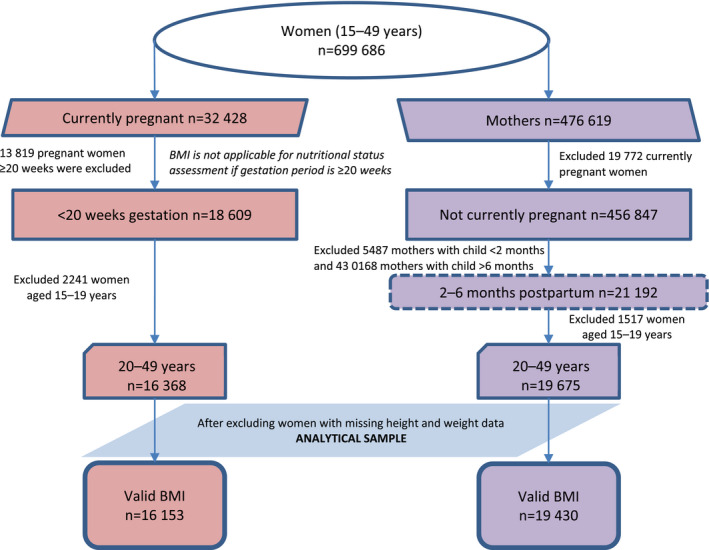
This is a mixed-methods study. We analyzed the National Family Health Survey (NFHS)-4 data (2015-16) to estimate the prevalence and risk factors of obesity, followed by a desk review of literature and stakeholder mapping with interviews to develop policy guidance.
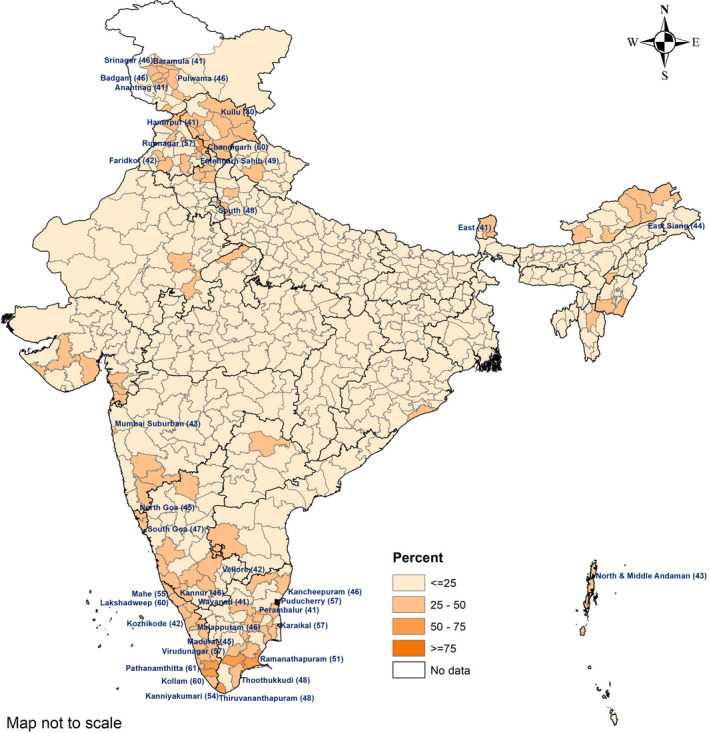
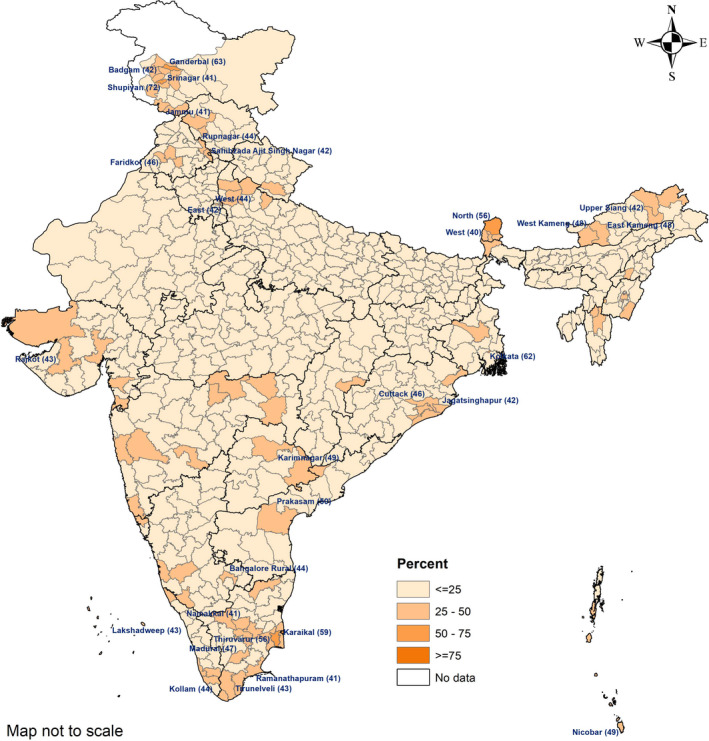
National prevalence of obesity (defined by WHO as body mass index ≥25) was comparable among pregnant (12%) and postpartum women (13%) ≥20 years of age. A high prevalence of obesity (>40%) was observed in over 30 districts in multiple states. Older maternal age, urban residence, increasing wealth quintile, and secondary education were associated with increased odds of obesity among pregnant and postpartum women; higher education increased odds among postpartum women only (OR 1.90; 95% CI, 1.44-2.52). Dietary variables were not associated with obesity. Several implementation challenges across healthcare system blocks were observed at policy level.
Overall prevalence of obesity in India during and after pregnancy is high, with huge variation across districts. Policy and programs must be state-specific focusing on prevention, screening, and management of obesity among pregnant and postpartum women.
探讨印度产妇肥胖的流行率、风险因素和后果,并提供当前管理产妇肥胖的政策和项目的证据。
这是一项混合方法研究。我们分析了 2015-16 年全国家庭健康调查(NFHS-4)数据,以估计肥胖的流行率和风险因素,随后对文献进行综述,并对利益相关者进行访谈以制定政策指导。
在 20 岁及以上的孕妇(12%)和产后妇女(13%)中,肥胖(世界卫生组织定义为身体质量指数≥25)的全国流行率相当。在多个邦的 30 多个地区,肥胖的高流行率(>40%)。母亲年龄较大、居住在城市、财富五分位数增加和中等教育与孕妇和产后妇女肥胖的几率增加有关;而高等教育仅增加了产后妇女肥胖的几率(OR 1.90;95%CI,1.44-2.52)。饮食变量与肥胖无关。在政策层面上,在医疗保健系统各个环节都观察到了一些实施方面的挑战。
印度在怀孕期间和之后肥胖的总体流行率很高,而且在各地区之间存在巨大差异。政策和项目必须针对特定的州,重点关注预防、筛查和管理孕妇和产后妇女的肥胖问题。