Guangdong Provincial Key Laboratory of Protein Function and Regulation in Agricultural Organisms, College of Life Sciences, South China Agricultural University, Tianhe District, Guangzhou 510642, China.
Key Laboratory of Zoonosis of Ministry of Agriculture and Rural Affairs, South China Agricultural University, Guangzhou 510642, China.
Int J Mol Sci. 2020 Sep 6;21(18):6517. doi: 10.3390/ijms21186517.
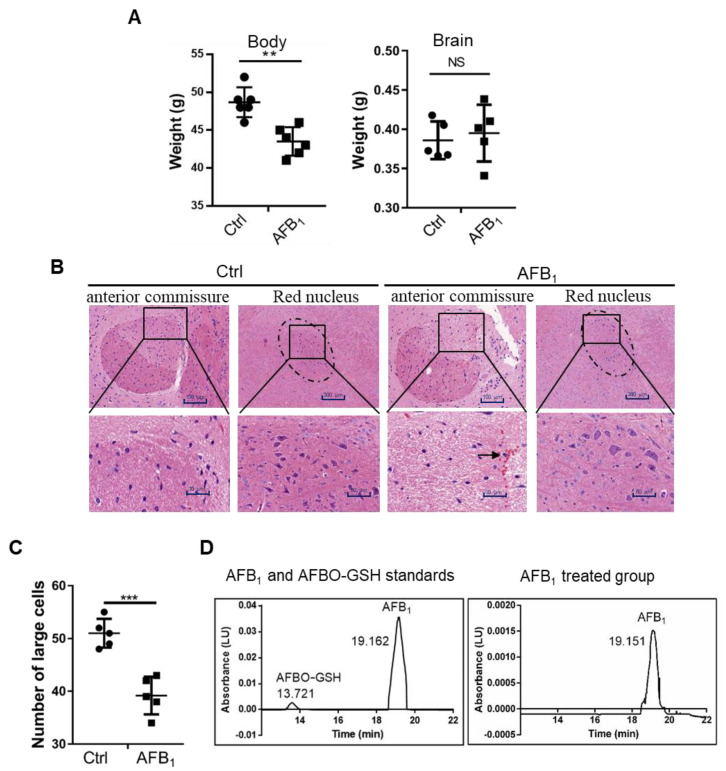
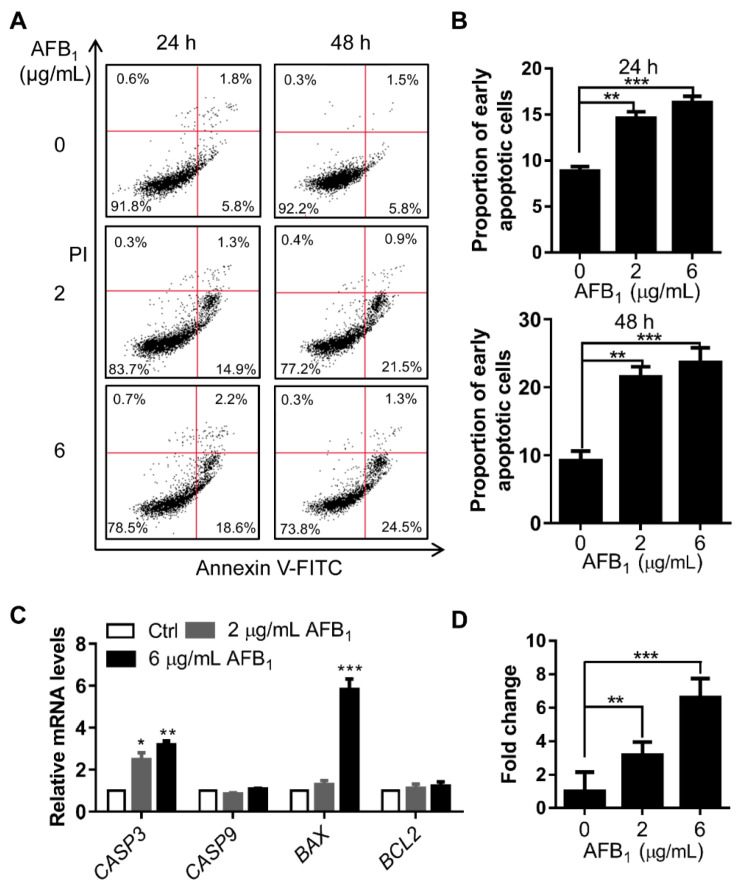
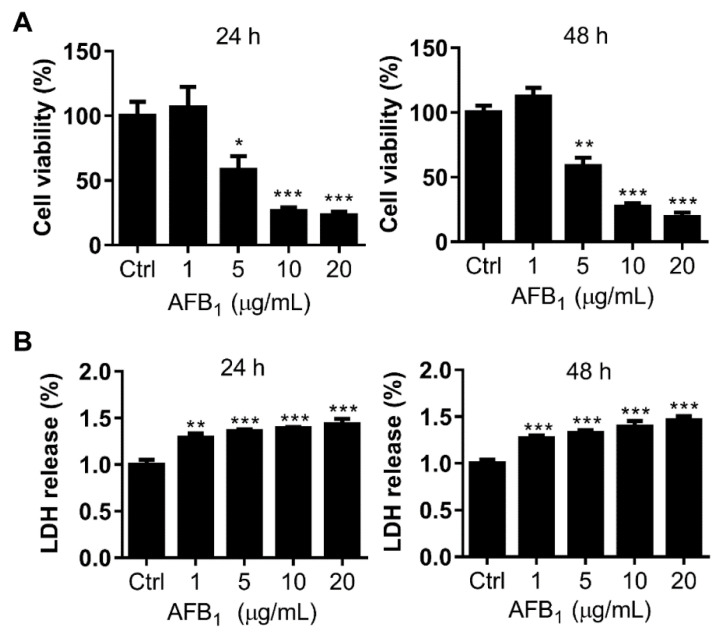
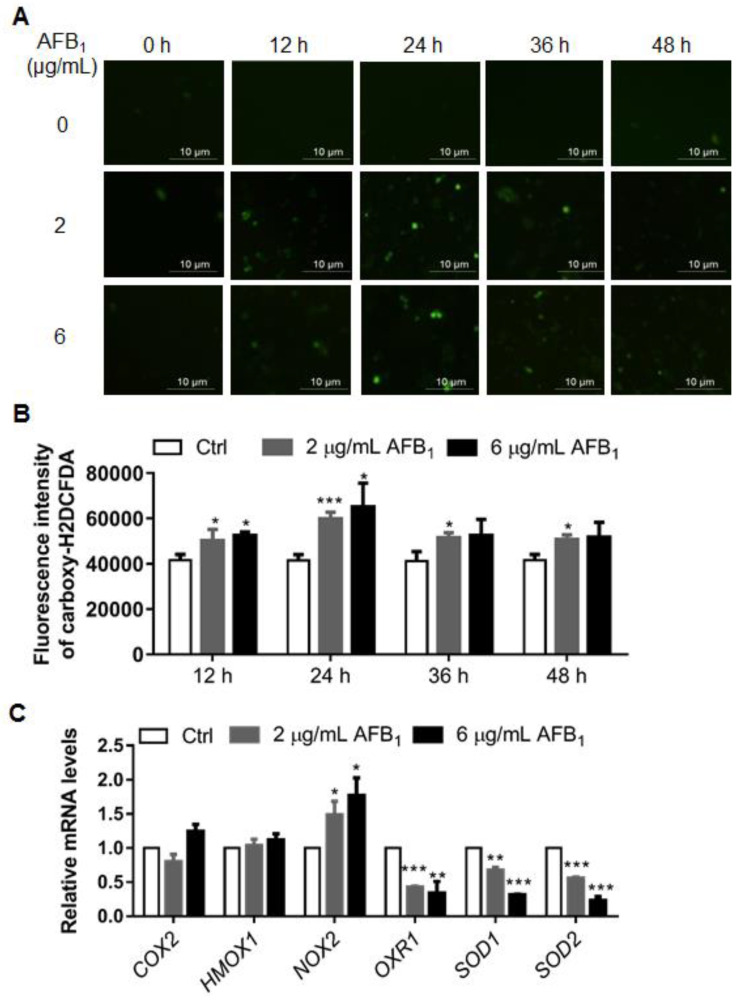
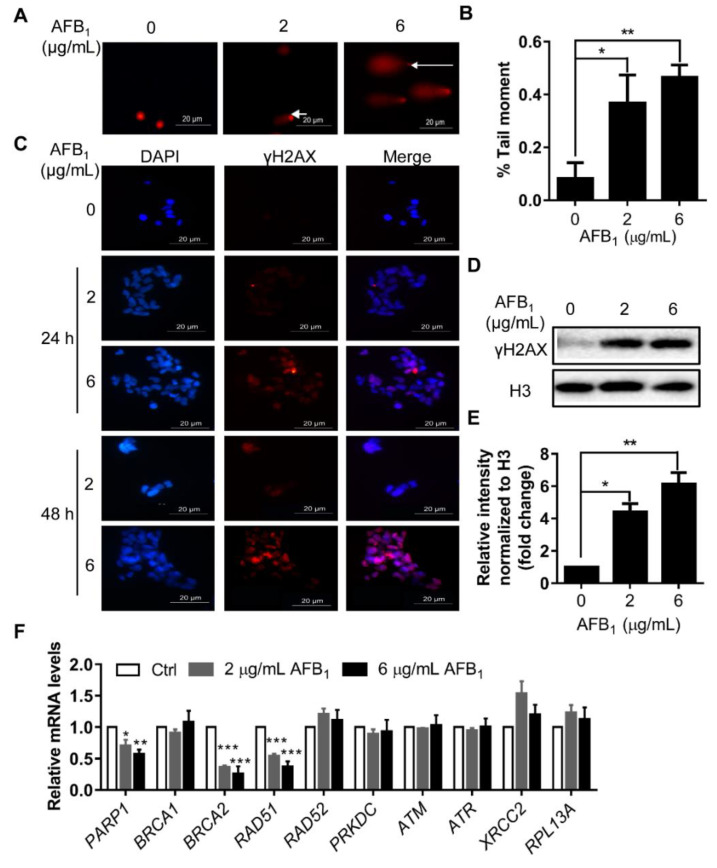
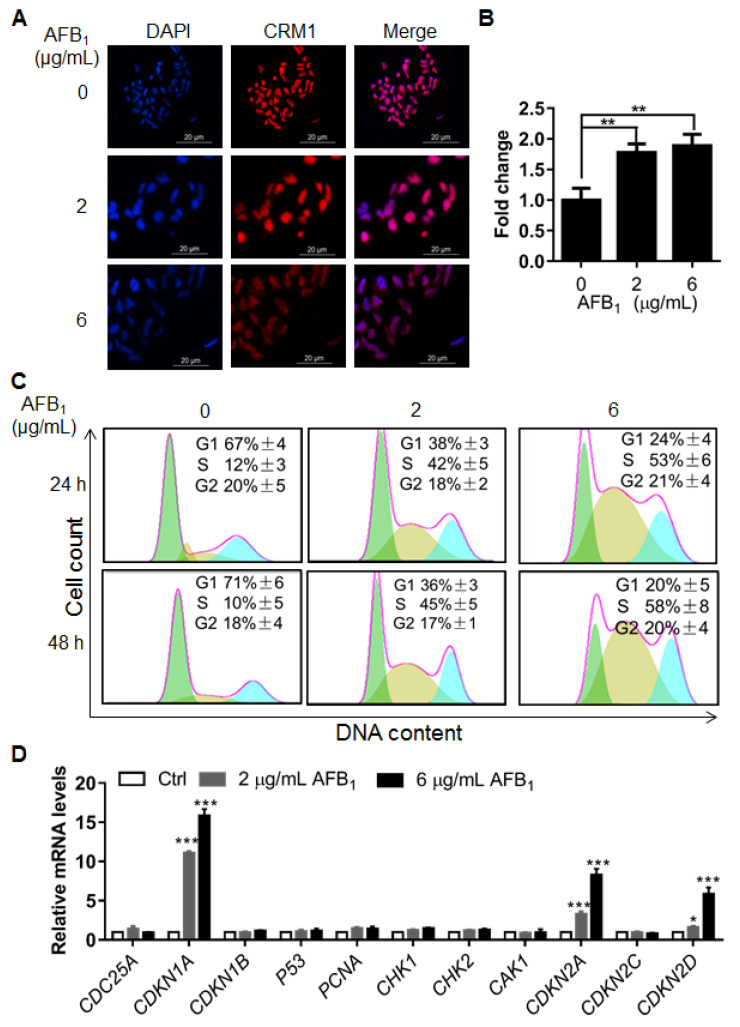
Aflatoxin B1 (AFB) is a mycotoxin widely distributed in a variety of food commodities and exhibits strong toxicity toward multiple tissues and organs. However, little is known about its neurotoxicity and the associated mechanism. In this study, we observed that brain integrity was markedly damaged in mice after intragastric administration of AFB (300 μg/kg/day for 30 days). The toxicity of AFB on neuronal cells and the underlying mechanisms were then investigated in the neuroblastoma cell line IMR-32. A cell viability assay showed that the IC50 values of AFB on IMR-32 cells were 6.18 μg/mL and 5.87 μg/mL after treatment for 24 h and 48 h, respectively. ROS levels in IMR-32 cells increased significantly in a time- and AFB concentration-dependent manner, which was associated with the upregulation of , and downregulation of , , and . Substantial DNA damage associated with the downregulation of , , and was also observed. Furthermore, AFB significantly induced S-phase arrest, which is associated with the upregulation of , , and . Finally, AFB induced apoptosis involving and . Taken together, AFB manifests a wide range of cytotoxicity on neuronal cells including ROS accumulation, DNA damage, S-phase arrest, and apoptosis-all of which are key factors for understanding the neurotoxicology of AFB.
黄曲霉毒素 B1(AFB)是一种广泛分布于各种食品中的真菌毒素,对多种组织和器官表现出强烈的毒性。然而,其神经毒性及其相关机制知之甚少。在这项研究中,我们观察到经口给予 AFB(300μg/kg/天,连续 30 天)后,小鼠的大脑完整性明显受损。然后,我们在神经母细胞瘤细胞系 IMR-32 中研究了 AFB 对神经元细胞的毒性及其潜在机制。细胞活力测定表明,AFB 对 IMR-32 细胞的 IC50 值分别为 24 h 和 48 h 处理后的 6.18μg/mL 和 5.87μg/mL。AFB 以时间和浓度依赖的方式显著增加 IMR-32 细胞中的 ROS 水平,这与 和 的上调以及 和 的下调有关。还观察到与 和 的下调相关的大量 DNA 损伤。此外,AFB 显著诱导 S 期阻滞,这与 和 的上调有关。最后,AFB 诱导涉及 和 的细胞凋亡。总之,AFB 对神经元细胞表现出广泛的细胞毒性,包括 ROS 积累、DNA 损伤、S 期阻滞和细胞凋亡,这些都是理解 AFB 神经毒理学的关键因素。