Theoretical Biology & Bioinformatics, Utrecht University, Utrecht, the Netherlands
Laboratory of Phytopathology, Wageningen University, Wageningen, the Netherlands.
mBio. 2020 Sep 8;11(5):e01714-20. doi: 10.1128/mBio.01714-20.
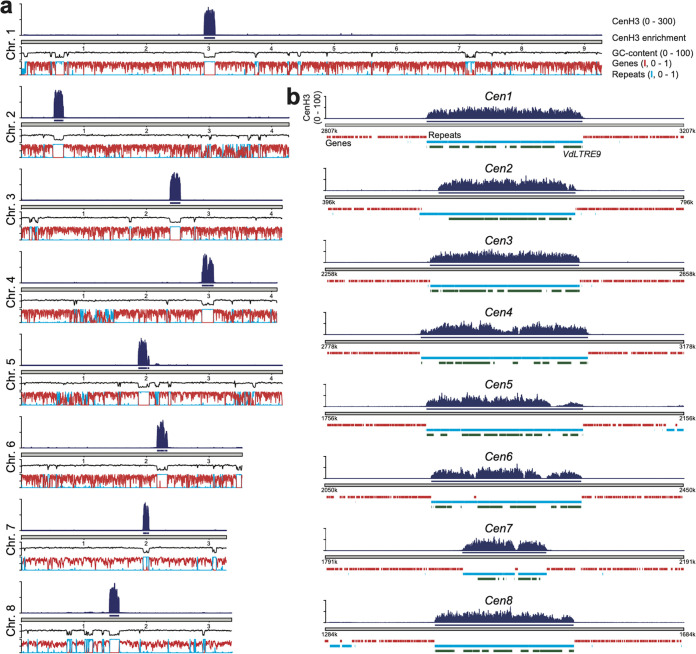
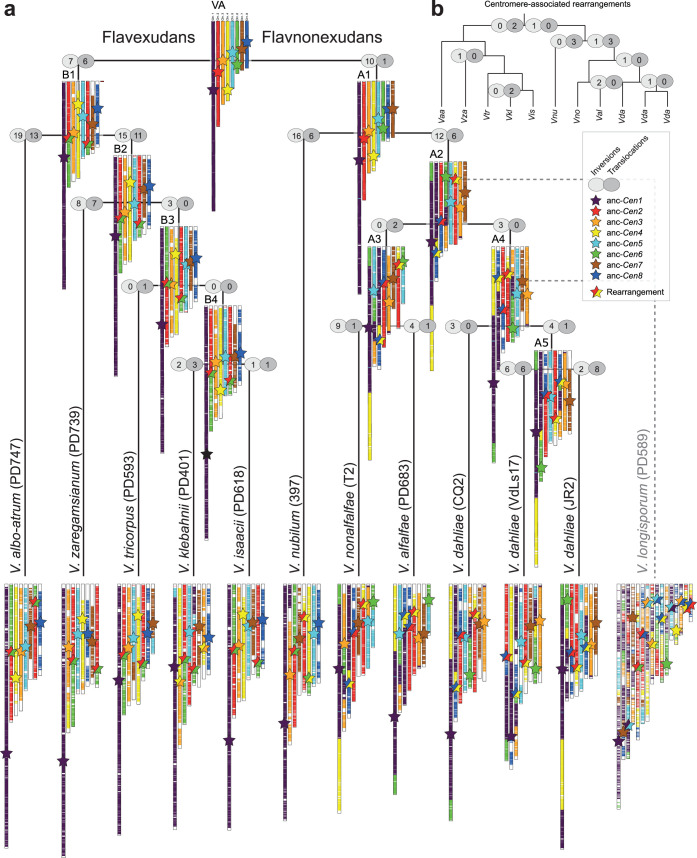
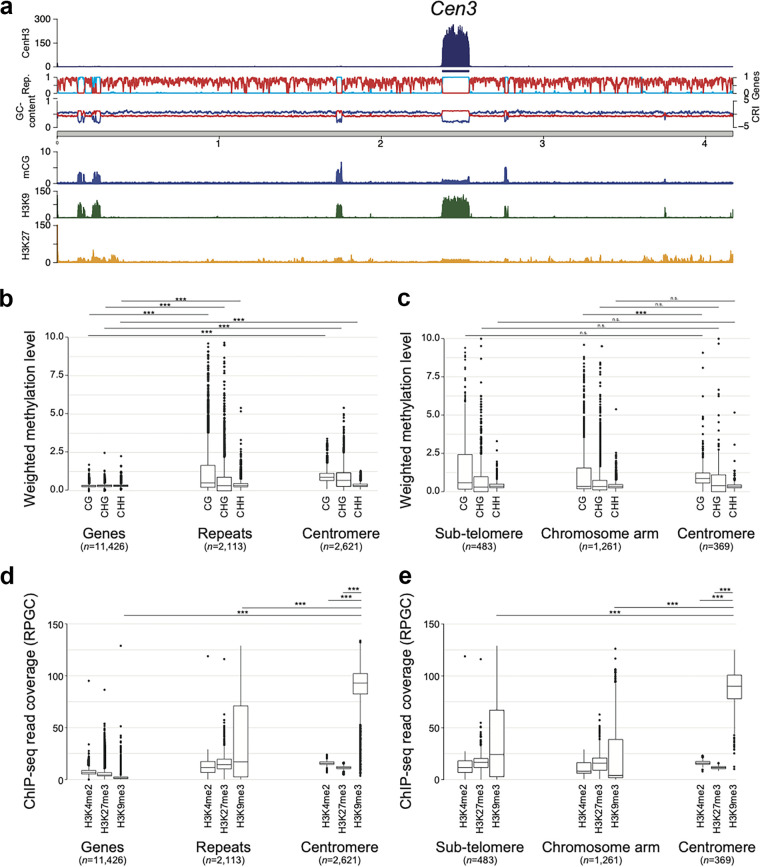
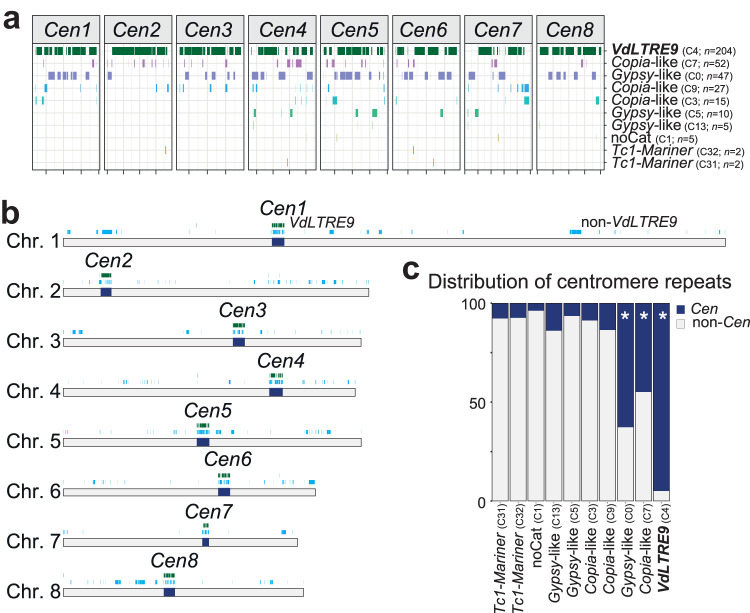
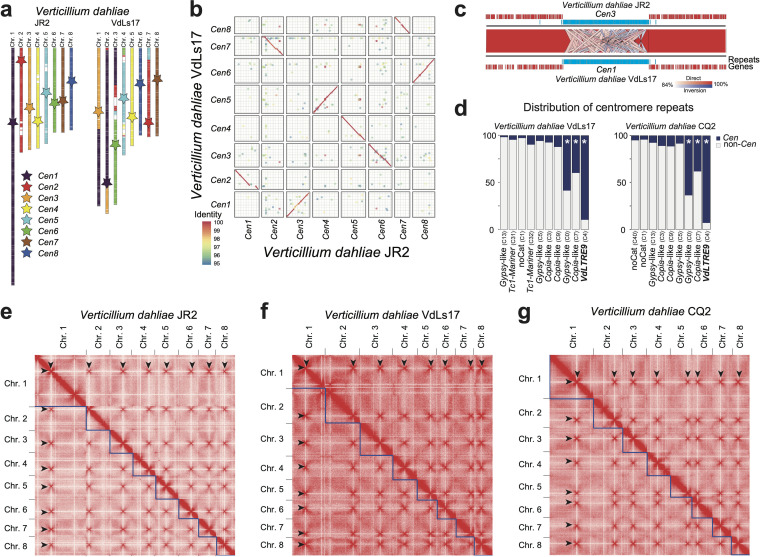
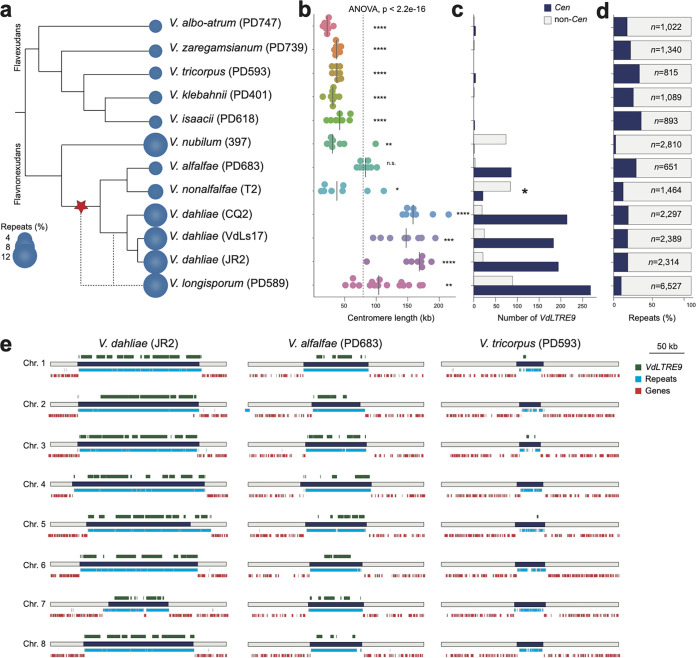
Centromeres are chromosomal regions that are crucial for chromosome segregation during mitosis and meiosis, and failed centromere formation can contribute to chromosomal anomalies. Despite this conserved function, centromeres differ significantly between and even within species. Thus far, systematic studies into the organization and evolution of fungal centromeres remain scarce. In this study, we identified the centromeres in each of the 10 species of the fungal genus and characterized their organization and evolution. Chromatin immunoprecipitation of the centromere-specific histone CenH3 (ChIP-seq) and chromatin conformation capture (Hi-C) followed by high-throughput sequencing identified eight conserved, large (∼150-kb), AT-, and repeat-rich regional centromeres that are embedded in heterochromatin in the plant pathogen Using Hi-C, we similarly identified repeat-rich centromeres in the other species. Strikingly, a single degenerated long terminal repeat (LTR) retrotransposon is strongly associated with centromeric regions in some but not all species. Extensive chromosomal rearrangements occurred during evolution, of which some could be linked to centromeres, suggesting that centromeres contributed to chromosomal evolution. The size and organization of centromeres differ considerably between species, and centromere size was found to correlate with the genome-wide repeat content. Overall, our study highlights the contribution of repetitive elements to the diversity and rapid evolution of centromeres within the fungal genus The genus contains 10 species of plant-associated fungi, some of which are notorious pathogens. species evolved by frequent chromosomal rearrangements that contribute to genome plasticity. Centromeres are instrumental for separation of chromosomes during mitosis and meiosis, and failed centromere functionality can lead to chromosomal anomalies. Here, we used a combination of experimental techniques to identify and characterize centromeres in each of the species. Intriguingly, we could strongly associate a single repetitive element to the centromeres of some of the species. The presence of this element in the centromeres coincides with increased centromere sizes and genome-wide repeat expansions. Collectively, our findings signify a role of repetitive elements in the function, organization, and rapid evolution of centromeres in a set of closely related fungal species.
着丝粒是染色体在有丝分裂和减数分裂过程中进行分离的关键区域,如果着丝粒形成失败,可能会导致染色体异常。尽管具有这种保守功能,但着丝粒在不同物种甚至同一物种的不同染色体之间存在显著差异。到目前为止,真菌着丝粒的组织和进化的系统研究仍然很少。在这项研究中,我们鉴定了真菌属的 10 个物种中的每个物种的着丝粒,并对其组织和进化进行了描述。使用着丝粒特异性组蛋白 CenH3 的染色质免疫沉淀(ChIP-seq)和染色质构象捕获(Hi-C),然后进行高通量测序,我们在植物病原体中鉴定了 8 个保守的、大型(约 150-kb)、富含 AT 和重复序列的区域着丝粒,这些着丝粒嵌入异染色质中。使用 Hi-C,我们在其他物种中也同样鉴定出富含重复序列的着丝粒。引人注目的是,一些但不是所有的物种中,一个退化的长末端重复(LTR)逆转录转座子与着丝粒区域强烈相关。在进化过程中发生了广泛的染色体重排,其中一些可能与着丝粒有关,这表明着丝粒参与了染色体进化。着丝粒的大小和组织在物种之间有很大的差异,并且发现着丝粒的大小与全基因组重复序列的含量相关。总的来说,我们的研究强调了重复元件对真菌属内着丝粒多样性和快速进化的贡献。属包含 10 种与植物相关的真菌,其中一些是臭名昭著的病原体。物种通过频繁的染色体重排进化,这有助于基因组的可塑性。着丝粒在有丝分裂和减数分裂过程中对染色体的分离至关重要,着丝粒功能的失败可能导致染色体异常。在这里,我们使用了一系列实验技术来鉴定和描述每个物种的着丝粒。有趣的是,我们可以将单个重复元件与一些物种的着丝粒强烈相关联。该元件在着丝粒中的存在与着丝粒的大小增加和全基因组重复序列的扩展相吻合。总的来说,我们的发现表明,在一组密切相关的真菌物种中,重复元件在着丝粒的功能、组织和快速进化中起着作用。