Department of Cardiovascular Disease Tor Vergata University Rome Italy.
Department of Anesthesia Tor Vergata University Rome Italy.
J Am Heart Assoc. 2020 Oct 20;9(19):e017126. doi: 10.1161/JAHA.120.017126. Epub 2020 Sep 9.
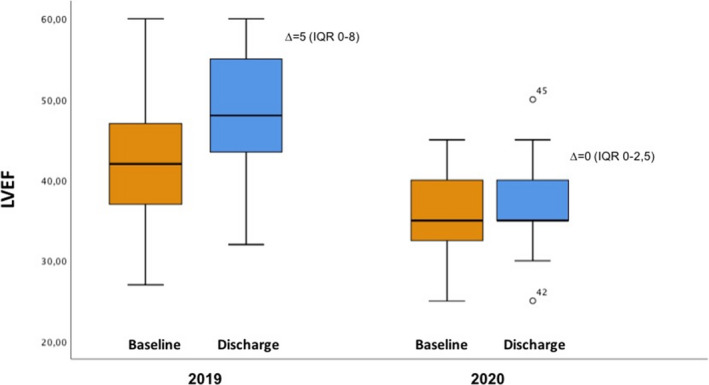
Background After the coronavirus disease 2019 outbreak, social isolation measures were introduced to contain infection. Although there is currently a slowing down of the infection, a reduction of hospitalizations, especially for myocardial infarction, was observed. The aim of our study is to evaluate the impact of the infectious disease on ST-segment-elevation myocardial infarction (STEMI) care during the coronavirus disease 2019 pandemic, through the analysis of recent cases of patients who underwent percutaneous coronary intervention. Methods and Results Consecutive patients affected by STEMI from March 1 to 31, 2020, during social restrictions of Italian government, were collected and compared with patients with STEMI treated during March 2019. During March 2020, we observed a 63% reduction of patients with STEMI who were admitted to our catheterization laboratory, when compared with the same period of 2019 (13 versus 35 patients). Changes in all time components of STEMI care were notably observed, particularly for longer median time in symptom-to-first medical contact, spoke-to-hub, and the cumulative symptom-to-wire delay. Procedural data and in-hospital outcomes were similar between the 2 groups, whereas the length of hospitalization was longer in patients of 2020. In this group, we also observed higher levels of cardiac biomarkers and a worse left ventricular ejection fraction at baseline and discharge. Conclusions The coronavirus disease 2019 outbreak induced a reduction of hospital access for STEMI with an increase in treatment delay, longer hospitalization, higher levels of cardiac biomarkers, and worse left ventricular function.
新冠病毒病 2019 疫情爆发后,社会隔离措施被引入以控制感染。尽管目前感染速度放缓,住院人数减少,尤其是心肌梗死患者,但我们观察到这种情况。我们的研究旨在通过分析最近接受经皮冠状动脉介入治疗的患者病例,评估传染病对新冠病毒病大流行期间 ST 段抬高型心肌梗死(STEMI)治疗的影响。
我们收集了 2020 年 3 月 1 日至 31 日期间在意大利政府社会限制期间因 STEMI 入院的连续患者,并与 2019 年 3 月同期治疗的 STEMI 患者进行了比较。与 2019 年同期相比,2020 年 3 月我院收治的 STEMI 患者减少了 63%(13 例 vs. 35 例)。STEMI 治疗的所有时间组成部分均发生显著变化,特别是症状首次接触至首次医疗接触、与急救中心通话至进入导管室和症状至导丝时间的累积延迟时间显著延长。两组间的手术数据和院内结局相似,但 2020 年患者的住院时间更长。在该组中,我们还观察到心脏生物标志物水平更高,入院时和出院时左心室射血分数更差。
新冠病毒病 2019 疫情导致 STEMI 患者就诊减少,治疗延迟增加,住院时间延长,心脏生物标志物水平升高,左心室功能恶化。