Sanders Katherine L, Edwards James L
Department of Chemistry, Saint Louis University, St. Louis, Missouri, USA.
Anal Methods. 2020 Sep 28;12(36):4404-4417. doi: 10.1039/d0ay01194k. Epub 2020 Sep 9.
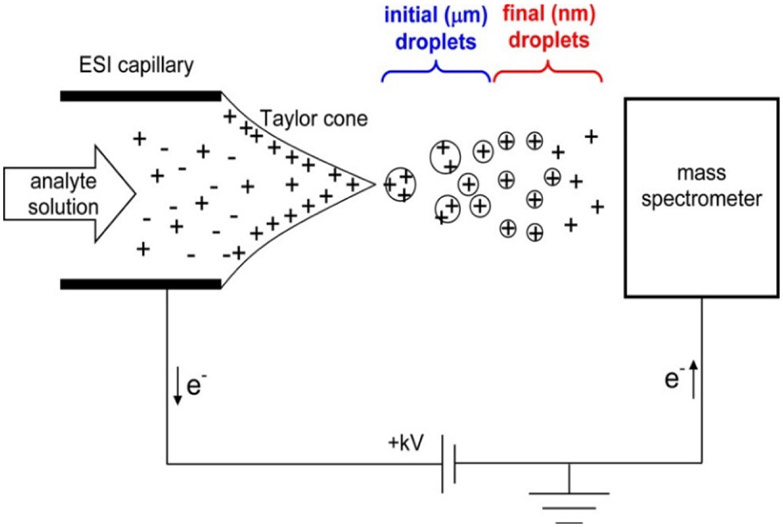
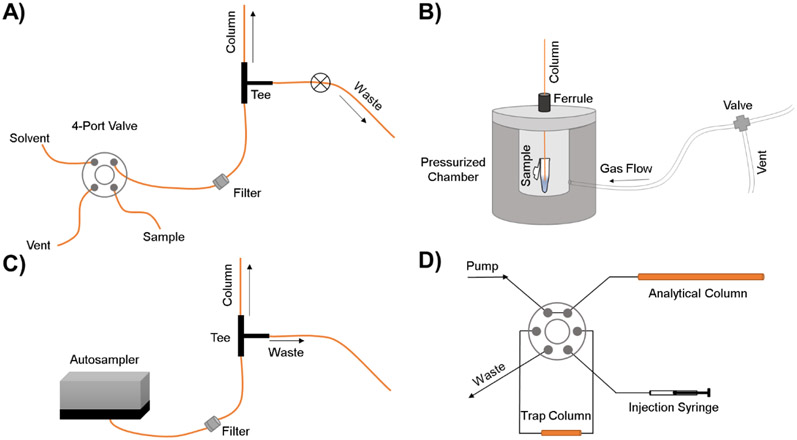
Liquid chromatography coupled to mass spectrometry (LC-MS) is one of the most powerful tools in identifying and quantitating molecular species. Decreasing column diameter from the millimeter to micrometer scale is now a well-developed method which allows for sample limited analysis. Specific fabrication of capillary columns is required for proper implementation and optimization when working in the nanoflow regime. Coupling the capillary column to the mass spectrometer for electrospray ionization (ESI) requires reduction of the subsequent emitter tip. Reduction of column diameter to capillary scale can produce improved chromatographic efficiency and the reduction of emitter tip size increased sensitivity of the electrospray process. This improved sensitivity and ionization efficiency is valuable in analysis of precious biological samples where analytes vary in size, ion affinity, and concentration. In this review we will discuss common approaches and challenges in implementing nLC-MS methods and how the advantages can be leveraged to investigate a wide range of biomolecules.
液相色谱-质谱联用(LC-MS)是鉴定和定量分子种类最强大的工具之一。将柱直径从毫米级减小到微米级目前是一种成熟的方法,可实现有限样品分析。在纳流模式下工作时,需要特定制造毛细管柱以进行正确的实施和优化。将毛细管柱与用于电喷雾电离(ESI)的质谱仪联用需要减小后续的发射器尖端。将柱直径减小到毛细管尺度可提高色谱效率,减小发射器尖端尺寸可提高电喷雾过程的灵敏度。这种提高的灵敏度和电离效率在分析珍贵生物样品时非常有价值,这些样品中的分析物在大小、离子亲和力和浓度方面各不相同。在本综述中,我们将讨论实施纳流液相色谱-质谱联用方法的常见方法和挑战,以及如何利用这些优势来研究广泛的生物分子。