Department of Obstetrics and Gynecology, Duke University School of Medicine, Durham, NC, USA.
University Program in Genetics and Genomics, Duke University, Durham, NC, USA.
FASEB J. 2020 Nov;34(11):14182-14199. doi: 10.1096/fj.202000716RR. Epub 2020 Sep 9.
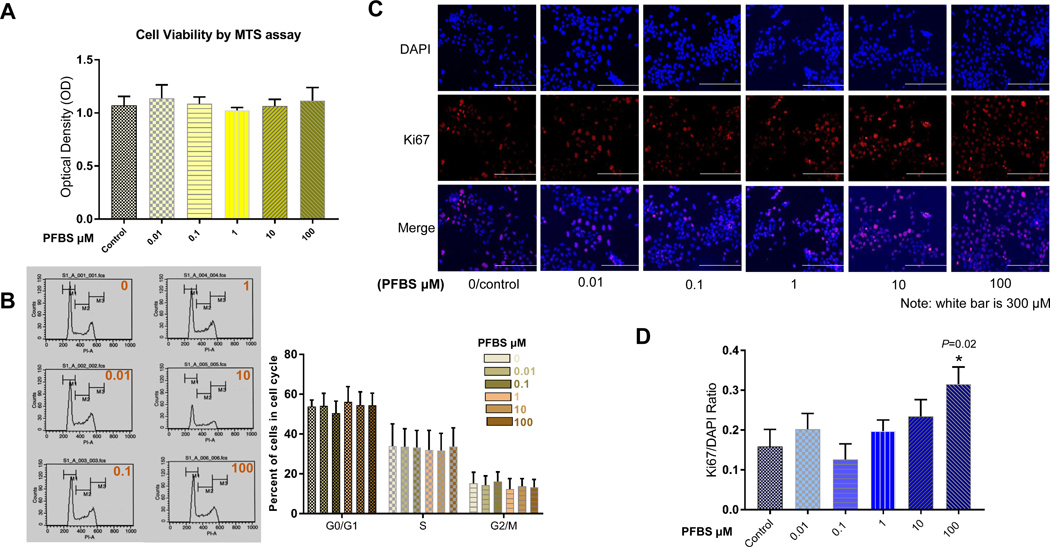
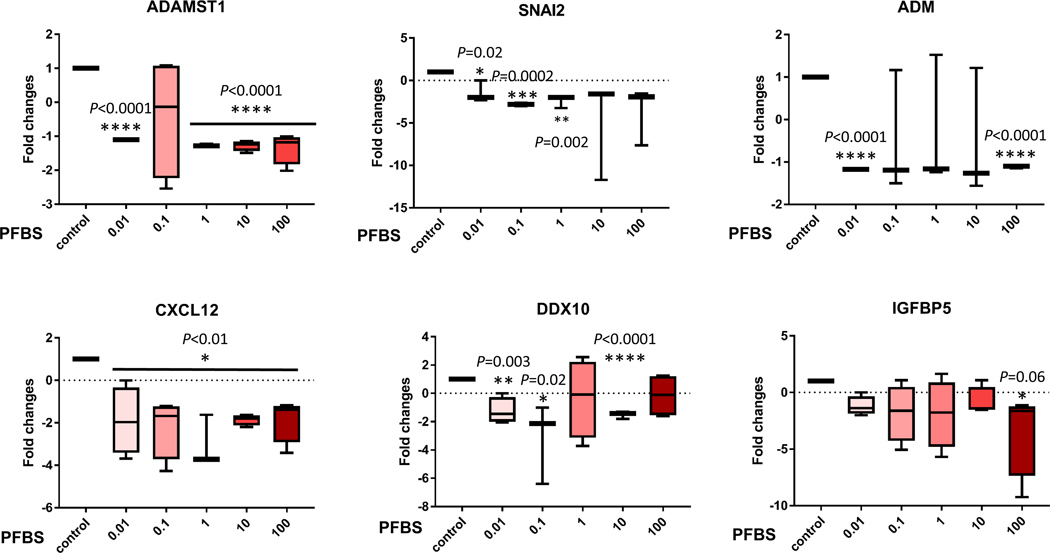
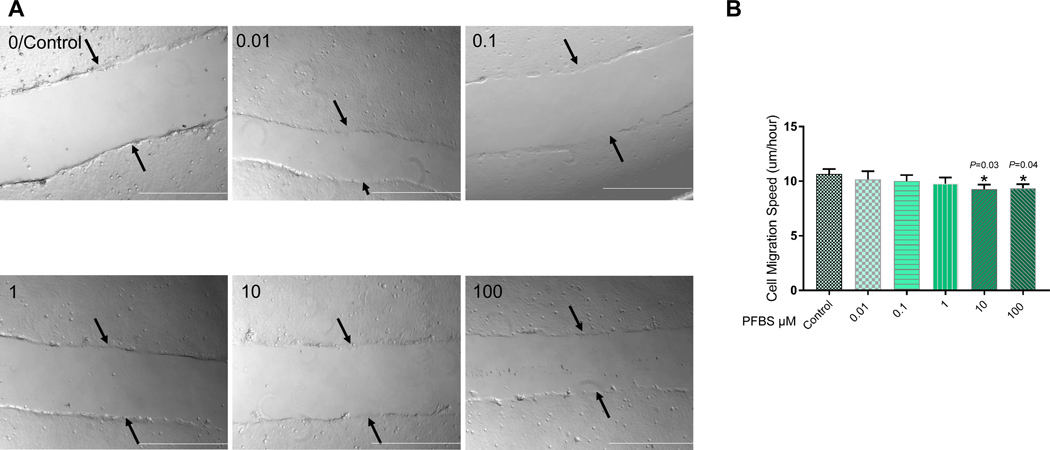
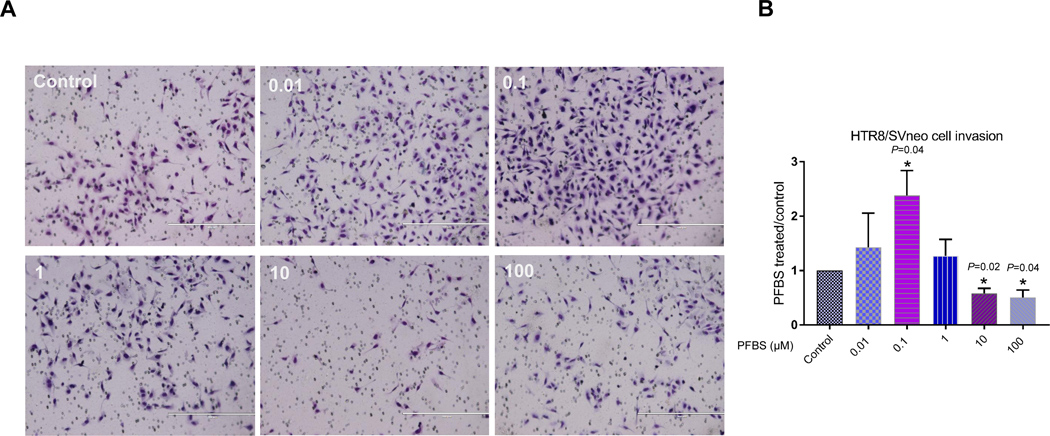
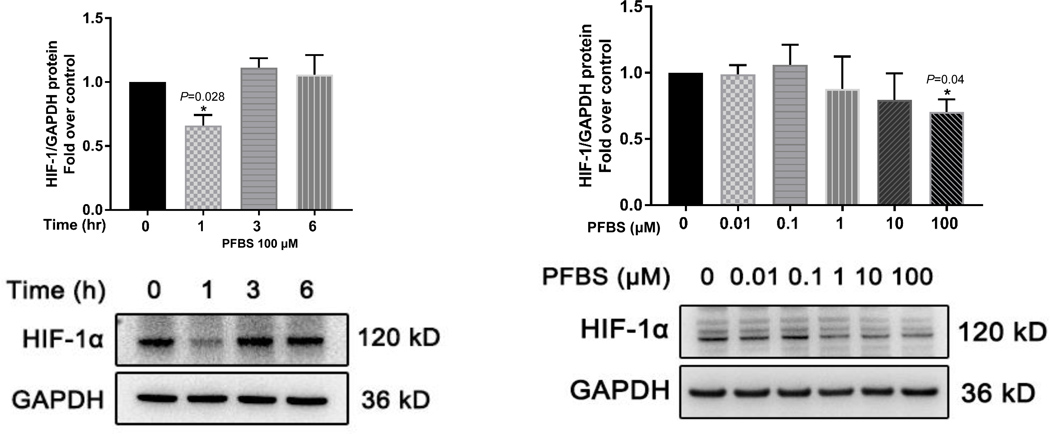
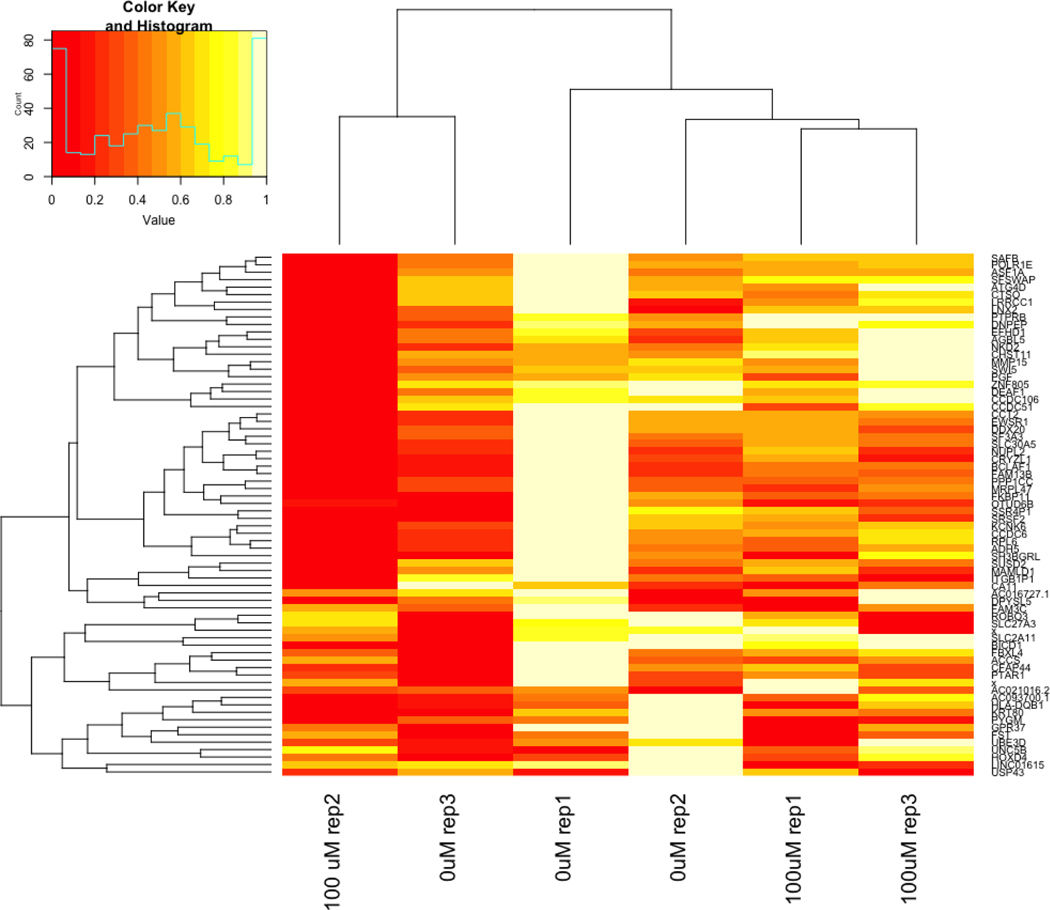
We reported that maternal PFBS, an emerging pollutant, exposure is positively associated with preeclampsia which can result from aberrant trophoblasts invasion and subsequent placental ischemia. In this study, we investigated the effects of PFBS on trophoblasts proliferation/invasion and signaling pathways. We exposed a human trophoblast line, HTR8/SVneo, to PFBS. Cell viability, proliferation, and cell cycle were evaluated by the MTS assay, Ki-67 staining, and flow cytometry, respectively. We assessed cell migration and invasion with live-cell imaging-based migration assay and matrigel invasion assay, respectively. Signaling pathways were examined by Western blot, RNA-seq, and qPCR. PFBS exposure interrupted cell proliferation and invasion in a dose-dependent manner. PFBS (100 μM) did not cause cell death but instead significant cell proliferation without cell cycle disruption. PFBS (10 and 100 μM) decreased cell migration and invasion, while PFBS (0.1 μM) significantly increased cell invasion but not migration. Further, RNA-seq analysis identified dysregulated HIF-1α target genes that are relevant to cell proliferation/invasion and preeclampsia, while Western Blot data showed the activation of HIF-1α, but not Notch, ERK1/2, (PI3K)AKT, and P38 pathways. PBFS exposure altered trophoblast cell proliferation/invasion which might be mediated by preeclampsia-related genes, suggesting a possible association between prenatal PFBS exposure and adverse placentation.
我们曾报道过,母体全氟丁烷磺酸(PFBS)作为一种新兴污染物,其暴露与子痫前期呈正相关,而子痫前期可导致滋养细胞侵袭异常和随后的胎盘缺血。在本研究中,我们研究了 PFBS 对滋养层细胞增殖/侵袭和信号通路的影响。我们将人滋养层细胞系 HTR8/SVneo 暴露于 PFBS 中。通过 MTS 检测、Ki-67 染色和流式细胞术分别评估细胞活力、增殖和细胞周期。通过基于活细胞成像的迁移实验和基质胶侵袭实验评估细胞迁移和侵袭。通过 Western blot、RNA-seq 和 qPCR 检测信号通路。PFBS 暴露以剂量依赖性方式干扰细胞增殖和侵袭。PFBS(100 μM)不会导致细胞死亡,而是显著促进增殖而不破坏细胞周期。PFBS(10 和 100 μM)降低细胞迁移和侵袭,而 PFBS(0.1 μM)显著增加细胞侵袭但不增加迁移。此外,RNA-seq 分析确定了与细胞增殖/侵袭和子痫前期相关的失调 HIF-1α 靶基因,而 Western blot 数据显示 HIF-1α 通路的激活,但 Notch、ERK1/2、(PI3K)AKT 和 P38 通路没有激活。PFBS 暴露改变了滋养层细胞的增殖/侵袭,这可能是由与子痫前期相关的基因介导的,提示产前 PFBS 暴露与不良胎盘形成之间可能存在关联。