Department of Hepatobiliary Surgery, Shenzhen University General Hospital, Shenzhen University Clinical Medical Academy, Shenzhen, China.
Department of Hepatobiliary Surgery, Southwest Hospital, Third Military Medical University (Army Medical University), Chongqing, China.
J Cell Mol Med. 2020 Oct;24(19):11211-11220. doi: 10.1111/jcmm.15675. Epub 2020 Sep 9.
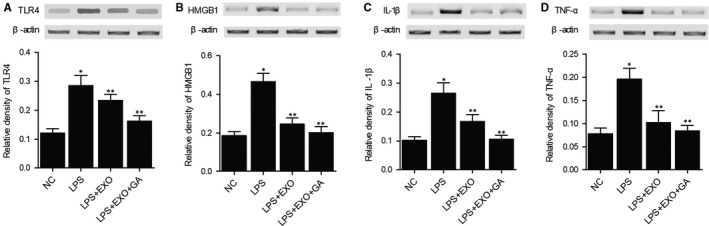
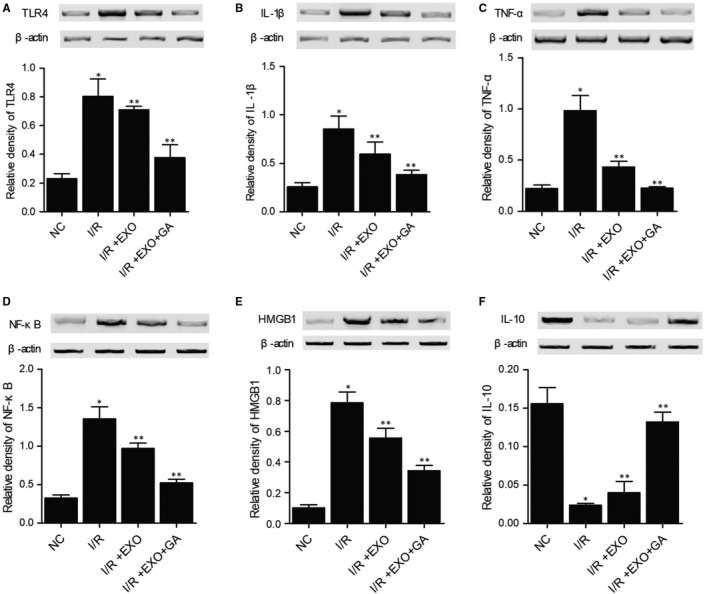
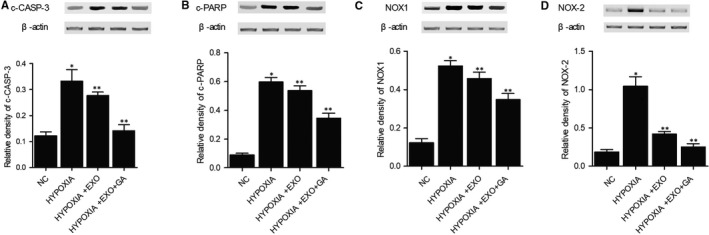
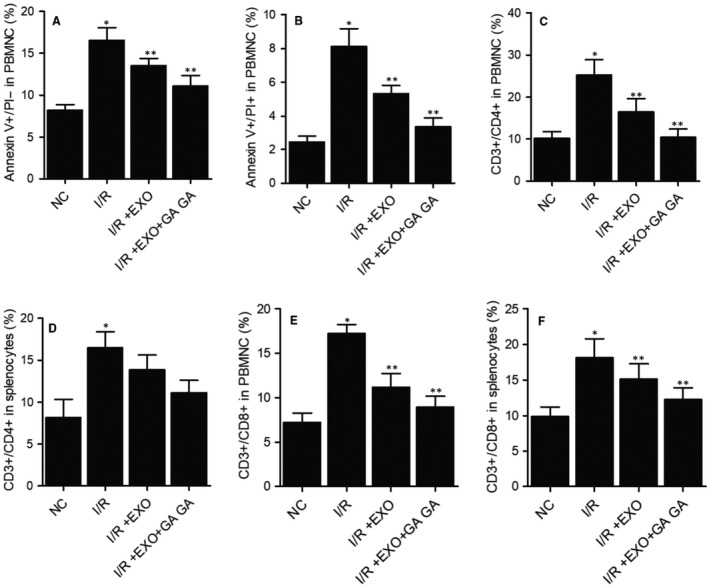
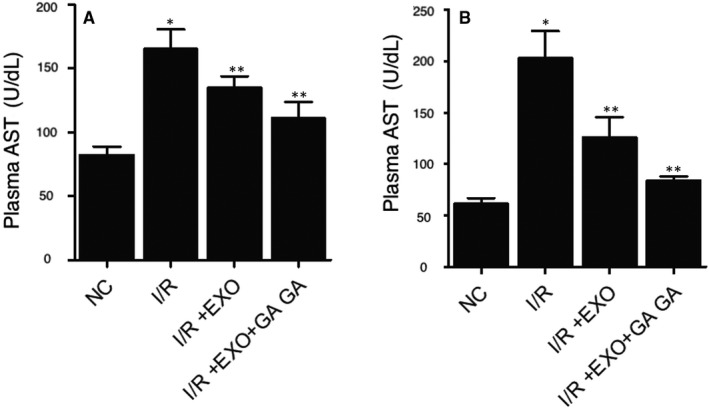
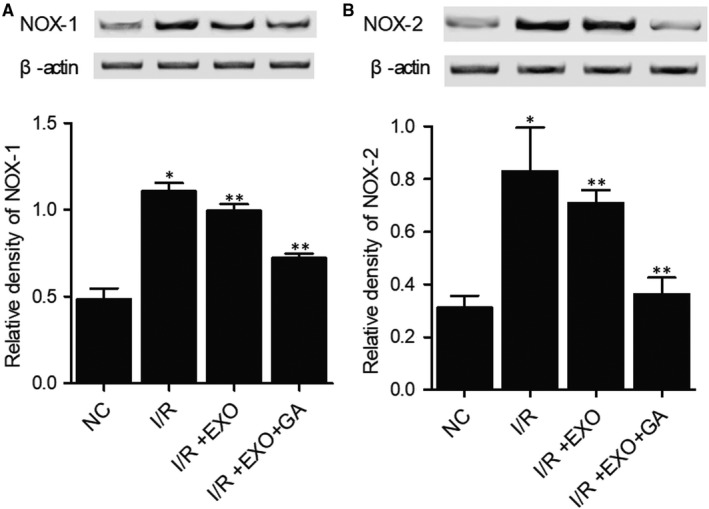
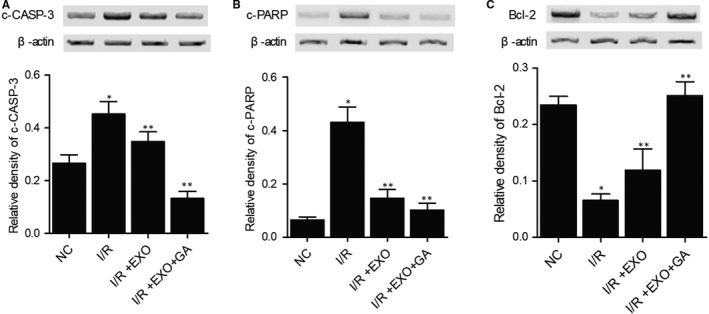
Recent studies have shown that mesenchymal stem cell-derived exosome could attenuate ischaemia-reperfusion (I/R) injury by suppressing inflammatory response in the liver. Glycyrrhetinic acid was also shown to be capable of repressing the TLR4 signalling pathway. However, it remains to be explored as whether the combined administration of mesenchyma stem cell (MSC)-derived exosome and glycyrrhetinic acid (GA) could increase their therapeutic effects on I/R injury. Western blot was performed to evaluate the expression of proteins associated with inflammatory response in THP-1 cells and I/R rat models treated under different conditions. Flow cytometry was carried out to analyse the proportions of different subtypes of peripheral blood cells in I/R rats. Alanine aminotransferase (ALT) and aspartate aminotransferase (AST) were measured to assess the liver injury in I/R rats. Combined treatment with MSC-derived exosome and GA effectively maintained the expression of key proteins involved in inflammatory response in LPS stimulated THP-1 cells and THP-1 cells treated under hypoxia conditions. In the established of I/R rat models, GA administration reinforced the therapeutic efficiency of MSC-derived exosomes by maintaining the proportion of different subgroups of peripheral blood cells, decreasing the concentration of ALT and AST, and restoring the expression of dysregulated proteins associated with inflammation. Our results demonstrated that treatment with exosomes derived from mesenchymal stem cells (MSCs) attenuated liver I/R injury, while the pre-treatment with GA may further promote the therapeutic effect of mesenchymal stem cell-derived exosome against acute liver ischaemia-reperfusion injury.
最近的研究表明,间充质干细胞衍生的外泌体通过抑制肝脏中的炎症反应来减轻缺血再灌注(I/R)损伤。甘草次酸也被证明能够抑制 TLR4 信号通路。然而,间充质干细胞(MSC)衍生的外泌体和甘草次酸(GA)联合给药是否能增加它们对 I/R 损伤的治疗效果仍有待探讨。通过 Western blot 评估了在不同条件下处理的 THP-1 细胞和 I/R 大鼠模型中与炎症反应相关的蛋白的表达。通过流式细胞术分析了 I/R 大鼠外周血不同亚型细胞的比例。通过测量丙氨酸氨基转移酶(ALT)和天冬氨酸氨基转移酶(AST)来评估 I/R 大鼠的肝损伤。MSC 衍生的外泌体和 GA 的联合治疗可有效维持 LPS 刺激的 THP-1 细胞和低氧条件下处理的 THP-1 细胞中参与炎症反应的关键蛋白的表达。在建立的 I/R 大鼠模型中,GA 给药通过维持外周血不同亚群细胞的比例、降低 ALT 和 AST 的浓度以及恢复与炎症相关的失调蛋白的表达,增强了 MSC 衍生的外泌体的治疗效果。我们的研究结果表明,间充质干细胞衍生的外泌体治疗减轻了肝脏 I/R 损伤,而 GA 的预处理可能进一步促进了间充质干细胞衍生的外泌体对急性肝缺血再灌注损伤的治疗作用。