1Department of Social Medicine, School of Public Health, China Medical University, Shenyang, People's Republic of China.
2Department of Medical Record Management Center, the First Affiliated Hospital of China Medical University, Shenyang, People's Republic of China.
J Behav Addict. 2020 Sep 8;9(3):551-571. doi: 10.1556/2006.2020.00057. Print 2020 Oct 12.
Mobile phone addiction (MPA) is frequently reported to be correlated with anxiety, depression, stress, impulsivity, and sleep quality among college students. However, to date, there is no consensus on the extent to which those factors are correlated with MPA among college students. We thus performed a meta-analysis to quantitatively synthesize the previous findings.
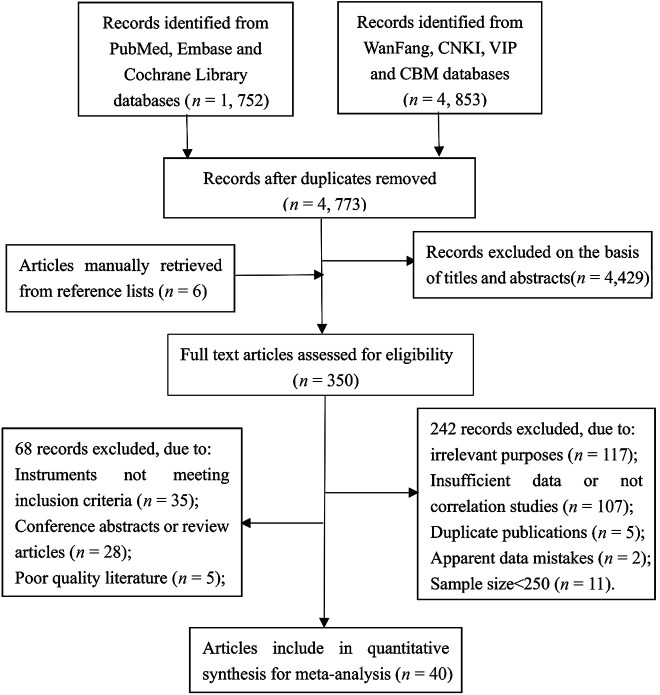
A systematic review and meta-analysis was conducted by searching PubMed, Embase, Cochrane Library, Wanfang, Chinese National Knowledge Infrastructure (CNKI), China Science and Technology Journal Database (VIP), and Chinese Biological Medicine (CBM) databases from inception to August 1, 2020. Pooled Pearson's correlation coefficients between MPA and anxiety, depression, impulsivity, and sleep quality were calculated by R software using random effects model.
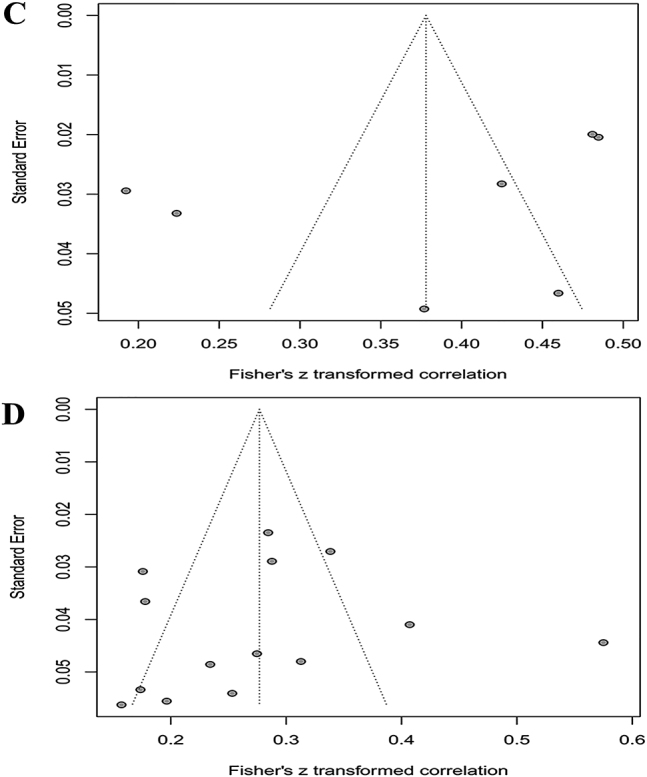
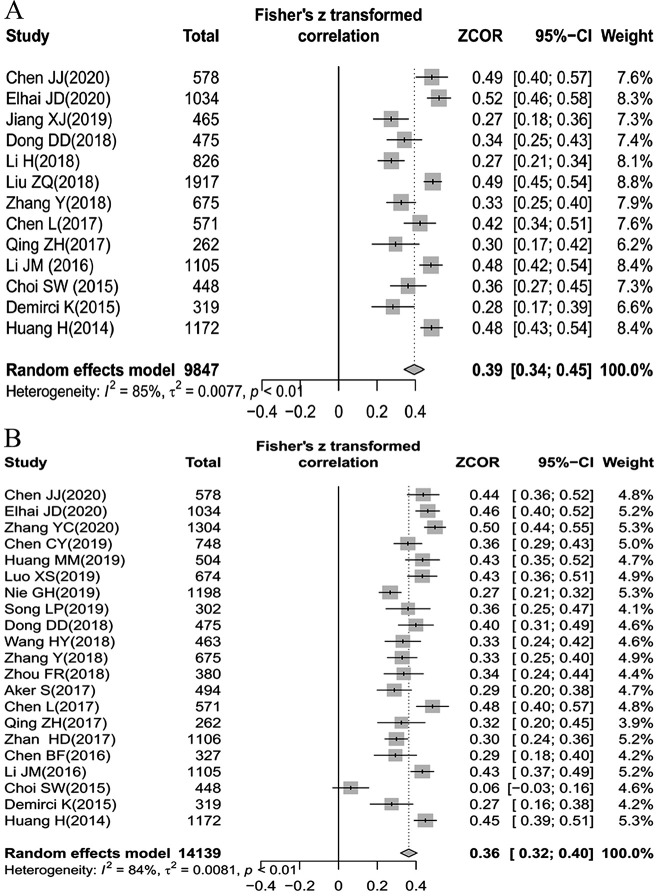
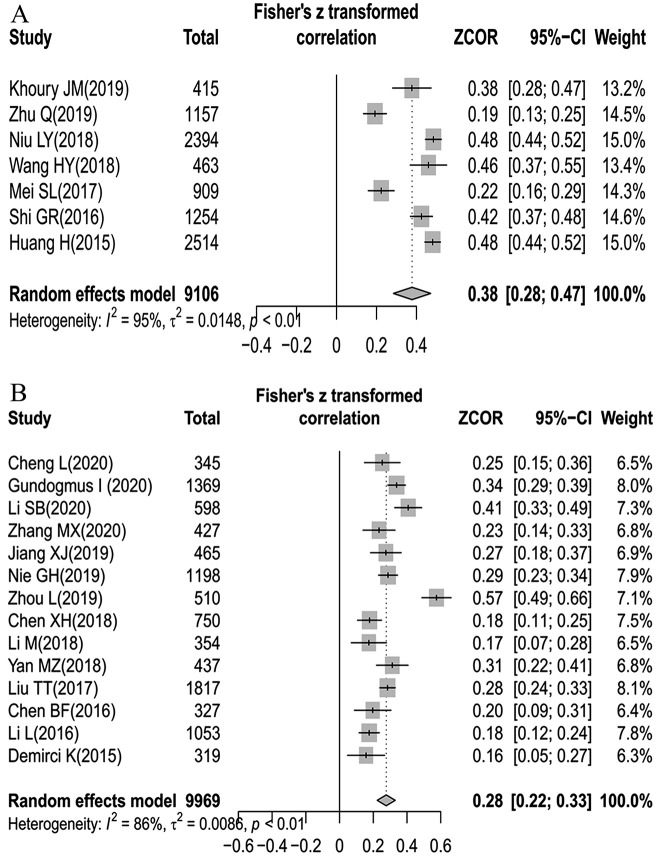
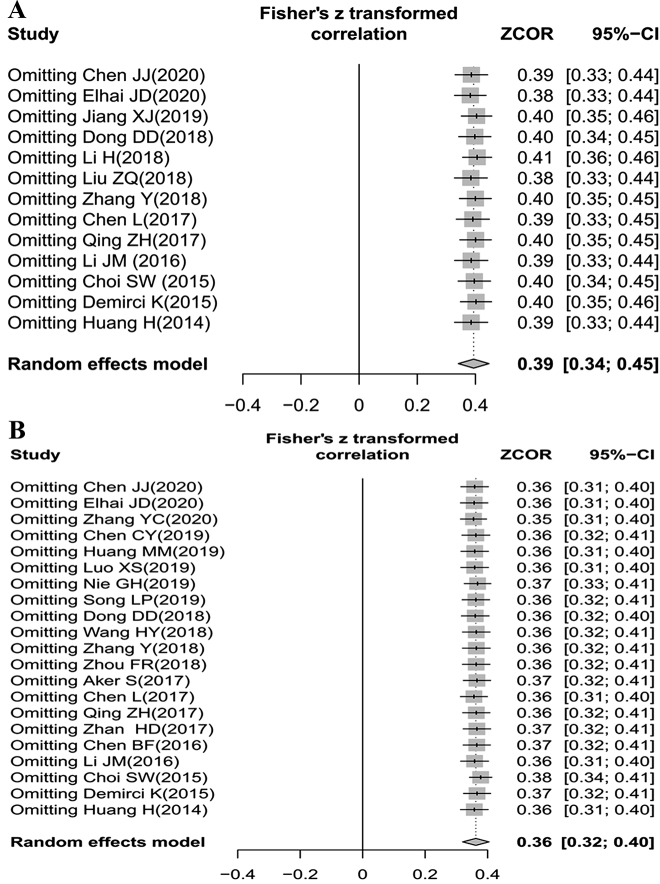
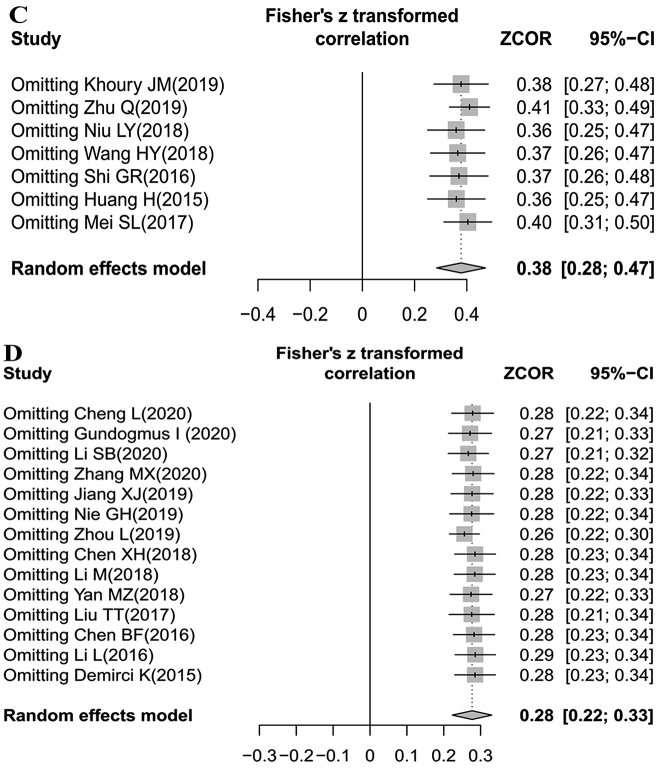
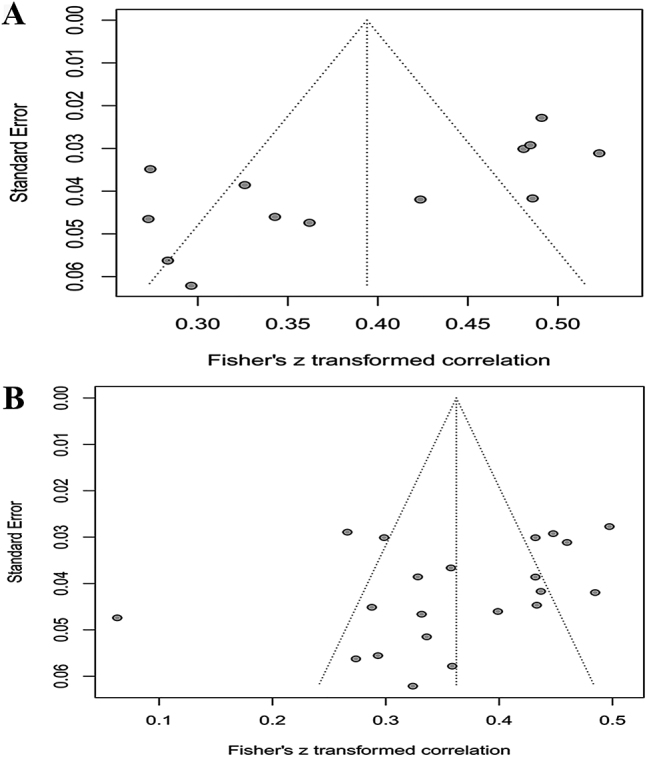
Forty studies involving a total of 33, 650 college students were identified. Weak-to-moderate positive correlations were found between MPA and anxiety, depression, impulsivity and sleep quality (anxiety: summary r = 0.39, 95% CI = 0.34-0.45, P < 0.001, I2 = 84.9%; depression: summary r = 0.36, 95% CI = 0.32-0.40, P < 0.001, I2 = 84.2%; impulsivity: summary r = 0.38, 95% CI = 0.28-0.47, P < 0.001, I2 = 94.7%; sleep quality: summary r = 0.28, 95% CI = 0.22-0.33, P < 0.001, I2 = 85.6%). The pooled correlations revealed some discrepancies when stratified by some moderators. The robustness of our findings was further confirmed by sensitivity analyses.
The current meta-analysis provided solid evidence that MPA was positively correlated with anxiety, depression, impulsivity, and sleep quality. This indicated that college students with MPA were more likely to develop high levels of anxiety, depression, and impulsivity and suffer from poor sleep quality. More studies, especially large prospective studies, are warranted to verify our findings.
手机成瘾(MPA)在大学生中常与焦虑、抑郁、压力、冲动和睡眠质量相关。然而,到目前为止,还没有关于这些因素与大学生 MPA 相关性的共识。因此,我们进行了一项荟萃分析,以定量综合以往的研究结果。
通过检索 PubMed、Embase、Cochrane 图书馆、万方、中国知网(CNKI)、中国科技期刊数据库(VIP)和中国生物医学文献数据库(CBM),从建库至 2020 年 8 月 1 日,对系统评价和荟萃分析进行了综述。使用 R 软件中的随机效应模型计算 MPA 与焦虑、抑郁、冲动和睡眠质量之间的 Pearson 相关系数。
共纳入 40 项研究,涉及 33650 名大学生。MPA 与焦虑、抑郁、冲动和睡眠质量之间存在弱到中度的正相关(焦虑:综合 r = 0.39,95%CI = 0.34-0.45,P < 0.001,I2 = 84.9%;抑郁:综合 r = 0.36,95%CI = 0.32-0.40,P < 0.001,I2 = 84.2%;冲动:综合 r = 0.38,95%CI = 0.28-0.47,P < 0.001,I2 = 94.7%;睡眠质量:综合 r = 0.28,95%CI = 0.22-0.33,P < 0.001,I2 = 85.6%)。按某些调节因素分层时,汇总相关性存在一些差异。敏感性分析进一步证实了我们研究结果的稳健性。
本荟萃分析提供了确凿的证据,表明 MPA 与焦虑、抑郁、冲动和睡眠质量呈正相关。这表明,有 MPA 的大学生更有可能出现高水平的焦虑、抑郁和冲动,并且睡眠质量较差。需要更多的研究,特别是大型前瞻性研究,来验证我们的发现。