Giraud-Gatineau Audrey, Texier Gaetan, Garnotel Eric, Raoult Didier, Chaudet Hervé
IHU Méditerranée Infection, Marseille, France.
Assistance Publique Hôpitaux de Marseille, Marseille, France.
Front Microbiol. 2020 Aug 13;11:1931. doi: 10.3389/fmicb.2020.01931. eCollection 2020.
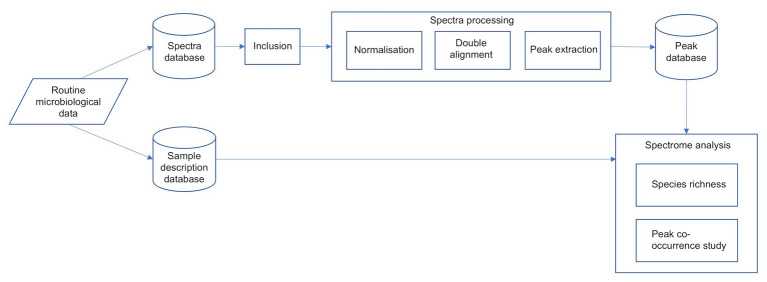
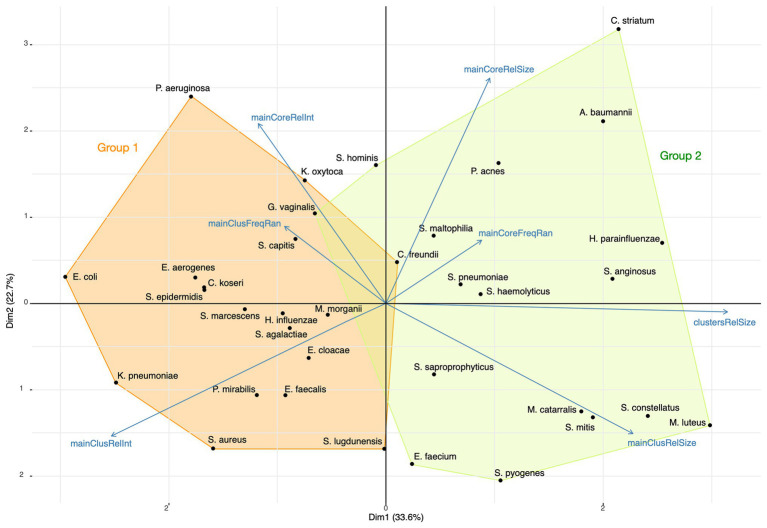
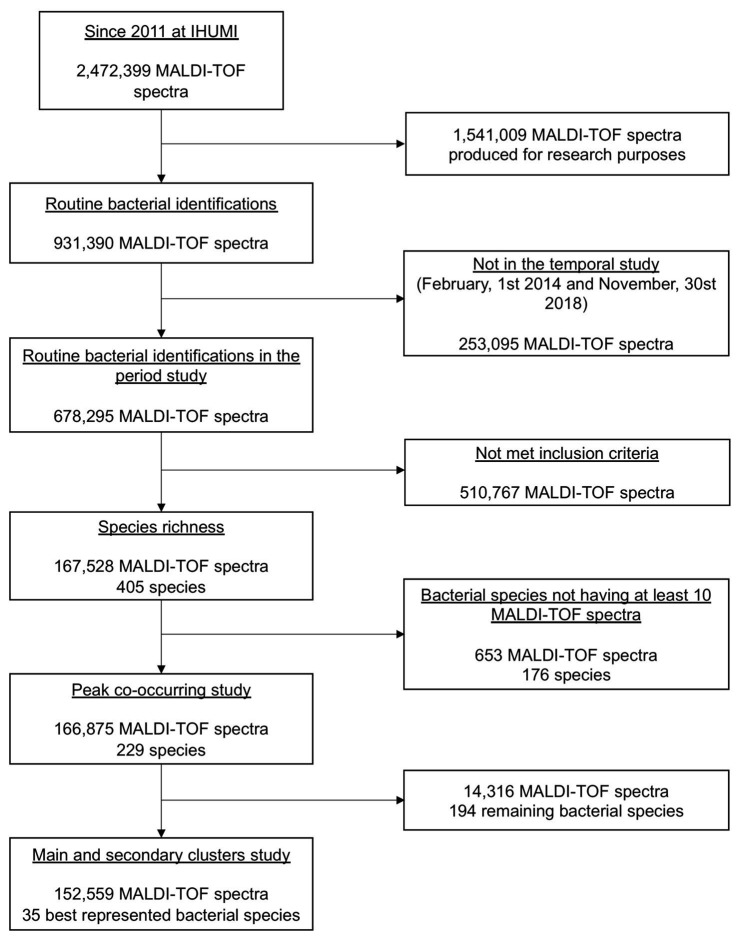
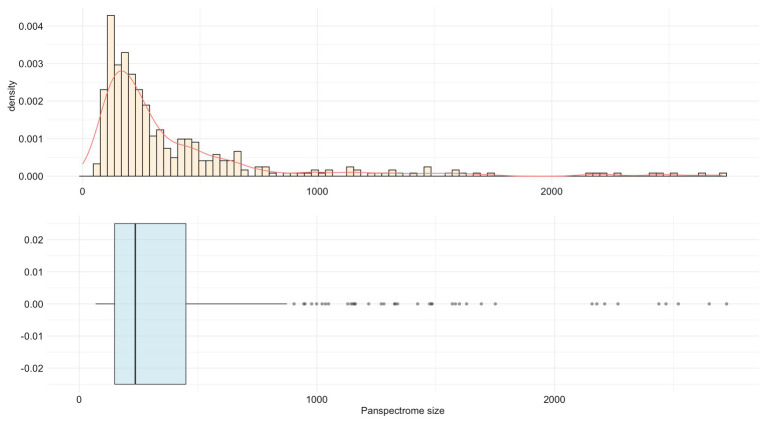
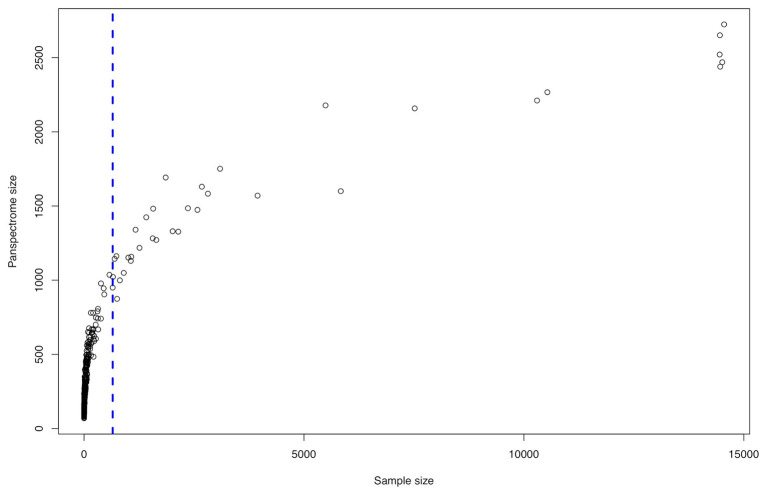
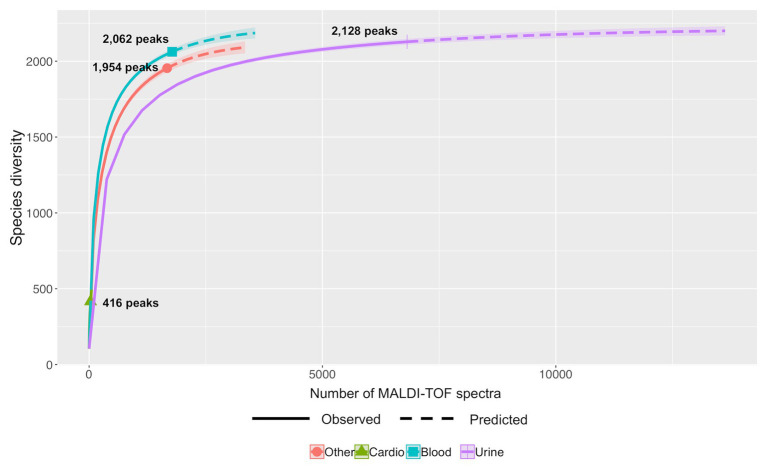
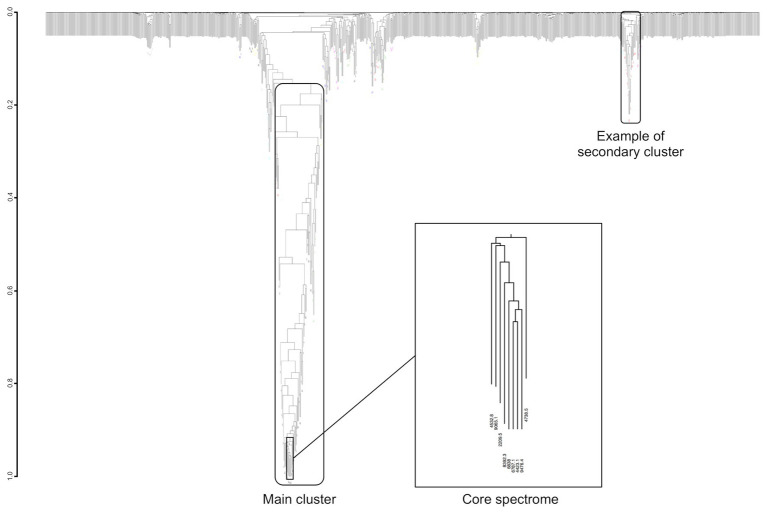
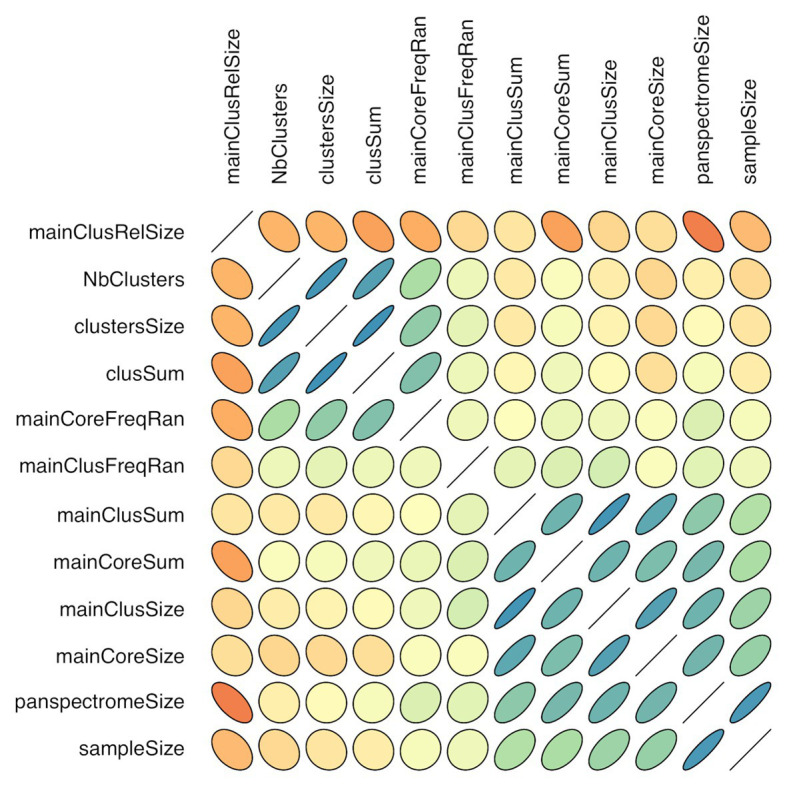
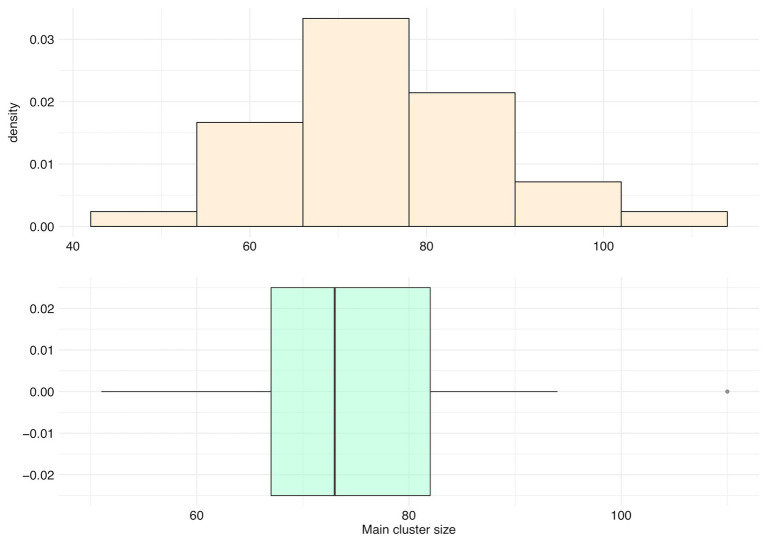
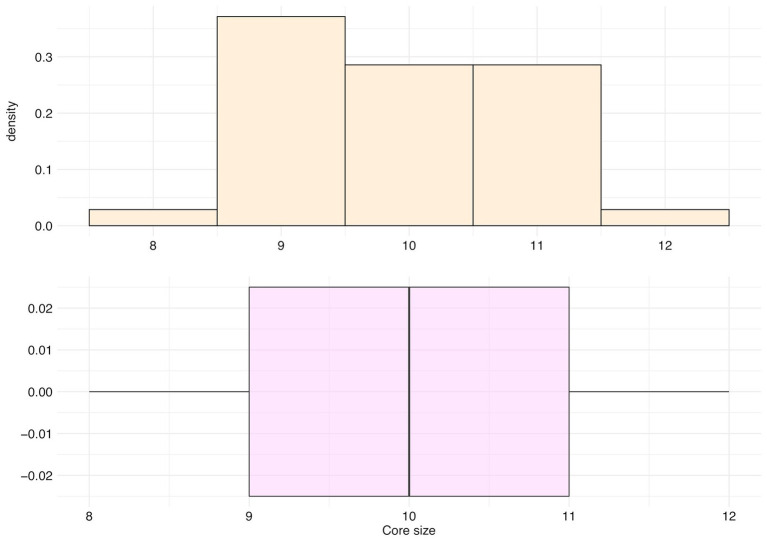
Bacterial identification at subspecies level is critical in clinical care and epidemiological investigations due to the different epidemic potentialities of a species. For this purpose, matrix-assisted laser desorption ionization - time-of-flight mass spectrometry (MALDI-TOF MS) has been proposed in place of molecular genotyping, but with some result discrepancies. The aim of this work is to methodically mine the expression diversities of MALDI-TOF bacterial species spectra and their possible latent organization in order to evaluate their subspecies specific expression. Peak expression diversities of MALDI-TOF spectra coming from routine identifications have been analyzed using Hill numbers, rarefaction curves, and peak clustering. Some size effect critical thresholds were estimated using change point analyses. We included 167,528 spectra corresponding to 405 species. Species spectra diversities have a broad size-dependent variability, which may be influenced by the kind of sampling. Peak organization is characterized by the presence of a main cluster made of the most frequently co-occurring peaks and around 20 secondary clusters grouping less frequently co-occurring peaks. The 35 most represented species in our sample are distributed in two groups depending on the focusing of their protein synthesis activity on the main cluster or not. Our results may advocate some analogy with genomics studies of bacteria, with a main species-related cluster of co-occurring peaks and several secondary clusters, which may host peaks able to discriminate bacterial subgroups. This systematic study of the expression diversities of MALDI-TOF spectra shows that latent organization of co-occurring peaks supports subspecies discrimination and may explain why studies on MALDI-TOF-based typing exhibit some result divergences.
由于同一细菌物种具有不同的流行潜力,因此在临床护理和流行病学调查中,对细菌进行亚种水平的鉴定至关重要。为此,有人提出用基质辅助激光解吸电离飞行时间质谱(MALDI-TOF MS)取代分子基因分型,但结果存在一些差异。这项工作的目的是系统地挖掘MALDI-TOF细菌物种谱的表达多样性及其可能的潜在组织方式,以评估其亚种特异性表达。我们使用希尔数、稀疏曲线和峰聚类分析了来自常规鉴定的MALDI-TOF谱的峰表达多样性。通过变化点分析估计了一些大小效应临界阈值。我们纳入了对应405个物种的167,528个谱。物种谱多样性具有广泛的大小依赖性变异性,这可能受采样类型的影响。峰组织的特征是存在一个由最常同时出现的峰组成的主聚类,以及大约20个将较少同时出现的峰分组的次聚类。根据蛋白质合成活性是否集中在主聚类上,我们样本中最具代表性的35个物种分为两组。我们的结果可能支持与细菌基因组学研究的某些类比,即存在一个与物种相关的主要同时出现峰的聚类和几个次聚类,后者可能包含能够区分细菌亚组的峰。这项对MALDI-TOF谱表达多样性的系统研究表明,同时出现峰的潜在组织方式支持亚种鉴别,这可能解释了基于MALDI-TOF分型的研究为何会出现一些结果分歧。