Faculty of Health and Medical Sciences, University of Surrey, Guildford, GU2 7XH, United Kingdom.
School of Engineering, University of Warwick, Coventry, CV4 7AL, United Kingdom.
Curr Opin Biotechnol. 2020 Apr;62:29-37. doi: 10.1016/j.copbio.2019.08.004. Epub 2019 Oct 1.
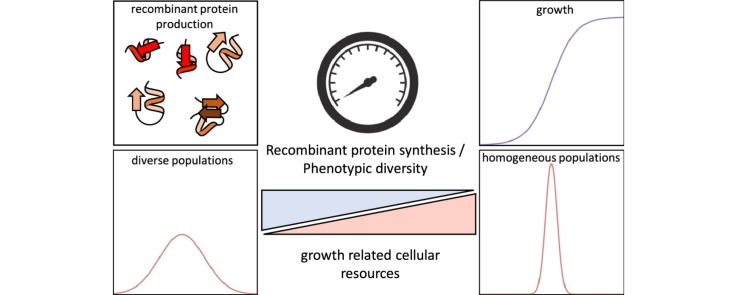
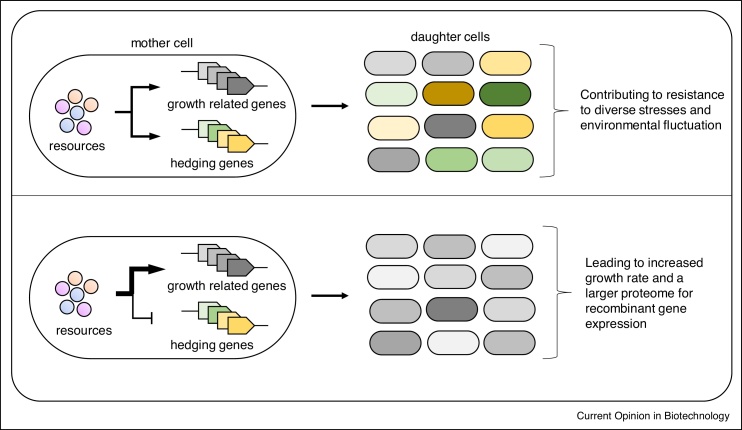
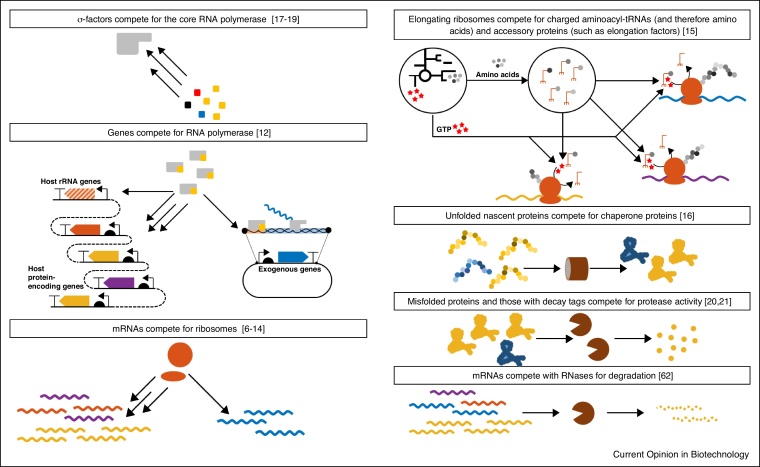
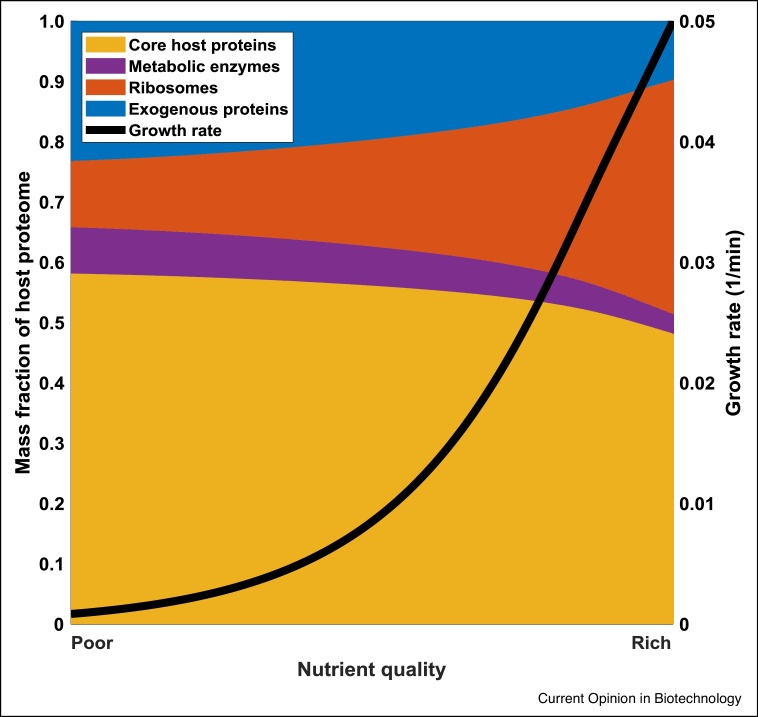
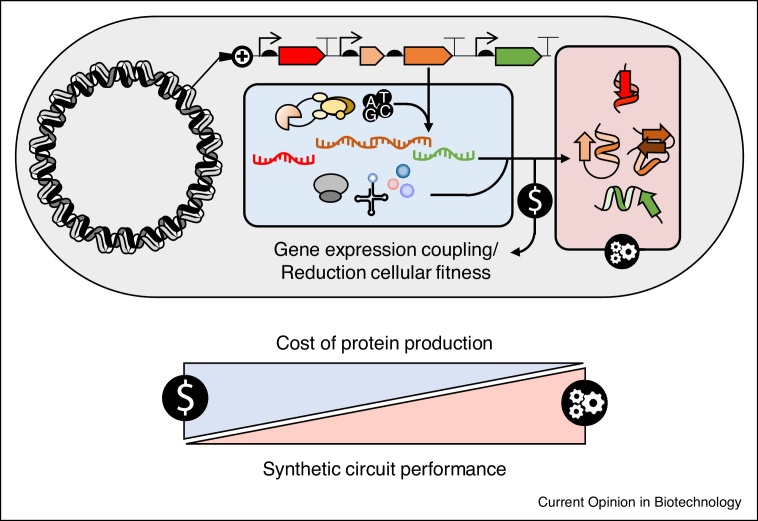
Bacterial cells have a limited number of resources that can be allocated for gene expression. The intracellular competition for these resources has an impact on the cell physiology. Bacteria have evolved mechanisms to optimize resource allocation in a variety of scenarios, showing a trade-off between the resources used to maximise growth (e.g. ribosome synthesis) and the rest of cellular functions. Limitations in gene expression also play a role in generating phenotypic diversity, which is advantageous in fluctuating environments, at the expenses of decreasing growth rates. Our current understanding of these trade-offs can be exploited for biotechnological applications benefiting from the selective manipulation of the allocation of resources.
细菌细胞的资源有限,这些资源可用于基因表达。这些资源的细胞内竞争会影响细胞的生理机能。细菌已经进化出了多种机制来优化资源分配,在最大化生长(例如核糖体合成)所需资源和其他细胞功能之间进行权衡。基因表达的限制也在产生表型多样性方面发挥了作用,这种多样性在波动的环境中是有利的,但会以降低生长速度为代价。我们目前对这些权衡的理解可以被应用于生物技术领域,通过选择性地操纵资源分配来从中受益。