Department of Cardiovascular Surgery, Union Hospital, Fujian Medical University, Fuzhou, 350001, People's Republic of China.
J Cardiothorac Surg. 2020 Sep 11;15(1):250. doi: 10.1186/s13019-020-01294-w.
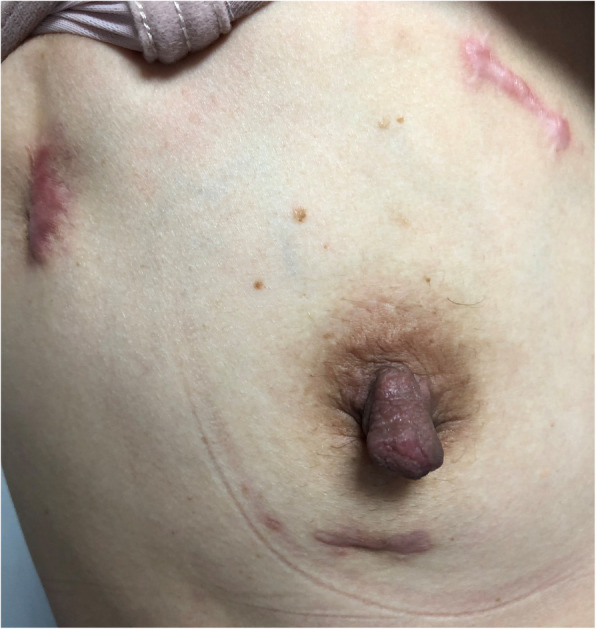
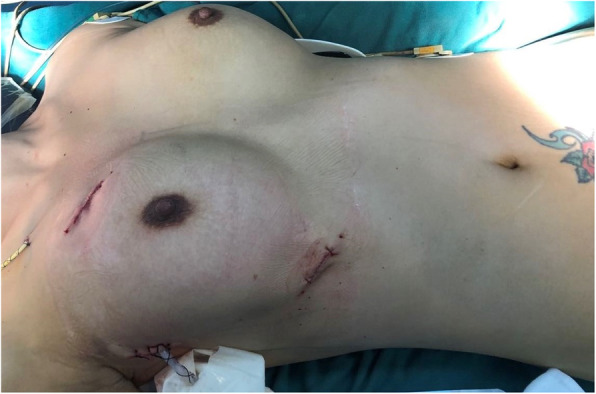
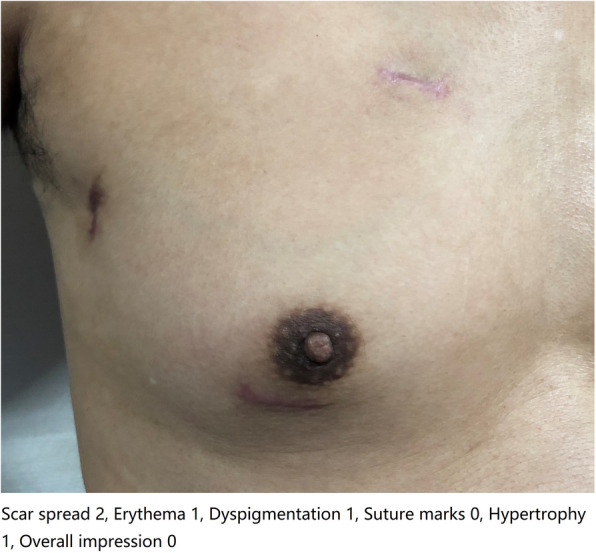
Conventional median sternotomy is widely used in cardiac surgery, while thoracoscopic cardiac surgery, which is considered to have aesthetic advantages, is being performed increasingly more often in China because patients' requests for minimally invasive procedures yielding aesthetically pleasing results have significantly increased. Few studies have been conducted to assess surgical scars after cardiac surgery. Compared to the median sternotomy approach, multiple-incision totally thoracoscopic cardiac surgery requires smaller but numerous and scattered incisions. In addition to two working ports on the upper and lower margins of the right breast, an inguinal incision and an axillary incision are made. Therefore, does totally thoracoscopic cardiac surgery truly have aesthetic advantages? This study has the following objectives: (a) to compare median sternotomy cardiac surgery and total thoracoscopic cardiac surgery in terms of the long-term cosmetic outcomes of post-operative scars and (b) to evaluate the effectiveness of the Scar Cosmesis Assessment and Rating scale in combination with the numeric rating scale in the assessment of surgical scars after cardiac surgery.
Consecutive patients who visited our institution from January 2019 to May 2019 for cardiac surgery via median sternotomy or the totally thoracoscopic approach and followed up for at least one year were included. Inter-rater reliability, internal consistency and convergent validity were evaluated for the Scar Cosmesis Assessment and Rating scale and the numeric rating scale. Clinical characteristics and the scores of the two scales were compared between the two groups using Student's t test or the Mann-Whitney U test.
Thirty-one patients underwent cardiac surgery via the totally thoracoscopic approach, and 42 patients underwent cardiac surgery via the median sternotomy approach. No significant differences were found in the demographic or clinical data between the two groups. The validity and reliability of the two scales were satisfactory. For the Scar Cosmesis Assessment and Rating scale, the median sternotomy group scored statistically significantly higher than did the totally thoracoscopic group on the "overall impression" and "patient question" subscales (P < 0.05). The overall scores of the Scar Cosmesis Assessment and Rating scale and numeric rating scale were statistically significantly different (P < 0.05).
The Scar Cosmesis Assessment and Rating scale in combination with the numeric rating scale is an effective tool for the assessment of scar aesthetics after cardiac surgery. Surgical scars of totally thoracoscopic cardiac surgery can yield desirable cosmetic outcomes in Chinese individuals, especially in susceptible individuals with a high risk of keloid and hypertrophic scars. Patients with appropriate indications can undergo cardiac surgery with the totally thoracoscopic approach and exhibit a satisfactory scar appearance.
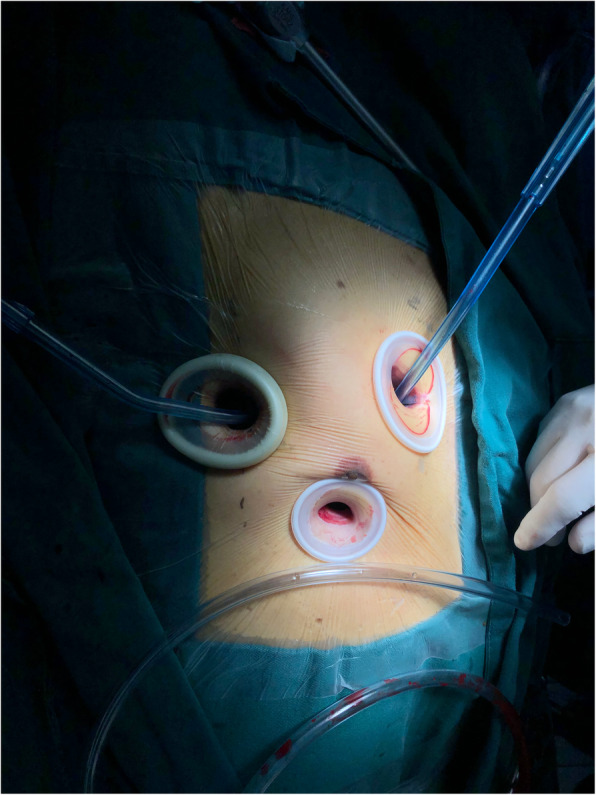
传统的正中胸骨切开术在心脏手术中被广泛应用,而胸腔镜心脏手术由于其美观优势,在中国的应用越来越多,因为患者对微创、美观效果的需求显著增加。很少有研究评估心脏手术后的手术疤痕。与正中胸骨切开术相比,多切口全胸腔镜心脏手术需要更小但数量更多且分散的切口。除了在右乳房上下缘的两个工作端口外,还需要做一个腹股沟切口和一个腋窝切口。因此,全胸腔镜心脏手术真的有美观优势吗?本研究有以下目的:(a)比较正中胸骨切开术心脏手术和全胸腔镜心脏手术在术后疤痕的长期美容效果方面的差异;(b)评估 Scar Cosmesis Assessment and Rating 量表与数字评分量表联合评估心脏手术后手术疤痕的有效性。
连续纳入 2019 年 1 月至 2019 年 5 月在我院行正中胸骨切开术或全胸腔镜心脏手术且随访至少 1 年的患者。评估 Scar Cosmesis Assessment and Rating 量表和数字评分量表的组内信度、内部一致性和收敛效度。采用 Student's t 检验或 Mann-Whitney U 检验比较两组患者的临床特征和两种量表的评分。
31 例患者接受全胸腔镜心脏手术,42 例患者接受正中胸骨切开术心脏手术。两组患者的人口统计学和临床数据无显著差异。两种量表的有效性和可靠性均令人满意。对于 Scar Cosmesis Assessment and Rating 量表,正中胸骨切开术组在“整体印象”和“患者提问”子量表上的评分明显高于全胸腔镜组(P<0.05)。Scar Cosmesis Assessment and Rating 量表和数字评分量表的总分差异有统计学意义(P<0.05)。
Scar Cosmesis Assessment and Rating 量表与数字评分量表相结合是评估心脏手术后疤痕美观的有效工具。胸腔镜心脏手术的手术疤痕在中国人群中可以获得理想的美容效果,尤其是在容易发生瘢痕疙瘩和增生性瘢痕的易感人群中。有适应证的患者可以接受全胸腔镜心脏手术,且术后疤痕外观令人满意。